EfficientlyComposingSwimmingLessonGroupsbyLevel

Summary
- Regular evaluation keeps swimming lesson groups current and promotes lesson quality.
- Digital tracking system supports planning, progress, and communication within swimming lessons.
- Division based on aptitude prevents boredom and overload, promotes enjoyment and safety.
Efficiently composing swimming lesson groups by level is important for a structured lesson progression. This ensures better alignment of the lesson content with the skills of the students. For swimming instructors and schools, this means clear planning and more targeted guidance.
In this article, we discuss how to organize swimming lesson groups based on aptitude, experience, and maximum group size. Additionally, we cover the use of a digital tracking system to monitor swimming lesson progress and improve communication with parents.
We provide practical tips for flexibility within groups and regularly evaluating the level. This creates a clear picture of the organization and learning process within swimming lessons.
1. Importance of Level Division
Dividing swimming lesson groups by level is essential for a structured lesson progression. In this chapter, we discuss why proper group division is important, the benefits it offers instructors and students, and how it positively influences lesson outcomes.
Why group division is important
A clear group division ensures that students with similar swimming skills receive lessons together. This makes it possible to better tailor the lesson program to the group's level. Instructors can focus practice and repetition where needed. Additionally, it prevents weaker or stronger students from standing out too much.
By organizing groups by level, a safer and more motivating learning environment is created. Students feel more comfortable and can make progress at their own pace. This contributes to a positive swimming experience for everyone.
Benefits for instructors and students
For instructors, good level division means they can distribute their attention more efficiently. They can offer specific exercises that match the group's skills. This increases lesson effectiveness and makes it easier to identify individual progress.
Students benefit because they receive lessons that match their current abilities. This prevents frustration and boosts self-confidence. Moreover, working with peers at the same level promotes social interaction and enjoyment during swimming lessons.
Impact on lesson outcomes
The impact of proper level division on lesson outcomes is clearly visible. Students make faster and more consistent progress because the material better matches their capabilities. Instructors can better respond to learning needs and address weaknesses.
Additionally, appropriate group composition leads to less dropout and more motivation. This contributes to achieving swimming diplomas within a realistic timeframe. Thus, the learning process becomes goal-oriented and clear for everyone.
What is Zwemlesmaatje?
Swimmigo is an independent app that allows you to track, assess, and celebrate swimming progress, whether you are a parent, adult swimmer, or instructor. You are not dependent on the swimming school but remain in control yourself.
For parents, the app offers a clear learning path of 7 levels (from Red to Gold) with 86 exercises. You rate each exercise with a simple scoring system (0 to 6) and receive a personal swimming certificate for each achieved level. This way, you can see at a glance where your child stands and what still needs work.
Adults who want to learn (better) swimming use Zwemlesmaatje discreetly and without group pressure. The app provides structure, breaks the learning process into manageable steps, and helps overcome insecurity. You train at your own pace, whenever it suits you.
Swimming schools and instructors use Swimmigo completely free as a digital system for student administration, schedules, and progress. Parents see their child's development in real-time without you having to do any extra work. A handy Marketing Toolbox also helps you create professional flyers, social media posts, and certificates.
2. Characteristics of Swimming Levels
In this chapter, we discuss the different swimming levels within the Zwem-ABC. We provide an overview of the skills associated with each level. Additionally, we cover special groups and possible adjustments for specific needs.
Levels within the Zwem-ABC
The Zwem-ABC consists of three levels: diploma A, B, and C. Each level builds upon the skills of the previous one. Level A focuses on becoming water confident and basic skills such as floating and swimming underwater. Level B focuses on learning four swimming strokes and improving swimming technique.
Diploma C concludes with skills for safe swimming in deep water and applying rescue techniques. This progression provides a clear structure in the learning process. Instructors can efficiently organize groups based on the achieved level.
Skills overview per level
Specific skills are set for each level that children must master. Level A focuses on water confidence, floating, and safe entering and exiting the water. Level B expands this with the four swimming strokes: backstroke, breaststroke, freestyle, and back crawl. Attention is also given to breathing and coordination.
At level C, children learn to handle unexpected situations, such as swimming in deep water and underwater swimming. This overview helps instructors monitor progress and practice purposefully. Parents also gain insight into what their child learns per level.
Special groups and adjustments
Besides the standard Zwem-ABC levels, there are special groups for children with temporary or permanent disabilities. National Swimming Certificates exist for these groups, adapted to their capabilities. These certificates contain similar safety skills but with adjusted requirements.
Also, for adults or newcomers, adapted groups can be formed. It is important to consider individual needs and pace. This keeps swimming accessible and enjoyable for everyone.
3. Practical Tips for Group Division
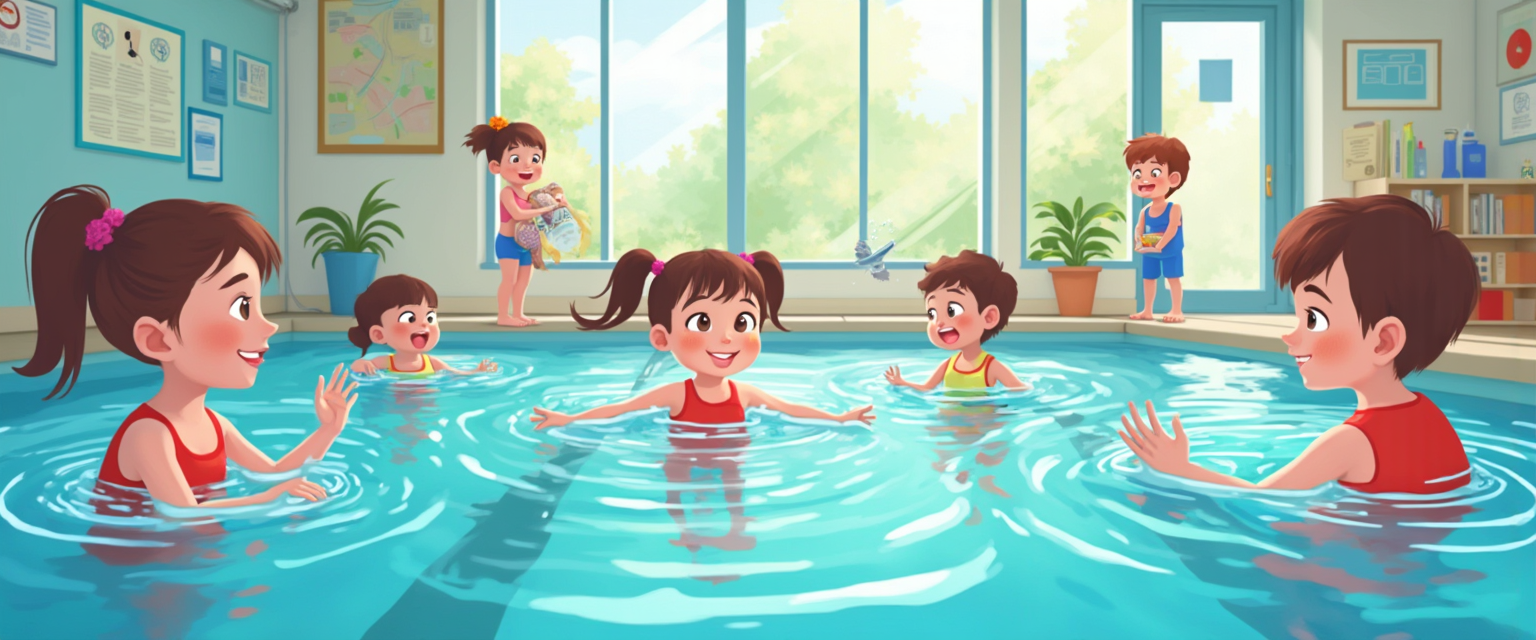
In this chapter, we discuss how to efficiently divide swimming lesson groups based on aptitude and experience. Additionally, we cover determining maximum group sizes for optimal guidance. Finally, we provide tips for flexibility with students who are between levels.
Students by aptitude and experience
When composing swimming lesson groups, it is important to consider the aptitude and experience of the students. This means not only looking at the diploma achieved but also at motor skills and water confidence. For example, a child with more aptitude may progress faster than another of the same age.
By grouping students with similar experience and aptitude, instructors can teach more targeted lessons. This prevents some children from getting bored or becoming overwhelmed. An example is forming a group where all children can comfortably swim underwater, so the lesson content matches that.
Determining maximum group sizes
The maximum group size depends on the level and age of the students. For beginners, a smaller group is often desirable to ensure sufficient personal attention. For example, groups of up to 6 children are effective in the first swimming lessons.
For advanced groups, the size can be somewhat larger, provided the instructor has enough experience. It is important to ensure each student gets enough time to practice techniques. This keeps lesson quality high and progress smooth.
Flexibility with transition levels
Students who are between two levels require extra attention in group division. It is wise to assign these children flexibly, for example by temporarily placing them in a higher or lower level. This prevents them from getting stuck or not being challenged enough.
Additionally, it can help to give these students extra exercises that match their specific developmental phase. This keeps motivation high and allows them to progress at their own pace. Flexibility contributes to a positive learning experience for both student and instructor.
4. Tools for Swimming Group Management
Digital tools play an important role in efficiently managing swimming lesson groups. They support lesson planning, progress tracking, and communication with parents and students.
In this chapter, we discuss how these tools contribute to clear organization and better alignment within swimming groups.
Use of digital swimming lesson planning
With digital swimming lesson planning, instructors can easily assign groups and schedule lessons. This prevents double bookings and makes it possible to quickly adjust for absences or level changes.
A practical example is using an online calendar where all swimming groups and available instructors are visible. This maintains overview and smooths organization.
Additionally, parents can see via an app or portal exactly when their child's swimming lesson takes place. This increases transparency and reduces misunderstandings.
Benefits of progress monitoring
Progress monitoring with digital systems provides insight into each swimmer's development. Instructors can make notes per student about achieved skills and points of attention.
This data helps in composing groups that match well in terms of level. This way, each swimmer receives lessons at the right level.
An example is keeping track of obtained diplomas and skills in a digital file, making it easier to promote students to a higher level in time.
Communication with parents and students
Effective communication with parents and students is essential for good cooperation. Digital platforms offer possibilities to send messages about schedule changes, lesson content, and progress.
Parents can also ask questions and provide feedback through these channels, increasing involvement. This contributes to a positive experience for all parties.
An example is automatically sending reminders for swimming lessons or sharing tips for practicing at home, supporting the continuity of the learning process.
5. Evaluation and Adjustment of Groups
In this chapter, we discuss how swimming lesson groups can be regularly evaluated to keep the level up to date.
We cover the importance of testing, adjusting groups when development differs, and ensuring safety and enjoyment.
This approach helps instructors and schools optimize lesson quality and learning pleasure.
Regular level testing
It is important to regularly test the swimming level of students, for example after a series of lessons or a specific lesson component.
This gives the instructor insight into progress and allows determining if a student is ready for the next level.
This testing can consist of practical exercises such as swimming a certain distance or demonstrating specific skills.
By recording these moments, a clear overview of development within the group is created.
Reorganization with differences in development
When students develop at their own pace, it may be necessary to reorganize groups.
Reorganization ensures everyone receives lessons at the right level, which promotes the learning process.
For example, a student who progresses faster can move to a group with a higher level.
A student who needs more time can be placed in a smaller or adapted group to receive extra attention.
This flexibility prevents frustration and keeps motivation high.
Maintaining safety and enjoyment
Besides the level, it is essential to ensure a safe and enjoyable swimming lesson environment.
Safety is guaranteed by appropriate group sizes and sufficient supervision during lessons.
Enjoyment arises from a good balance between challenge and success experiences for the students.
Instructors can monitor this by regularly asking for feedback and observing the group atmosphere.
This way, swimming remains a positive experience that invites further development.

Summary
Summary of Efficiently Composing and Tracking Swimming Lesson Groups with a Digital Tracking System
Regular evaluation of swimming lesson groups keeps the level current and promotes lesson quality and enjoyment. Testing helps instructors assess student progress and adjust groups.
Digital tools support planning, tracking, and communication within swimming lesson groups. They provide overview and simplify lesson organization.
With a digital tracking system, instructors can divide swimming lesson groups based on aptitude and experience. This prevents students from getting bored or overwhelmed.
The Zwem-ABC offers a clear structure with three levels: A, B, and C. Each level builds on skills that fit the swimming lesson group.
Good group division ensures a safe and motivating learning environment. Students can progress at their own pace and experience more enjoyment during swimming lessons.
Why a digital tracking system helps
A digital tracking system makes it possible to clearly record test results and progress. This provides insight into each student's swimming lesson progress.
Additionally, the system supports swimming lesson planning and communication with parents. This makes organizing swimming lessons more efficient and transparent.
Dear reader, this blog post was about efficiently composing swimming lesson groups by level.
We would love to hear if you have experience with dividing swimming lesson groups and what your approach is. Feel free to leave a comment below this article.
You can try Swimmigo for free via https://swimmigo.com. We hope it can support you in organizing swimming lessons.
Sources

Bob van Soest
As an expert in operating sports facilities (such as swimming pools) and developer of, among others, Swimmigo.com, I am passionately committed to making swimming lessons simpler, more fun and more insightful for parents, swimming instructors and everyone who wants to learn to swim.
Frequently Asked Questions
Related articles
Efficiently Distributing Swimming Lesson Groups Among Instructors
Discover practical tips to effectively organize swimming lesson groups and optimally deploy instructors.
Effectively Organizing Swimming Lesson Groups by Levels
Practical tips for organizing swimming lesson groups based on swimming levels and effective planning.
Discover Swimmigo
The all-in-one app for swimming lesson progress. For parents, swim schools, and adult swimmers.