Are Swim Bands Safe for Your Child? How to Avoid False Security

Summary
- Swim bands and swim wings are flotation aids, not lifesaving devices: only a life jacket truly protects against drowning.
- The swim band around the waist is a toy: children can slip out, fall forward, or get stuck in it.
- Drowning is silent and fast, even in shallow water. Always stay within arm's reach of a child who cannot swim.
- A child who always relies on bands does not build water confidence. Let them also experience how water works without aids.
- Swimming lessons are the only real certainty: there your child learns to swim without aids, level by level, in every country.
The first warm days, or the first afternoon at the pool on vacation: your toddler cannot swim yet but still wants to get in the water. So the swim bands come out, because that keeps the head above water. That is true, as long as you stand next to them. The misunderstanding only begins when bands become a substitute for supervision or swimming lessons.
Below you will read what swim bands, swim wings, and swim rings can and cannot do, why drowning is still possible even with bands on, and how to safely let your child get used to water. The rules apply everywhere: in every pool, in every country.
What is false security exactly?
False security means that something feels like protection, while it does not actually provide that protection. With swim bands on, your child looks safe and feels safe. But if something goes wrong, it often happens because everyone thought it was fine. Swim bands and swim wings are flotation aids, not lifesaving devices.
Drowning is silent and fast
The World Health Organization estimates that worldwide about 300,000 people drown annually. Children under five are heavily overrepresented: nearly a quarter of all drownings. Also in the Netherlands, it is not uncommon. In 2025, one hundred residents drowned, reports CBS, and in the previous ten years an average of 93 per year. Young children drown differently than adults: silently and quickly, without splashing or shouting. And it can happen in as little as ten centimeters of water, says VeiligheidNL. A toddler who flips upside down in a small inflatable pool in the garden makes no noise.
A flotation aid is not a lifesaving device
The difference between a flotation aid and a lifesaving device is significant. A life jacket is designed to turn someone who falls into the water onto their back, so that mouth and nose stay above water, even if the child is unconscious. Swim wings do not do that: they lift the upper body, but a child who falls forward into the water can remain face down. That is why both VeiligheidNL and the American Academy of Pediatrics say the same: inflatable swimming aids are not lifesaving devices and never replace supervision.
Swim band or swim wings: the difference matters
In everyday language, everything is called swim bands, but there is a world of difference between the band around the waist and the wings around the upper arms. It determines whether your child stays upright or can dangerously tip over.
Swim wings are meant for floating
Swim wings fit around the upper arms, high on the body. This keeps the head above water and allows a child who cannot swim yet to float upright. VeiligheidNL calls them a safe choice for that, with one strict condition: stay next to the child. Swim wings are no exemption from supervision.
The swim band around the waist is a toy
The inflatable band around the waist is a different story. VeiligheidNL classifies it as a toy, and there is a risk in that: children can easily slip through it, and if the band is too tight, they can get stuck and cannot get upright again. A swim band should only be used on a child who can already swim well.
Puddle jumpers and flotation suits: better, but no free pass
A puddle jumper is a kind of life vest with built-in floats, usually made of foam. Foam cannot deflate and the buckle on the back makes it difficult for children to remove it themselves. Flotation suits place a child horizontally in the water so they can practice swimming strokes. Both are good products, but they remain aids. Precisely because of the horizontal position, a child's face can come underwater, writes Kinderveiligheid.nl.
Only a life jacket is a rescue device
Are you boating or near open water? Then a approved life jacket is the only good choice. A swim vest is not the same: it does not have the ability to turn a child onto their back. Choose a vest with a crotch strap, otherwise it will slip up during a fall.
| Aid | Intended for | Protects against drowning? |
|---|---|---|
| Swim wings on upper arms | Floating under supervision | No |
| Swim band around waist | Playing, only if the child can swim | No, it is a toy |
| Puddle jumper | Floating under supervision | No |
| Flotation suit and swim cork | Learning to swim in lessons | No |
| Swim vest | Protected water, if the child can swim | No |
| Life jacket | Boating and open water | Yes, that is what it is made for |
The risks of swim bands summarized
Apart from the question of whether an aid is suitable, swim bands have a few concrete dangers. These apply to all inflatable aids, from cheap to expensive.
Deflation and broken seams
Inflatable aids can leak: from a nail, on the tiles, or simply after a summer in storage. The Flemish organization Kind en Gezin warns that inflatable swim bands can break and deflate. A deflated wing no longer provides buoyancy, exactly at the moment your child relies on it.
Falling forward and head underwater
With a band around the waist, a child's center of gravity is high. Toddlers are naturally top-heavy, with a large head on a small body. If such a child falls forward into the water, the bands do not help: the legs float up and the head goes under. This is a common accident pattern especially in shallow water, where parents think nothing can happen.
In open water, the current always wins
An aid that works well in the pool can become a danger in open water. Wind and current can blow a child with swim bands away from the shore, and no inflatable band helps in the sea or a river. They do not belong there, not even near the shore.
The biggest risk is habituation
The material is not the biggest risk. The habituation is: what happens to a child who is always in the water with it. Swim bands reduce safety in the long term instead of increasing it.
You do not build water confidence with bands on
A child who floats on swim wings for months gets used to a body that naturally stays afloat. They do not learn what happens when they have to kick and float themselves, and they misjudge the water. Swimming instructors recognize the pattern every summer: children who lie in the pool for hours with bands, but already struggle to keep their head above water without bands. The American Academy of Pediatrics therefore advises to start swimming lessons as soon as a child is ready, and never see flotation aids as a replacement for those lessons.
The most dangerous moment is when the bands come off
The longer a child is used to a flotation aid, the bigger the shock when it disappears. They only know swimming with bands and have no reference for swimming without. A shallow pool can suddenly become scary or dangerous because the child overestimates their own ability. Therefore, phase out consciously, together with swimming lessons, and not only on the first vacation day at the sea.
Swimmigo · Swim lesson app
Free for parents
Follow your child's swimming progress, see where you stand and report absences in the app.

How to use flotation aids safely
Flotation aids do not need to be thrown away. It is about knowing what they can and cannot do, and using them as an aid, not as a rescue device.
Stay within arm's reach
The most important rule is the least popular: supervision. VeiligheidNL advises to always stay within arm's reach of children who cannot swim, even in shallow water and even in the bath. Also agree on who watches the child at what moment. Almost every drowning story contains the phrase 'I thought you were watching' somewhere hidden.
Buy consciously and check the aid
Choose foam instead of inflatable where possible, check seams and valves before each use, and do not buy second-hand inflatable bands. An aid should fit firmly: too loose means slipping, too tight means constriction.
Let your child experience without aids too
VeiligheidNL gives parents a remarkable tip: take off the swim wings occasionally while staying close. This way a child experiences that they do not automatically float without an aid and learns to take the water seriously. That awareness is the basis of safe behavior, in every pool, in every country, on every coast. It also explains why children in countries without a swimming culture drown more often. Even in the Netherlands, where swimming lessons seem obvious, the difference is large: children up to ten years old born outside Europe have according to CBS more than eight times the risk of drowning compared to children with a Dutch background, and for children whose parents were born outside Europe, that is four times as much. Water habituation and swimming lessons are therefore important for every child, anywhere in the world.

What does this mean for swim schools and instructors?
At the edge of the pool, instructors see parents struggling every day with the question of whether bands should be on. There is also an opportunity for swim schools here.
Advise parents instead of just forbidding
A ban on swim bands in lessons is understandable, because the lesson builds towards swimming without aids. But a good conversation works better than a rule. Explain why water habituation without bands works, and give parents concrete advice for free swimming. Parents who understand why their child first learns to float on their back let go of the aid at home much earlier.
Follow progress, not the aid
The moment a child can swim without an aid is not a matter of age but of level. In swimming lessons, a child builds up step by step: getting used to water, floating, kicking, and only then the first strokes. With Swimmigo, parents and instructors see the same progress, per level and per skill. This way, as a parent, you know exactly where your child stands and when they are ready for the next step, instead of guessing based on bands or no bands. See the level structure on the level page and discover on the parent page how to track your child's progress. For those who want to know more about all aids per age: read the complete overview of swimming aids and flotation devices.
Conclusion
Swim bands feel like safety, but they are not: they are flotation aids and toys, not lifesaving devices. Supervision within arm's reach, a conscious product choice, and occasionally swimming without aids make the difference. Real certainty only comes when your child learns to swim, step by step and without bands. Every swimming lesson is aimed at that, from the first water habituation to the first diploma, in every country.
Swimmigo · Swim lesson app
Free for parents
Follow your child's swimming progress, see where you stand and report absences in the app.
Sources
- World Health Organization (WHO): Drowning fact sheet, consulted September 2026
- CBS: Higher risk of drowning among children not born in the Netherlands, July 2026
- VeiligheidNL: Swimming aids for children, last modified June 16, 2026
- VeiligheidNL: Prevent drowning in children (0 to 4 years), consulted September 2026
- Kinderveiligheid.nl: Safe swimming aids for children, last modified June 15, 2026
- Kind en Gezin: Safe in and around water, consulted September 2026
- American Academy of Pediatrics: Drowning Prevention and Water Safety, consulted September 2026

Bob van Soest
As an expert in operating sports facilities (such as swimming pools) and developer of, among others, Swimmigo.com, I am passionately committed to making swimming lessons simpler, more fun and more insightful for parents, swimming instructors and everyone who wants to learn to swim.
Frequently Asked Questions
Related articles

Complete Overview of Swimming Aids and Buoyancy Devices: Safe Choices for Every Age
Swim wings, puddle jumper, or life jacket? Discover which swimming aids are safe for your child, by age and swimming level, and which ones to skip.
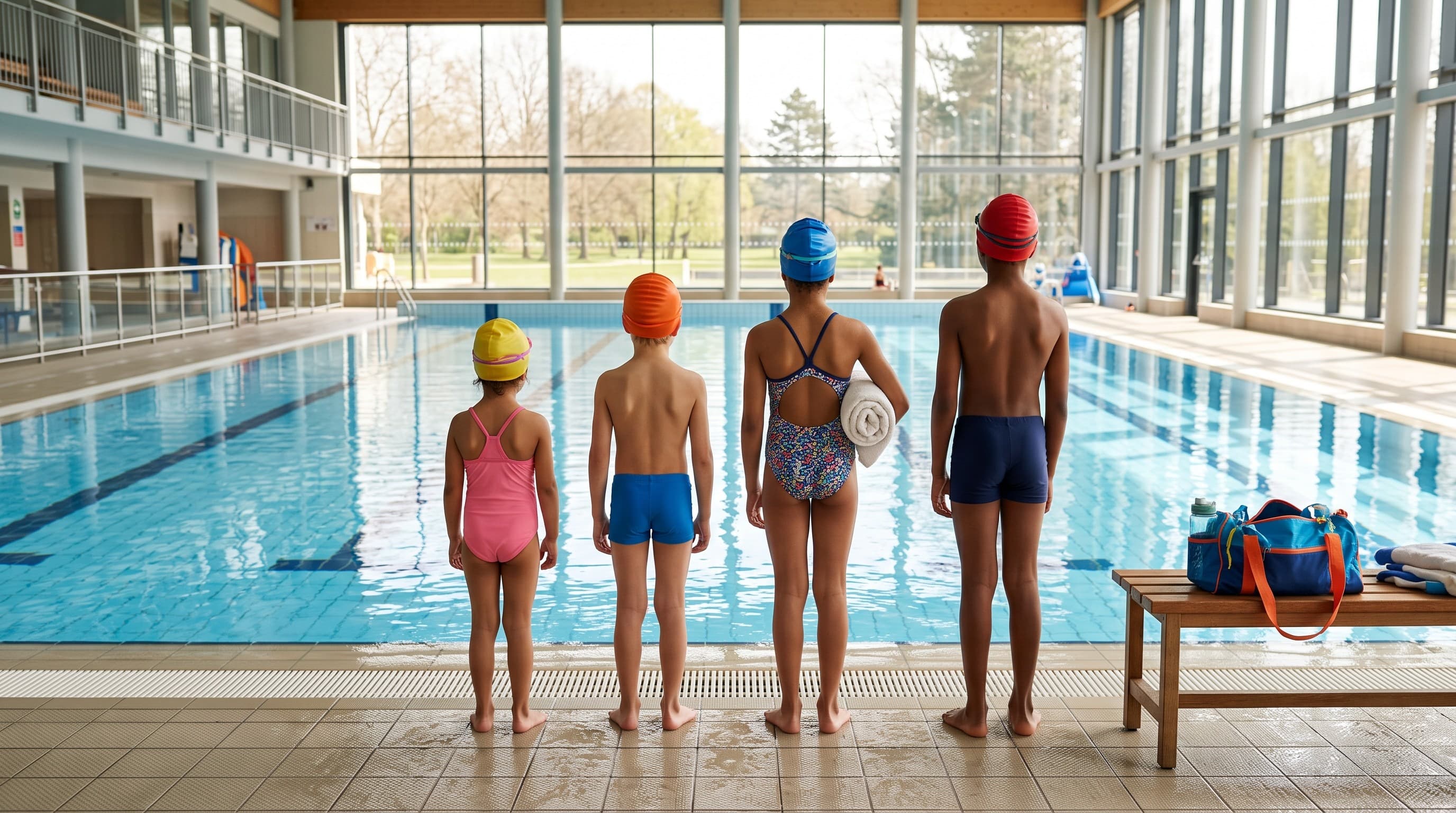
Swimwear and Swim Diapers for Your Child: What to Watch for at Swim Lessons?
Swimwear, swim diapers, and swim caps for your child at swim lessons: what works in the water, what to look for when fitting, and how to care for hair and skin after the lesson.
Discover Swimmigo
The all-in-one app for swimming lesson progress. For parents, swim schools, and adult swimmers.