CompleteOverviewofSwimmingAidsandBuoyancyDevices:SafeChoicesforEveryAge[2026]
![Complete Overview of Swimming Aids and Buoyancy Devices: Safe Choices for Every Age [2026]](/_next/image?url=https%3A%2F%2Fzvblogpostimages.s3.eu-west-3.amazonaws.com%2FAUTOMATISCH_UPLOAD%2F1_5ec9b9ca0b61.jpg&w=3840&q=75&dpl=dpl_FEcJLWFaZFj4CsT2F159aPzMcoRK)
Summary
- Only a life jacket is a real rescue device; swim wings and swim rings are buoyancy aids.
- No swimming aid replaces your supervision; always stay within arm’s reach of a child who cannot swim.
- The choice depends on age and swimming level, not on what’s on sale.
- A swim ring is a toy and a swim vest is not a life jacket; learn the difference.
- Let your child also experience how it feels without buoyancy aids to prevent a false sense of security.
You’re standing in front of the swimming gear shelf and it’s all a bit overwhelming. Swim wings, floaties, puddle jumpers, swim vests, life jackets, swim collars. Everything promises to keep your child safe in the water, but there’s a big difference between buoyancy aids and devices that truly protect against drowning.
This confusion is understandable because many of these products look alike. Still, the safety of your child depends on which aid you choose and when. One thing is clear: almost no swimming aid is a rescue device. Only a life jacket is designed to prevent drowning, and even that never replaces your supervision.
This issue is global. The World Health Organization reports about 300,000 drownings worldwide annually, with children under five making up nearly a quarter. Parents everywhere face the same choices at the pool, from the Netherlands to Spain. I’ll list all swimming aids for you, by age, with the risks you need to know.
The Basic Rule That Simplifies Everything
One rule cuts through all confusion: no swimming aid replaces your supervision. Not one. VeiligheidNL and Kind en Gezin are equally clear: stay within arm’s reach of a child who cannot swim yet, no matter what aid they wear.
Drowning happens silently and quickly. Kind en Gezin warns it can occur in less than twenty seconds, without splashing or shouting. A buoyancy aid gives your child flotation, not protection. Keep that distinction sharp and the rest of this overview becomes much easier.
All Swimming Aids at a Glance
Below you’ll find the main aids you encounter in stores, what they do, and who they’re for. The table summarizes it, then I’ll go through each aid separately.
| Aid | For Whom | What It Does | Main Risk or Limitation |
|---|---|---|---|
| Swim Collar | Babies | Inflatable ring around the neck, keeps head above water | Use only under direct supervision |
| Swim Seat | Babies and young toddlers | Inflatable band with seat to get used to water | Can tip over, test stability first |
| Swim Wings | Children who cannot swim yet | Bands on the arms that keep the head above water | Not a rescue device, can leak |
| Swimsuit with Floaters | Children learning to swim | Swimsuit with floaters on back, chest, and collar, keeps child horizontal | Not a rescue device, stay close |
| Puddle Jumper | Children who cannot swim yet | Foam vest with arm bands, cannot leak, hard to remove by child | Can give a false sense of security |
| Swim Cork | During swim lessons | Foam belt around hips for exercises | Not recommended outside lessons |
| Swim Ring | Children who can already swim | Inflatable ring around the waist, for playing | Toy, not an aid, child can slip out |
| Life Jacket | Everyone, including non-swimmers | Vest with collar that turns wearer onto back, prevents drowning | Not for shallow water where ground is reachable |
| Swim Vest | Children who can already swim | Buoyancy aid without the turning function of a life jacket | Not a rescue device, does not turn wearer onto back |
The Swim Collar for Babies
The swim collar is an inflatable ring that fits around a baby’s neck. This allows a baby to splash freely in the bath or pool while keeping their head above water. VeiligheidNL emphasizes you must always stay close, even if the collar seems secure.
The Swim Seat to Get Used to Water
A swim seat is an inflatable band with a plastic seat where a child can sit loosely. It’s intended to help small children get used to water. Note: a swim seat can tip over, so test its stability the first time before letting your child play in it.
Swim Wings, the Safe Standard Choice
Swim wings, also called floaties, are the most well-known choice. They are inflatable or foam bands worn on the arms. Because they sit high on the body, they keep your child’s head above water. VeiligheidNL recommends swim wings when going to the pool or a lake with a child who cannot swim yet.
Still, swim wings are not rescue devices. They can leak or shift. Kind en Gezin advises choosing bands with multiple air chambers so that one leak does not deflate the entire band. Check the seams for wear before each use.
The Swimsuit with Floaters
A swimsuit with built-in floaters on the back and chest, plus a floating collar, automatically puts a child in a horizontal position once they start kicking. This makes it suitable for children just learning to swim. For children who cannot kick yet, swim wings are a better choice.
The Puddle Jumper, Popular but Not Perfect
Puddle jumpers are foam vests with built-in arm bands. Their biggest advantage: the foam cannot leak and children find them hard to remove themselves due to the buckle on the back. VeiligheidNL sees the benefits but repeats the same advice as for all other aids: always stay with your child.
The Swim Cork During Swim Lessons
The swim cork is a foam or plastic belt worn around the hips. It’s fine for exercises during swim lessons, but VeiligheidNL advises against using it outside lessons. It provides less stability than arm bands and is meant for guided lessons, not free play.
The Swim Ring Is a Toy, Not an Aid
This is the pitfall many parents fall into. An inflatable swim ring around the waist is a toy, not an aid. A child can easily slip out or get stuck if the ring is too tight and then cannot stay upright. If your child cannot swim well yet, always combine the swim ring with swim wings.
The Life Jacket, the Only Real Rescue Device
A life jacket is fundamentally different. It is a vest with a collar that turns a drowning person onto their back, keeping mouth and nose above water. Even an unconscious person cannot drown with it. This is the only aid that truly prevents drowning, and you can buy it for babies from two to three months old.
Note: a life jacket does not work in shallow water where a child can touch the bottom, because it cannot turn them onto their back there. And never buy a life jacket to grow into; it must fit well to function properly.
The Swim Vest Is NOT a Life Jacket
This distinction is crucial and often overlooked. A swim vest does not have the ability to turn someone onto their back, warns Kinderveiligheid.nl. Only put a swim vest on a child who can already swim and is in sheltered water where help is nearby. On a boat, always use a real life jacket.
The False Sense of Security
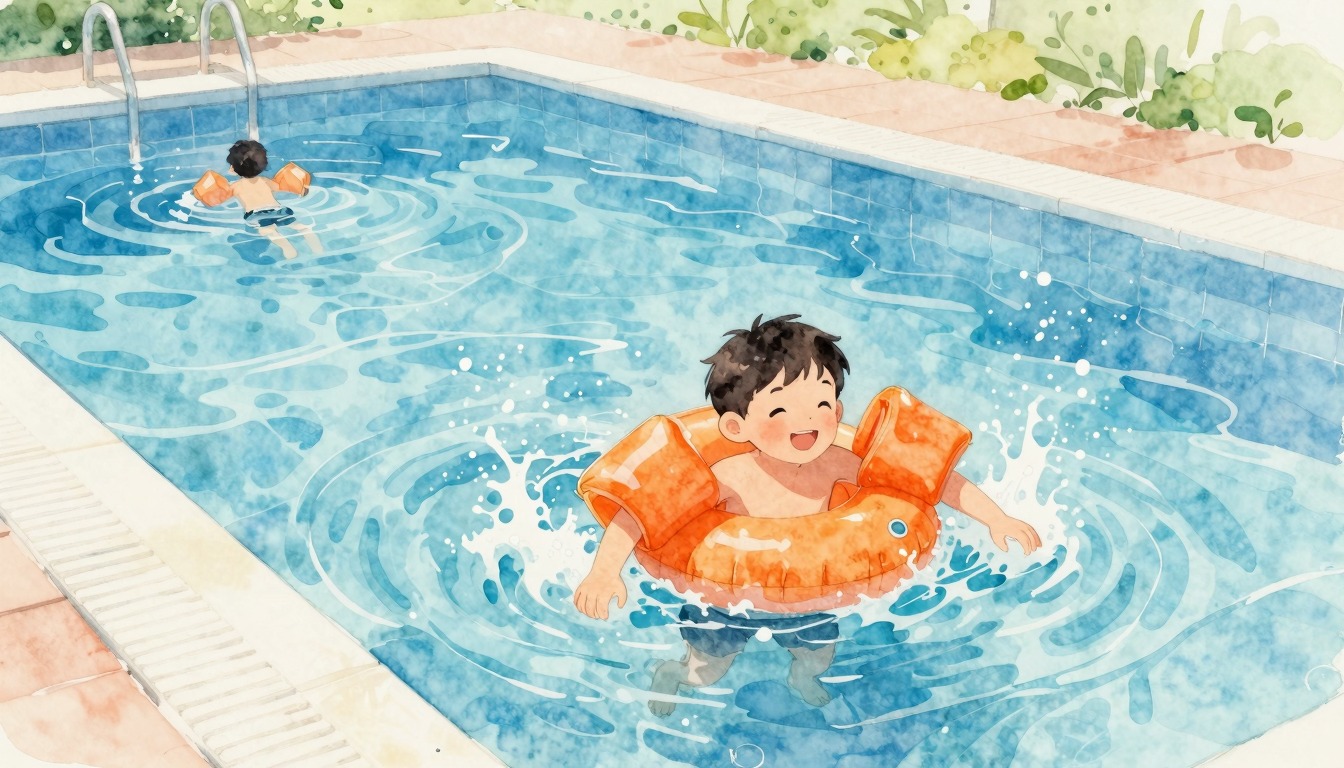
This is the real danger of swimming aids, and a topic parents discuss a lot online. Kind en Gezin calls it by name: swim bands can give a false sense of security. A child used to buoyancy aids may think they can swim and jump into the water without thinking as soon as the bands come off.
Inflatable bands can also break and deflate, so they are never 100% reliable. In open water with currents or strong wind, a child with swim bands can quickly drift away. That’s why experts advise a double approach: use the right aids AND let your child occasionally experience how it feels to be in the water without buoyancy aids. Only then do they learn that floating is not automatic.
By Age: What Your Child Needs When
The choice depends on age and swimming ability, not on what happens to be on sale. Below is a practical overview.
Babies up to 1 Year
For the very youngest, the goal is water familiarization, not learning to swim. A swim collar or a well-tested swim seat helps with that, always under direct supervision. Kind en Gezin even advises against swimming with babies under twelve months in public pools due to infection risks and chlorine fumes. Getting used to water at home in the bath is often the safest first step at this age.
Toddlers from 1 to 3 Years
From about one year, water familiarization and baby swimming are possible, provided the pool is clean and controlled. Swim wings or a swimsuit with floaters are suitable choices. Stay within arm’s reach, as toddlers have no sense of danger.
Preschoolers from 4 to 6 Years
From about four years, a child can really learn swimming technique, writes Kind en Gezin. This is also the age when most children start swim lessons. Swim wings or a puddle jumper are fine for free play, but during lessons follow the swim school’s instructions.
Children Who Can Already Swim
Once a child can swim a distance without help and float independently, most buoyancy aids can be removed. A swim vest or swim ring then is just for fun, in sheltered water. For open water or boats, a life jacket remains the standard, no matter how well your child swims.
Safe in Any Water, in Any Country
The same rules apply wherever you swim. Whether you’re at a Dutch lake, the Mediterranean Sea, or a pool in Germany: a buoyancy aid is never a rescue device and supervision remains the first line of defense. The WHO emphasizes that basic swimming skills and water safety save lives worldwide. Investing in swim lessons and water safety prevents hundreds of thousands of child deaths in the coming decades, in every country and regardless of how swim education is organized there.
That’s also why Swimmigo is multilingual. The app works in five languages so a family that moves or travels can continue to follow swim lesson progress. Water safety is not a local matter; it’s a universal principle.
Swimming Aids During the Swim Lesson Itself
During swim lessons, instructors often use the swim cork or a kickboard, but they decide that, not you. Don’t bring your own swim wings to the lesson; they can interfere with the exercises. The swim school follows a progression suited to your child’s level, and that progression is more important than any aid.
When Can the Aid Come Off?
That’s the question every parent wonders about, and the answer lies in your child’s progress. Those who track which skills a child has mastered see exactly when it’s time to leave swim wings behind. That’s where a student tracking system comes in. Swimmigo divides swim lessons into seven levels, from Red to Gold, with a total of 86 skills. This way, as a parent, you see in real time where your child stands and when they’re ready for the next step without buoyancy aids.
A few signs your child is ready: they float independently on their back, swim a full pool length without stopping, and reach for the edge themselves if needed. As long as your child becomes anxious when the bands come off or immediately sinks, it’s too early. When in doubt, ask the swim instructor, who sees your child weekly in the water and can best assess if that step is responsible.
How Swimmigo Helps You
Swimmigo is a free app that brings swim lesson progress, planning, and parent communication together in one place, available in five languages. For you as a parent, it means you no longer have to guess how far your child is. You see per exercise what your child can already do, get a push notification when they level up, and receive a free swim certificate per level. For instructors, there’s the same app with groups, scores per level, and digital logbooks.
Especially when phasing out swimming aids, that insight is invaluable. You see from the levels when your child can truly float independently, instead of relying on a feeling. Learn more about what the app can do on the features page, and for parents everything is neatly summarized.
Conclusion
Choose your swimming aid consciously and by age, not because it looks cute. Remember that only a life jacket truly protects against drowning, and no aid replaces your supervision. Also teach your child how it feels without buoyancy aids, and let go of the aid as soon as progress allows.
Sources
- World Health Organization (WHO): Drowning fact sheet, accessed August 2026
- VeiligheidNL: Swimming aids for children, last updated June 16, 2026
- Kind en Gezin: Safe in and around water, accessed August 2026
- Kinderveiligheid.nl: Safe swimming aids for children, accessed August 2026

Bob van Soest
As an expert in operating sports facilities (such as swimming pools) and developer of, among others, Swimmigo.com, I am passionately committed to making swimming lessons simpler, more fun and more insightful for parents, swimming instructors and everyone who wants to learn to swim.
Frequently Asked Questions
Discover Swimmigo
The all-in-one app for swimming lesson progress. For parents, swim schools, and adult swimmers.