Help,mychildwantstoquitswimminglessons:howtobreakthemotivationdipasaparent[2026]
![Help, my child wants to quit swimming lessons: how to break the motivation dip as a parent [2026]](/_next/image?url=https%3A%2F%2Fzvblogpostimages.s3.eu-west-3.amazonaws.com%2FAUTOMATISCH_UPLOAD%2F1_18565defe386.jpg&w=3840&q=75&dpl=dpl_8HBmXj8pyjjziKcbXKHvXrtJMU4a)
Summary
- Your child says "I don't want to go to swimming lessons anymore"? You are not alone: motivation dips are normal and occur in most children during the swimming lesson journey
- Uncovering the real reason (fear, boredom, social pressure, or fatigue) is step one, and often different from what your child says
- Swimmigo makes swimming lesson progress visible: when your child sees which skills they have mastered and what the next step is, motivation often recovers naturally
- Collaborating with the swim instructor and setting small, achievable goals are proven more effective than pushing or punishing
- Finishing swimming lessons is not a luxury but a necessity: nearly a quarter million people drown worldwide annually, and swimming lessons are the most effective prevention
Help, your child wants to quit swimming lessons
Your heart sinks when your child shouts for the third time this week: "I don't want to go to swimming lessons!" You have invested months in lessons, you know how important water safety is, and honestly: you don't want your child to give up just when they are almost able to swim. But how do you respond at this moment? Push or pause? Be strict or show understanding?
You are not alone. Worldwide, millions of parents struggle with exactly the same question. Dutch research shows that motivation problems in swimming lessons are more the rule than the exception: the way swim instructors teach plays a crucial role in how motivated children remain (Van der Sleen et al., 2023). This blog helps you step by step through the motivation dip, with concrete strategies that really work, no matter what language or country you live in.
Why do children want to quit swimming lessons?
The six hidden reasons behind "I don't want to anymore"
Children rarely say exactly what is going on. "I don't want to anymore" can mean anything: from pure fatigue to deeper fear. The key to the solution lies in uncovering the real cause. Researchers identify six main causes that recur worldwide, from the Netherlands to the United States and Australia.
Fear of water: more than just being scared
Fear of water is the most underestimated reason why children want to quit. It is often not about panicky fear, but a lingering discomfort: the strange acoustics of a pool, the cold first touch of water, or a previous unpleasant experience that you as a parent may not even have noticed. The Reddingsbrigade Nederland emphasizes that water fear in children is often underestimated and that patience is the only way.
Boredom and repetition: when every lesson feels the same
Swimming lessons consist of repetition, and that is exactly the point. But for a 6 or 7-year-old child, practicing the breaststroke for the hundredth time feels like a drag. Especially children who learn quickly experience the repetition as boring, while they are not yet ready for the next level. This is where insight into progress makes a difference.
Social dynamics: peer pressure in the pool
In a swimming lesson group, children have different levels, ages, and personalities. A quieter child can feel overwhelmed by louder peers. Conversely, a child who learns faster can feel frustrated that the group is "too slow." This social tension is a worldwide phenomenon: a survey among Dutch swim instructors (Frontiers in Sports and Active Living, 2023) shows that 70% of instructors worry about their students' motivation.
Physical exhaustion: swimming is harder than you think
A half-hour swimming lesson is physically comparable for a young child to an hour of intense dry-land exercise. Add a long school day and you have a completely exhausted child. The Zwembadbranche advises parents to seriously reconsider the timing of the swimming lesson: a morning lesson on the weekend can work wonders for a child who is too tired during the week.
Fear of failure and perfectionism: the bar is set too high
Some children put invisible pressure on themselves. They see other children who are "further," or they feel the expectation of parents asking "when will you get your diploma?" This performance pressure backfires. Children who feel they are failing prefer to quit altogether rather than be "bad."
Cognitive overload after a school day
A swimming lesson demands a lot from a child's brain: understanding instructions, coordinating motor skills, all in an unusual environment with many stimuli. After a full school day, the cognitive tank is simply empty. Child psychologists worldwide recognize this pattern: an overstimulated child cannot learn, and a child who cannot learn wants to quit.
Step 1: Uncover the real cause
How to have the conversation without applying pressure?
Don't ask "why don't you want to go to swimming lessons?" but use open questions: "What was the most fun part of swimming lessons today? And what was the least fun?" Listen without judgment. Children can sense whether you are truly curious or already have an answer ready. The Goldfish Swim School, with locations in the US and Canada, advises parents to first find the real reason before deciding: in 80% of cases, the reason is not what you think.
Recognize signals your child does not verbalize
Pay attention to behavior around the swimming lesson, not just during. Does your child become quiet in the car on the way to the pool? Complain about stomach aches on swimming lesson days? Sleep worse the night before? These are all signals that say more than words. Write them down for a week: patterns become visible that you miss in the moment.
Involve the swim instructor as an ally
The swim instructor sees your child in a context you do not see. Request a short conversation: how does your child behave in the group? Which exercises go well, which do not? Is there a difference between the start and end of the lesson? A good instructor recognizes the patterns and wants just as much as you do for your child to keep coming happily.
Step 2: Concrete strategies to restore motivation
Make progress visible with Swimmigo
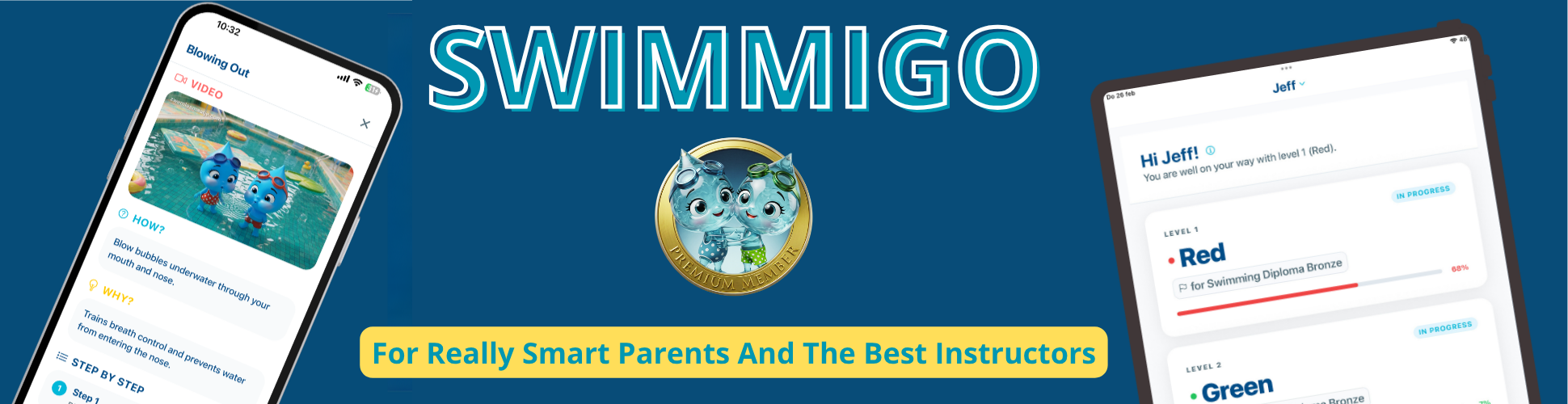
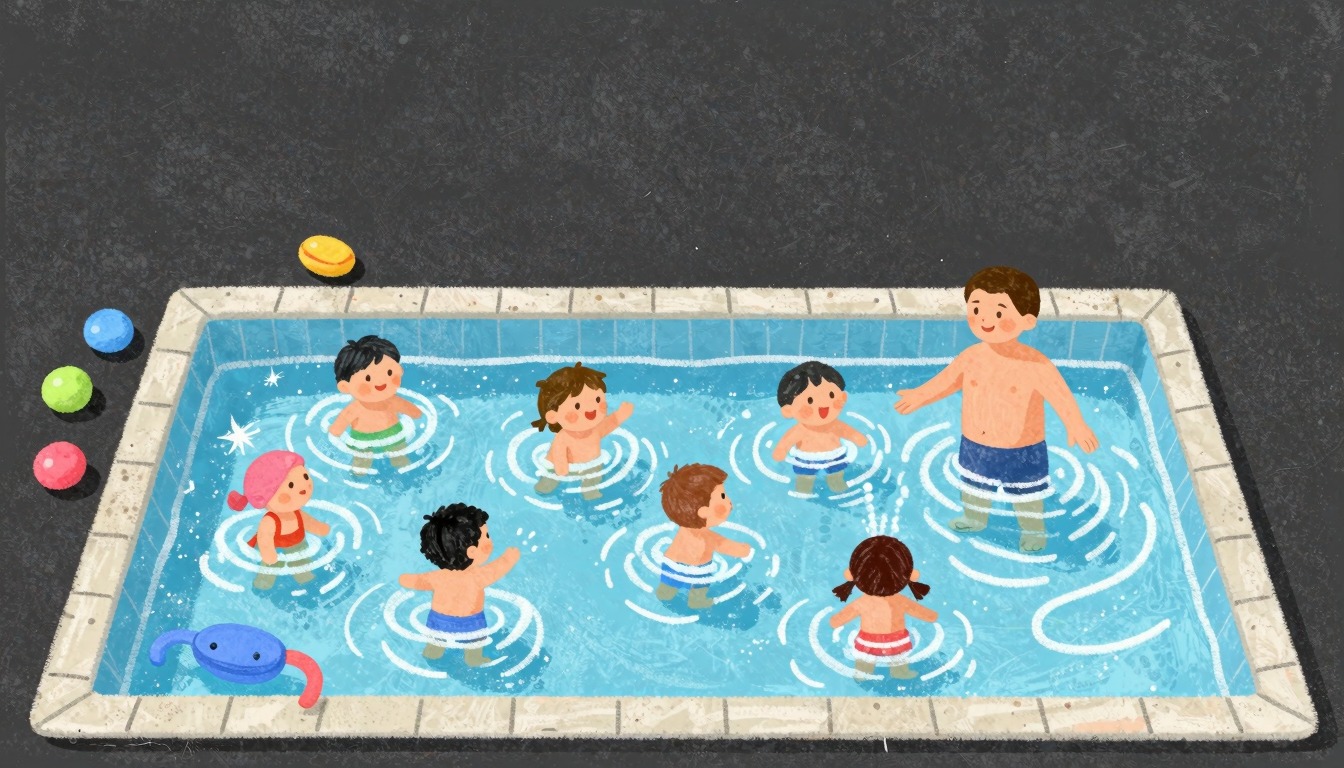
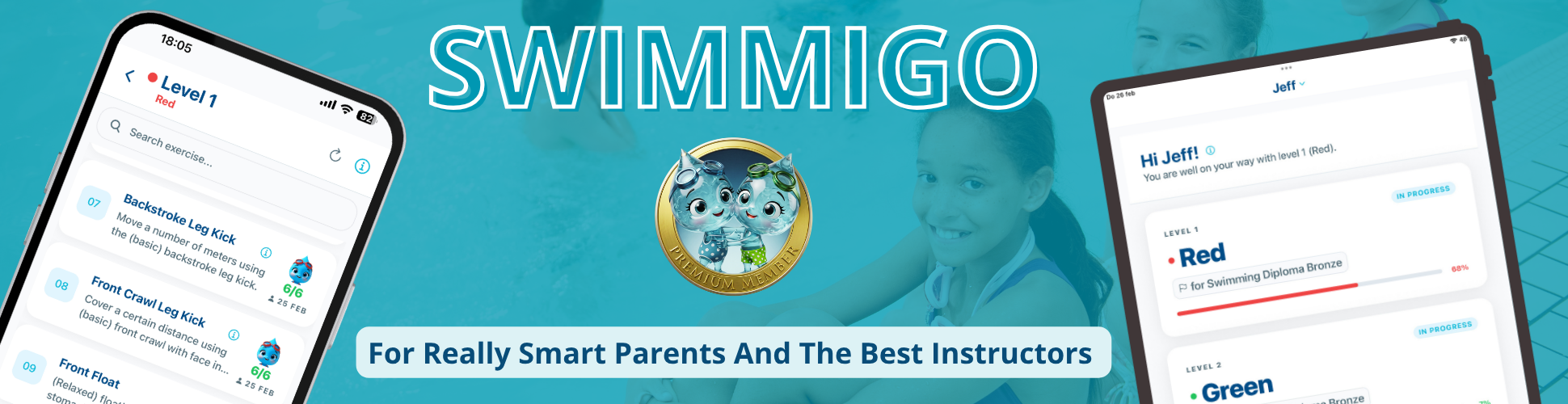
Children hate the unknown. "When will I be done?" is the question hidden under every "I don't want to anymore." Swimmigo, available in 5 languages, gives you and your child real-time insight into swimming lesson progress. Every mastered skill becomes visible, from "face in the water" to "backstroke 25 meters." When your child sees that there is progress, even if slow, the mindset shifts from "I can't do it" to "I'm almost there."
Set micro-goals instead of end goals
"Getting your A diploma" is an abstract, infinitely far goal for a 5-year-old. Better: "This month you will learn to kick for 5 seconds." Micro-goals provide quick success experiences and keep the brain motivated. This approach works worldwide: from the Dutch Zwem-ABC to the Australian Swim and Survive program, small milestones are proven more effective than large end goals.
Build a reward system that is not about money
Material rewards work short term, intrinsic motivation works long term. Let your child place a sticker on a swimming lesson poster after every 3 lessons. Not as a "reward" but as visual proof of perseverance. After 10 stickers? Then your child chooses what you do on the weekend. The feeling of control and autonomy is what truly motivates.
Plan a "fun swim" between lessons
Swimming lessons are serious. Fun is the fuel. Go free swimming with your child once every two weeks, without instructions, without corrections. Let your child be in charge: "Today you decide what we do in the water." This restores the association "pool = fun" that may have been lost during structured lessons.
Enlist a buddy: swimming together is more fun
Ask if a friend can come along to free swimming once. Or check if there is a buddy in the swimming lesson group your child can team up with. Social connection is one of the strongest motivators there is. The same Dutch motivation research shows that children who feel connected to their swim instructor and fellow students remain significantly more motivated.
Consider a short break (and how long is wise?)
A break of two to four weeks can work wonders, provided you keep the water fun alive. The pitfall: a break longer than six weeks leads to skill loss and only raises the threshold to return. Agree on a concrete return date, put it in the calendar, and keep swimming informally in between. Swimmigo can help you track which skills were mastered before the break, so you know exactly where to continue upon return.
Step 3: When is quitting the right choice?
The difference between a dip and structural resistance
A motivation dip usually lasts two to six weeks and has an identifiable cause. Structural resistance is different: if your child has been reluctantly attending every lesson for months, with tears or physical complaints, it is time to seriously reconsider. Never force. A traumatized child does not learn to swim; they develop a lifelong aversion to water. The World Health Organization reports that nearly a quarter million people drown worldwide annually, of which children under 15 make up 43%. Swimming lessons are therefore not a luxury but a life-saving skill. But coercion is never the solution.
Alternatives: different swim school, different instructor, different time
Sometimes "quitting" actually means "quitting this lesson." A different instructor with a different style can make the difference between reluctance and enthusiasm. A different time (morning versus afternoon) can make the difference between an exhausted and an energetic child. And sometimes a different swim school with a different teaching method is exactly what is needed. Don't give up before you have tested these three variables.
Conclusion
A child who wants to quit swimming lessons is not an exception but the rule. Motivation is not a straight line upward but a wave, and that is normal. What matters is how you as a parent respond: with curiosity instead of frustration, with small goals instead of big demands, and with tools like Swimmigo that make progress visible. Because ultimately, swimming lessons are not about the diploma on the wall, but about a child who is safe in the water, in every pool, in every sea, in every country in the world.
Want to know more about how Swimmigo can help your swim school or family? Check out our parent page or discover the instructor page. Curious how the levels and skills work exactly? Check our levels overview.
Sources
- WHO: Drowning Fact Sheet, 2024
- Van der Sleen et al.: Intrinsic motivation in Dutch swimming lessons, Frontiers in Sports and Active Living, 2023
- Frontiers: Swimming lessons often discourage kids from just having fun in the pool, 2023
- US Swim School Association: Learning to Swim is Essential, 2024
- Goldfish Swim School: 4 Reasons Not to Let Your Child Quit Swim Lessons, 2024
- Zwembadbranche: Child doesn't want to go to swimming lessons? 4 deeper insights and tips, 2025
- Reddingsbrigade Nederland: Water safety and swim education, 2025
- CDC: Global Drowning Prevention, 2024
- NRZ: National Council for Swimming Safety, 2025

Bob van Soest
As an expert in operating sports facilities (such as swimming pools) and developer of, among others, Swimmigo.com, I am passionately committed to making swimming lessons simpler, more fun and more insightful for parents, swimming instructors and everyone who wants to learn to swim.
Frequently Asked Questions
Related articles
Best Age to Start Swimming Lessons
Discover practical tips to determine the right age for swimming lessons and prepare your child well.

Recognizing Early Signs of Dropout in Swimming Lessons
Learn practical ways to recognize and prevent early dropout in swimming lessons for better progress and safety.
![Language Barrier in Swimming Lessons: How Expat Parents Stay Involved in Their Child’s Swimming Progress [2026]](/_next/image?url=https%3A%2F%2Fzvblogpostimages.s3.eu-west-3.amazonaws.com%2FAUTOMATISCH_UPLOAD%2F1_11cf99860af9.jpg&w=3840&q=75&dpl=dpl_8HBmXj8pyjjziKcbXKHvXrtJMU4a)
Language Barrier in Swimming Lessons: How Expat Parents Stay Involved in Their Child’s Swimming Progress [2026]
Expat parents miss crucial updates about their child’s swimming progress due to language barriers. Discover how multilingual tools make your child safer and give you peace of mind.
Discover Swimmigo
The all-in-one app for swimming lesson progress. For parents, swim schools, and adult swimmers.