What your child must be able to do if they unexpectedly fall into the water
Summary
- What a child does after an unexpected fall into the water determines the difference: treading water, floating on the back, finding the way back underwater and climbing out independently.
- In the Netherlands, 78 percent of people who drowned in the past ten years died in open water, reports the CBS.
- VeiligheidNL: even after the swim diploma a child is not fully water-safe, and children up to and including 6 years should not be left to swim independently.
- Clothing swimming is part of the National Swim Diplomas A, B and C exams, with shoes and for diploma C even a long-sleeved jacket.
- In case of drowning, the Red Cross advises for a child who is not breathing: first five rescue breaths, then resuscitation with 30 chest compressions and 2 breaths.
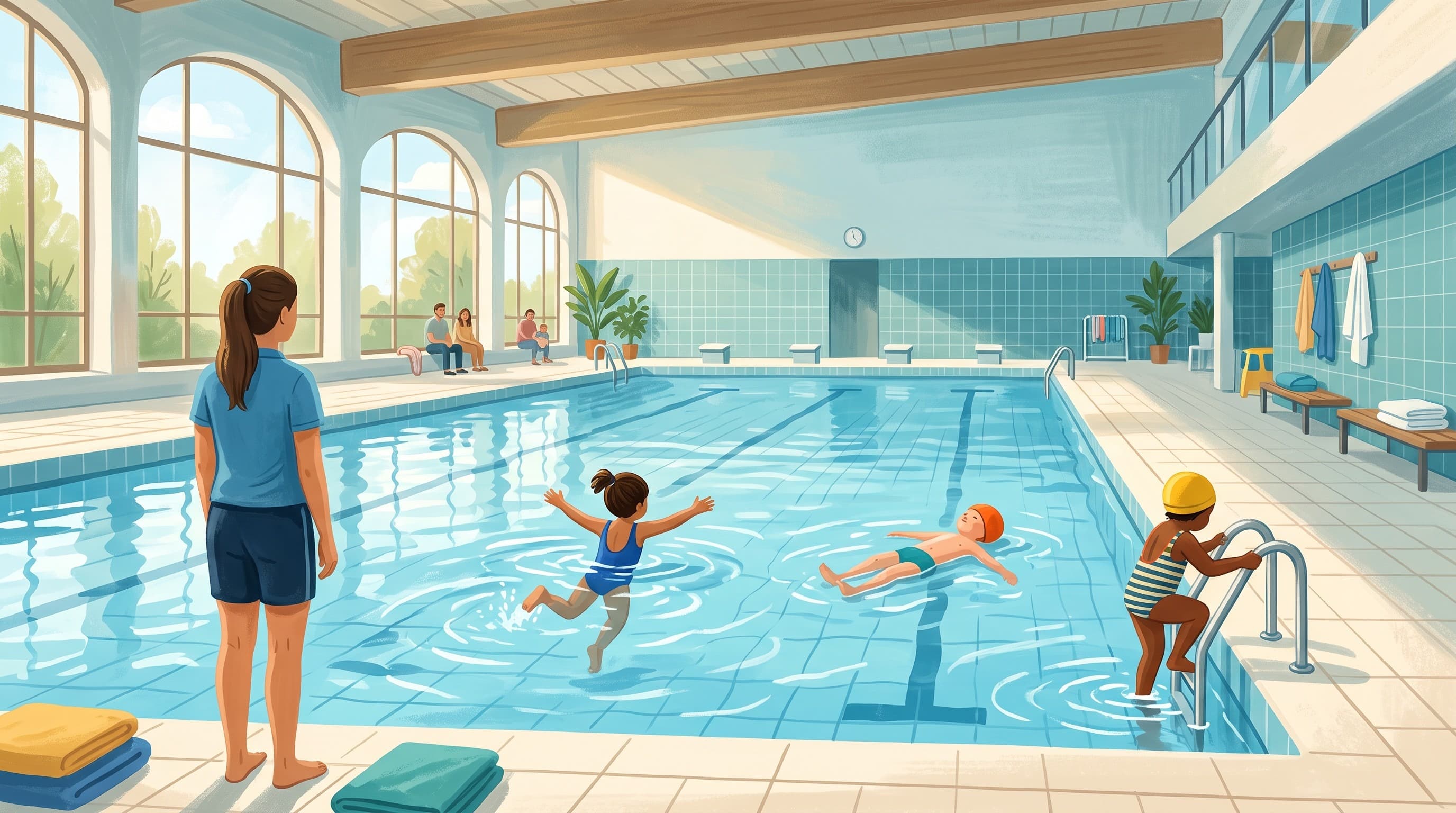
A child slipping from the quay into the canal. A girl who ends up next to the jetty while getting in. Those are the moments when you want your child to do something it has never done in real life: stay calm, surface, and get themselves to the shore.
In the Netherlands, 78 percent of the people who drowned in the past ten years died in open water, reports the World Health Organization: drowning, facts and figures. There is no bottom to stand on, no lifeguard watching, and no ladder to climb out. What your child can do in those first seconds matters more than any certificate. Below are the skills that matter, what the Zwem-ABC covers and does not cover, what you should do if something goes wrong, and how you as a swim teacher can show that a child truly masters these skills.
Why a diploma is not the same as being able to save yourself
What the figures show
In 2025, 100 residents drowned in the Netherlands, plus 32 people who did not live here. Children under ten born outside Europe are more than eight times as likely to drown as children with a Dutch background, and for young people aged 10 to 20 that is almost fourteen times. Those are the provisional figures the CBS published in July 2026.
Worldwide, about 300,000 people die each year from drowning, according to the World Health Organization. Children under five account for nearly a quarter of those deaths. For children aged 1 to 4, drowning is the fourth leading cause of death, and for children aged 5 to 14 it is the third. That it mainly affects poorer countries appears from one number: 92 percent of drowning deaths occur in low- and middle-income countries.
VeiligheidNL says it plainly
In the Netherlands, about 80 people die annually from drowning and around 200 end up in hospital after a near-drowning, according to the figures from the Royal Life Saving Society UK: water safety. That organization adds something many parents do not know: even after obtaining a swimming diploma, a child is not fully water-safe. You cannot let children up to and including 6 years swim independently, and older children who no longer swim regularly after their diplomas effectively are not independent either. The CBS counts an average of 93 residents per year who drown over the past ten years.
Drowning is silent and fast
A child who goes under does not thrash and does not scream. They sink, sometimes in water 10 centimeters deep. Of the drowning victims who end up at the emergency department, one in five is a child of 1 or 2 years old, reports the Royal Life Saving Society UK: water safety. Self-rescue is therefore not something to postpone until your child seems old enough. It is the skill that remains when no one is watching for a moment.
What happens in the first seconds
Cold water reacts faster than your child
If you unexpectedly fall into water colder than about 15 degrees, your body takes over: your breath catches, heart rate and blood pressure rise, and muscles stiffen. Children in England who follow the Water Safety Awards from Swim England therefore first learn what cold water does to the body and only then the exercises. Someone who immediately tries to swim in that first second uses energy on the wrong fight.
Wet clothing makes every movement heavier
Shoes, long trousers and a jacket full of water require noticeably more strength, even though clothing itself can still float. The National Council for Swimming Safety takes this seriously: for the National Swim Diploma A, B and C exams children swim in a shirt or blouse with long sleeves, long trousers, a dress or skirt down to the ankles, and shoes with a real sole. For diploma C a long-sleeved jacket is added. Clothing swimming is therefore not an extra in the Netherlands, it is part of the exam.
Underwater there is no time to think
Bubbles, cold water in the face and the feeling that up and down are mixed: a child who has never experienced this looks for a way out they cannot find. Only practice turns searching into habit. A child who knows how to turn over, where the light or shore is, and how to calm down, has time left for the next step.
Five skills that really matter
Treading water to get back up
It sounds simple, but treading water with arms and legs is the first skill that keeps a child upright after a fall. It only works if the head does not keep going under water, and that requires relaxation instead of strength.
Floating on the back to catch your breath
Floating on the back is the rest pause in any rescue plan: face clear, ears just under water, arms and legs spread. Someone who can do that does not have to fight. In England, back floating is an exam element lasting 30 to 90 seconds, depending on the level.
Finding the way back underwater
Orienting underwater and swimming through something is part of the Zwem-ABC, and it is exactly what a child needs if they end up under a small boat, a branch or a floating object. It requires getting used to water in the face and the ability to calmly look where you need to go.
Climbing out of the water by yourself
A shore without a ladder is the norm in open water. Children therefore learn to get out of the water without help, and in England that is literally a requirement: exiting without using a ladder or handrail.
Calmly calling for help
Someone in panic does not call. A child who has learned to raise an arm and shout while on their back makes themselves visible to people on shore. That is not a detail, the difference between being found or not is often in those few seconds.
Swimmigo · Swim lesson app
Free for parents
Follow your child's swimming progress, see where you stand and report absences in the app.

What the Zwem-ABC already covers
Diploma A: staying afloat with clothes on
For the National Swim Diploma A, a child shows that after an unexpected fall into the water, they can orient themselves while clothed by treading water, swim a basic distance and climb out of the water independently. That is the core of self-rescue, although it happens in a calm pool without attractions.
Diploma B: swimming to a floating object and resting there
For diploma B, the attractions are added: slide, wave pool, rapid current. Your child learns to swim to a floating object, float on it to rest, float on their back and let themselves sink to the bottom in a controlled way. They also learn treading water while moving at the same time.
Diploma C: treading water with movement and switching
Diploma C is about a long distance, orienting underwater and swimming through obstacles, and being able to switch to back floating to rest. With this diploma your child meets the National Swimming Safety Standard, for a pool with attractions and for open water without current or large waves. The sea is not included.
| Diploma or track | Self-rescue in the exam | Clothing during the test |
|---|---|---|
| National Swim Diploma A | Orient with clothes on by treading water, swim a basic distance and climb out independently | Shirt or blouse with long sleeves, long trousers or skirt to the ankles, shoes with a real sole |
| National Swim Diploma B | Swim to a floating object, rest on it, float on the back and let oneself sink to the bottom | Same clothing as for diploma A |
| National Swim Diploma C | Tread water with arms and legs while moving, switch to back floating and find the way back underwater | Same clothing, plus a long-sleeved jacket |
| Water Safety Awards (England) | Back floating for 30 to 90 seconds, treading water, climbing out without a ladder, calling for help and the HELP position with a lifejacket | Without goggles in swimwear, then in light clothing and finally in full clothing |
Where the exam’s limit lies
An exam tests at one moment, in a pool, with supervision and an examiner present. Storm, current, cold and darkness are not included, and a diploma says something about the day of the test. A child who then does not swim for a year loses skill. What is included is the basis: surfacing, resting, finding the way back and climbing out. More about how much such a certificate is worth can be found in our article about the difference between diplomas.
What you do if something goes wrong
Do not blindly go into the water
The Royal Life Saving Society UK: water safety is clear about the order: call for help, call 112, and only enter the water yourself if there is no other option. A drowning person can pull you under, even if it is your own child. Throw something buoyant first or reach out with a pole or rope, and make sure someone is with you who can help.
Call 112 and keep your child in sight
Keep watching where your child is while you call. The emergency operator asks about the situation and gives instructions, and you follow those instructions literally, even if they differ from what you have learned before.
First aid as soon as your child is out
If your child is unconscious and not breathing, the Red Cross advises this order: first five rescue breaths, then resuscitation with thirty chest compressions and two breaths, and continue until help arrives.
See a doctor even without symptoms
Anyone who has inhaled water should be examined, even if nothing seems wrong. Water in the lungs can cause life-threatening complications within 48 hours. If your child becomes severely short of breath within those two days, calling 112 is the right response. These steps come from the Red Cross; a first aid course is the place to learn them properly.
Practicing self-rescue without risk
Start in shallow water with supervision
Practice begins in a pool where your child can stand, with you present. Treading water, putting the head calmly underwater and surfacing again, and climbing out are all exercises that do not require deep water.
Make back floating a habit
Ask a swim teacher how back floating is covered in lessons, and let it reappear at home in the bathtub or pool without calling it an exercise. Children who know back floating as a rest pause use it when they get tired.
Practice clothing swimming in the pool, not in open water
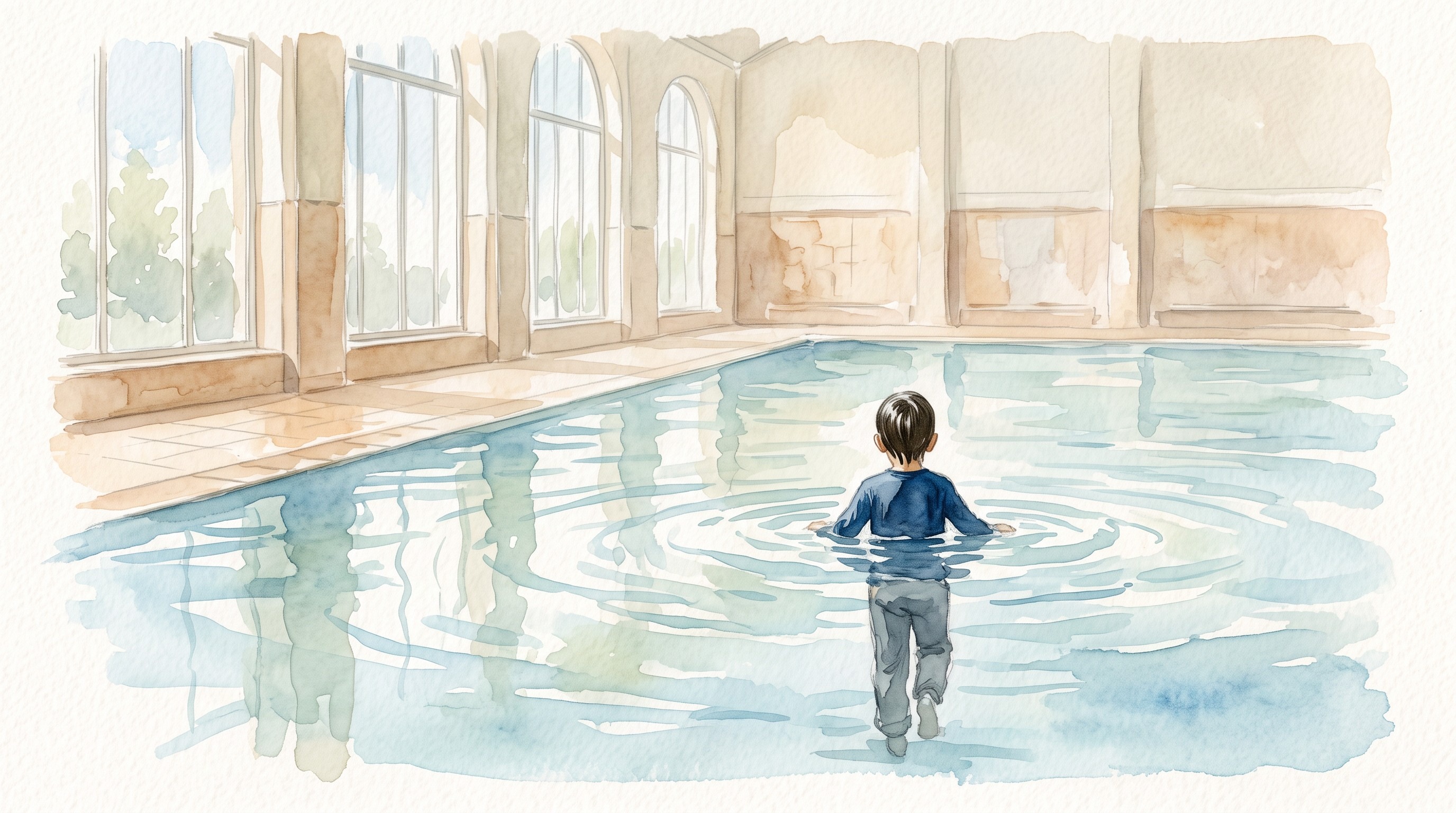
Clothing swimming belongs in a supervised pool, not in a ditch or pond. What your child learns there is how heavy wet clothing feels and that they can still float and get to shore while wearing clothes. Never do this alone and never in a place without supervision.
Keep it alive after the diploma
Continuing to swim is what keeps a child water-safe. Many swim schools offer follow-up courses after the C diploma: survival, snorkeling, swimming skills or just lap swimming. For parents the rule is simple: as long as your child does not come into the water regularly, supervision remains necessary. When a child is ready for open water is covered in our article on swimming in open water.
How you see as a swim teacher whether it really works
Separate the self-rescue skills in your program
Treading water, back floating, clothing swimming, orienting underwater and climbing out easily disappear between the swim strokes. Put them as separate skills in your program, with their own moment in the lesson, then it remains visible whether a child masters them or only recognizes them.
Record what a child did each lesson
In Swimmigo an instructor works with seven levels and 86 skills, where each exercise for each pupil gets a score from 0 to 6. That way you see after a few weeks which children are stuck on treading water or floating, long before it becomes an issue at the exam. More about that progression is in the level overview and at the pupil tracking system.
Show parents where things stand
Parents who know what their child can already do practice more purposefully at home. In Swimmigo they see the same levels and exercises as the instructor, the app notifies parents when something is updated and parents read messages in their own language, because the app works in five languages and is used internationally. For parents it is free, a swim school chooses a subscription that fits its size. More about that is on the page for parents and on the page for instructors.
How other countries teach self-rescue
England: separate water safety awards alongside learning to swim
Swim England has three Water Safety Awards, developed together with the RNLI and RLSS UK rescue organizations. Children there practice without goggles in swimwear, then in light clothing and finally in full clothing: 30 to 90 seconds floating on the back, treading water, climbing out without a ladder, the HELP position with a life jacket and giving a distress signal. What is included in the Zwem-ABC in the Netherlands is a separate track alongside learning to swim in England.
Worldwide: what the WHO recommends
The WHO places teaching basic swimming and water safety skills at the top of the list of effective measures, together with safe rescue and resuscitation skills, well-tested lesson programs and safe instructor-to-group ratios. The organization calculated that investing in day care and swimming skills would prevent about 774,000 children from drowning by 2050, with a return of nine times the costs.
What remains the same everywhere
Whether a child learns to swim in the Netherlands, Germany or England: surfacing, breathing calmly, getting to shore or to help, and not panicking. That foundation works in any water and any country, even if countries choose to make it a separate track alongside learning to swim.
Conclusion
A diploma shows what a child could do on the day of the exam. Self-rescue is something else: treading water, back floating, finding the way back underwater, climbing out and calmly calling for help. Practice these skills in a supervised pool, keep them alive after the diploma, and know what you do if something goes wrong: call for help and call 112, throw something buoyant, and only enter the water yourself if there really is no other option. As a swim school you can list these skills separately in your program and in your pupil tracking system, so parents can see what their child can do independently.
Swimmigo · Swim lesson app
Free for parents
Follow your child's swimming progress, see where you stand and report absences in the app.
Sources
- WHO: Drowning fact sheet, updated 1 May 2026
- World Health Organization: drowning, facts and figures, July 2026
- Royal Life Saving Society UK: water safety, consulted September 2026
- Royal Life Saving Society UK: water safety, consulted September 2026
- Royal Life Saving Society UK: water safety, consulted September 2026
- Royal Life Saving Society UK: water safety, consulted September 2026
- World Health Organization: drowning, facts and figures, consulted September 2026
- World Health Organization: drowning, facts and figures, consulted September 2026
- World Health Organization: drowning, facts and figures, consulted September 2026
- Swim England: Water Safety Awards, self-rescue in and without clothing, 18 August 2018
- Reddingsbrigade Nederland: elementary swimming and self-rescue, consulted September 2026

Bob van Soest
As an expert in operating sports facilities (such as swimming pools) and developer of, among others, Swimmigo.com, I am passionately committed to making swimming lessons simpler, more fun and more insightful for parents, swimming instructors and everyone who wants to learn to swim.
Frequently Asked Questions
Related articles
Complete overview of water safety for parents: how to protect your child in and around water
300,000 people drown worldwide every year, with young children at the highest risk. Discover how to integrate water safety into your daily life.
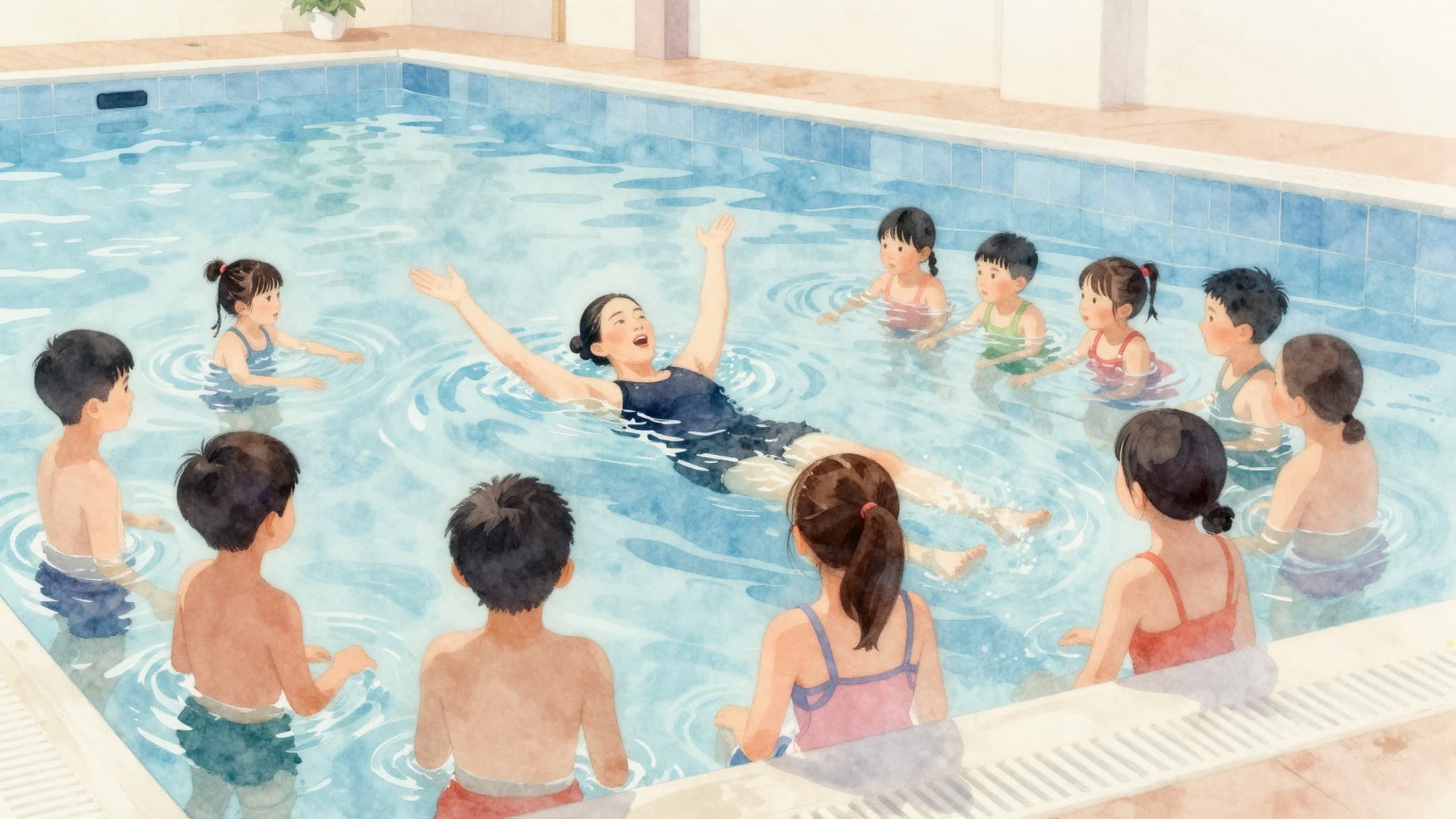
Integrating Water Safety into Every Swimming Lesson: Practical Toolkit for Swim Instructors
10 concrete water safety exercises for every swim instructor. From floating with clothes on to buddy checks: build life-saving reflexes during swimming lessons.
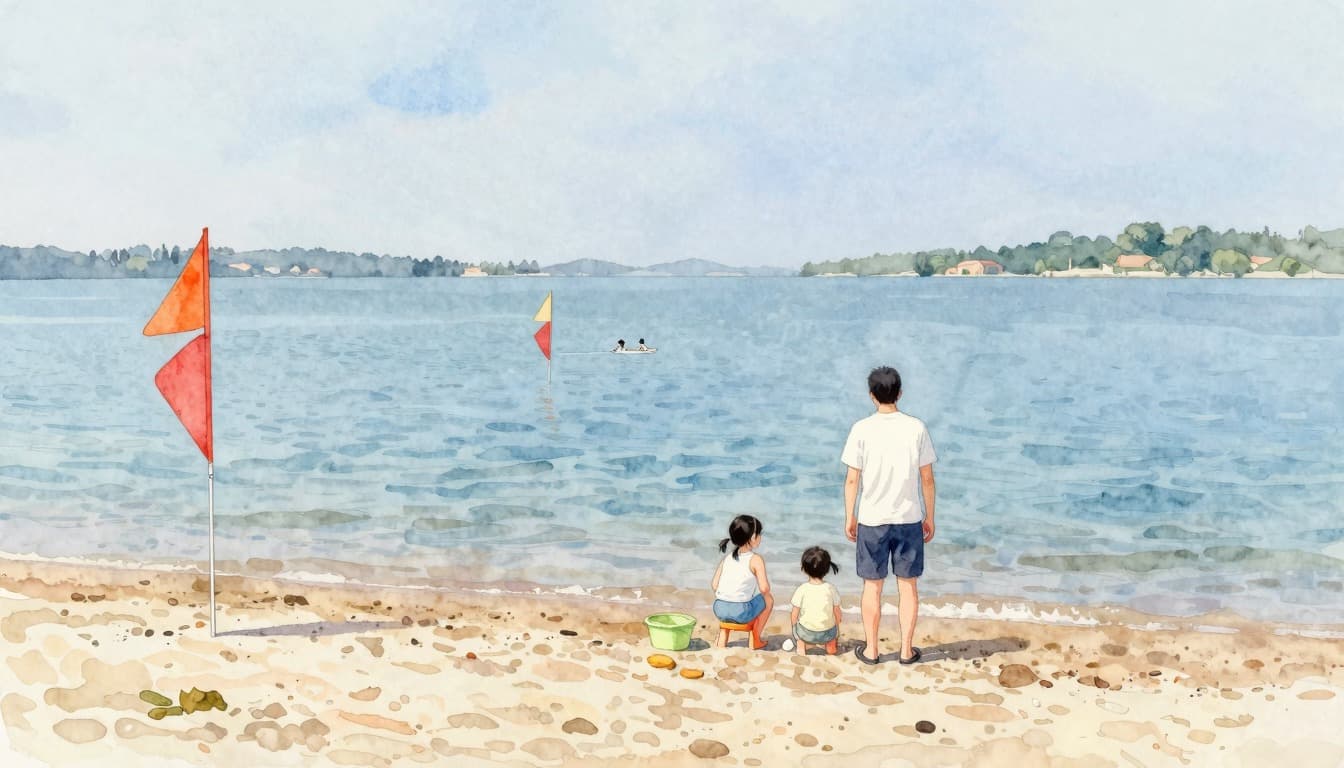
Water Safety on Vacation: How to Keep Your Child Safe in Open Water, Anywhere
How do you keep your child safe in open water on vacation? Learn to recognize dangers of sea, lake, and river, discover international warning systems, and check your water safety checklist.
Discover Swimmigo
The all-in-one app for swimming lesson progress. For parents, swim schools, and adult swimmers.