OrganizingSwimmingLessonsforRefugeesClearly
Summary
- Digital tracking system records skills and motivates participants.
- Financial support and adapted lessons increase accessibility.
- Collaboration with local partners improves reach and safety.
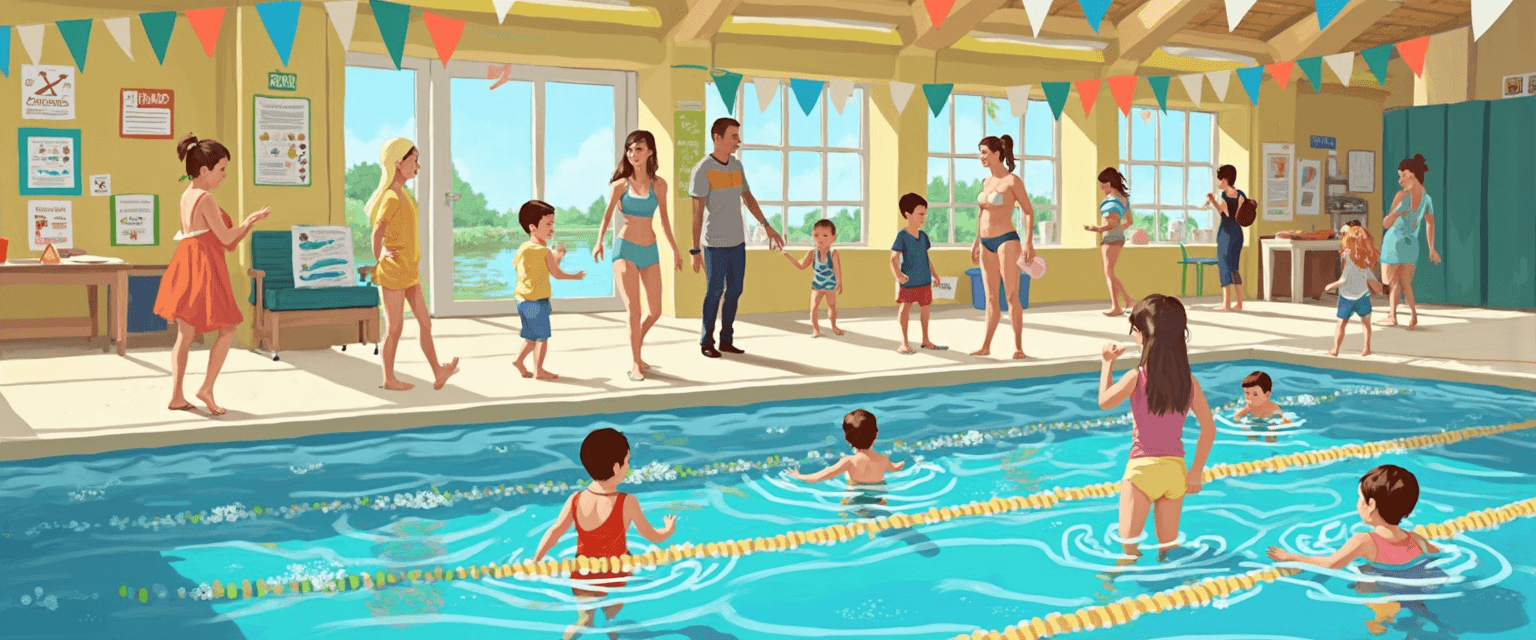
Organizing swimming lessons for refugees requires a structured approach. A swimming lesson schedule plays an important role in maintaining oversight and ensuring the lessons run smoothly. Swimming instructors and involved organizations need clear agreements and good cooperation.
In this article, we discuss how swimming lessons for refugees can be organized clearly. We cover topics such as collaboration with local partners, grouping students, making lessons accessible, and systematically tracking progress.
This approach helps create an effective and well-managed swimming lesson program that meets the specific needs of refugees.
1. Importance of Water Safety
In this chapter, we discuss why water safety is essential for refugees. We look at the specific risks newcomers face, the role of swimming lessons in increasing safety, and the importance of awareness. This creates a clear picture of the first steps to organize swimming lessons clearly.
Risks for Newcomers
Refugees and newcomers face an increased risk of drowning in the Netherlands. This is because many of them lack sufficient swimming skills. Additionally, they are often unfamiliar with the Dutch water environment and its associated dangers. The absence of swimming skills increases the chance of accidents in and around water.
Cultural differences and language barriers can also make it difficult to effectively convey water safety. Therefore, it is important to recognize these risks early and address them specifically. This allows appropriate measures to be taken to prevent accidents.
Role of Swimming Lessons
Swimming lessons play a crucial role in improving water safety among refugees. Through structured lessons, participants learn not only how to swim but also how to handle water and risks. This contributes to their confidence and independence in the water.
Additionally, swimming lessons offer an opportunity to build social contacts and promote integration. It is important that these lessons meet the needs of different target groups, such as children, adults, and women. This way, water safety is promoted broadly and effectively.
Creating Awareness
Awareness about water safety is a first step to reduce risks. Providing information via brochures, posters, and digital channels helps spread knowledge about water safety. This makes people alert to possible dangers and encourages participation in swimming lessons.
Creating awareness also focuses on specific groups, such as young men, who are more at risk. Through targeted communication and education, the importance of water safety is made clear. This creates a safe environment for everyone.
What is Swimmigo?
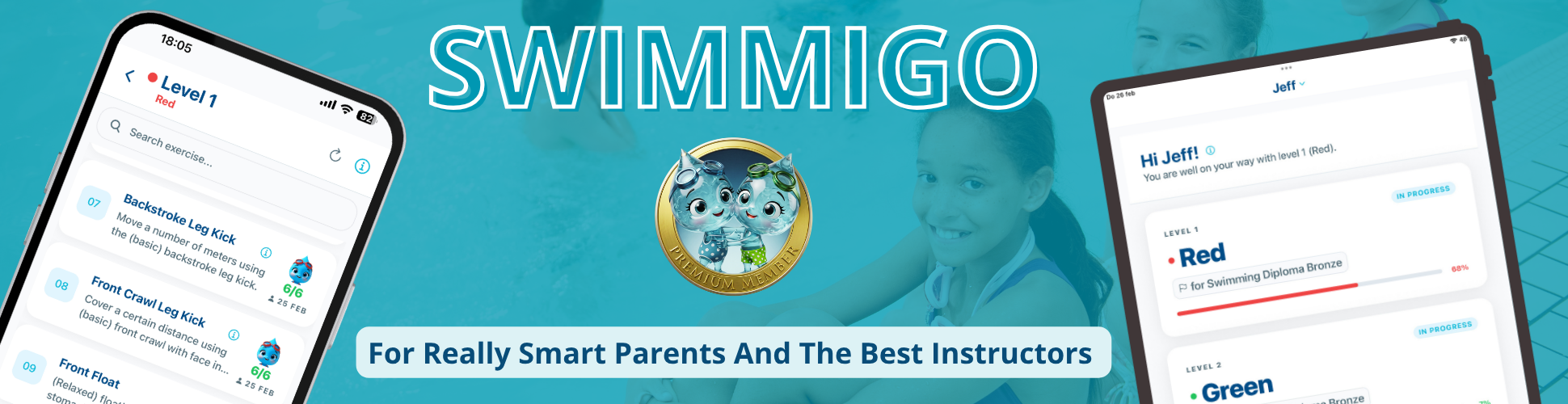
Swimmigo is an independent app that allows you to track, assess, and celebrate swimming progress, whether you are a parent, adult swimmer, or instructor. You are not dependent on the swimming school but keep control yourself.
For parents, the app offers a clear learning path of 7 levels (from Red to Gold) with 86 exercises. You assess each exercise with a simple scoring system (0 to 6) and receive a personal swimming certificate for each level achieved. This way, you can see at a glance where your child stands and what still needs work.
Adults who want to learn (better) swimming use Swimmigo discreetly and without group pressure. The app provides structure, divides the learning process into manageable steps, and helps overcome uncertainty. You train at your own pace, whenever it suits you.
Swimming schools and instructors use Swimmigo completely free as a digital system for student administration, schedules, and progress. Parents see their child's development in real time without you having to do any extra work. A handy Marketing Toolbox also helps you create professional flyers, social media posts, and certificates.
2. Collaboration with Partners
Good collaboration with local partners is essential for organizing swimming lessons for refugees.
In this chapter, we discuss how municipalities, schools, swimming pools, and instructors can be involved.
We also explain how clear cooperation agreements contribute to a smooth running of the swimming lesson program.
Involving Municipalities and Schools
Municipalities and schools play an important role in reaching refugees who need swimming lessons.
Municipalities can, for example, help inform newcomers and facilitate locations for swimming lessons.
Schools are often the first point of contact for children and can integrate swimming lessons into their programs.
By involving these parties early, a broad support base and better coordination are created.
Swimming Pools and Instructors
Swimming pools and instructors are crucial for conducting the lessons.
It is important to select pools that are accessible and have experience with diverse target groups.
Instructors must be familiar with the specific needs of refugees, such as language differences and cultural aspects.
Good communication between pools, instructors, and the organization ensures a safe and effective lesson environment.
Making Cooperation Agreements
Clear cooperation agreements prevent misunderstandings and ensure clear responsibilities.
These agreements can cover lesson schedules, communication with participants, and financial arrangements.
It is advisable to record these agreements in writing and evaluate them regularly.
This keeps the swimming lesson program well organized and aligned with the needs of all involved.
3. Swimming Lesson Scheduling and Organization
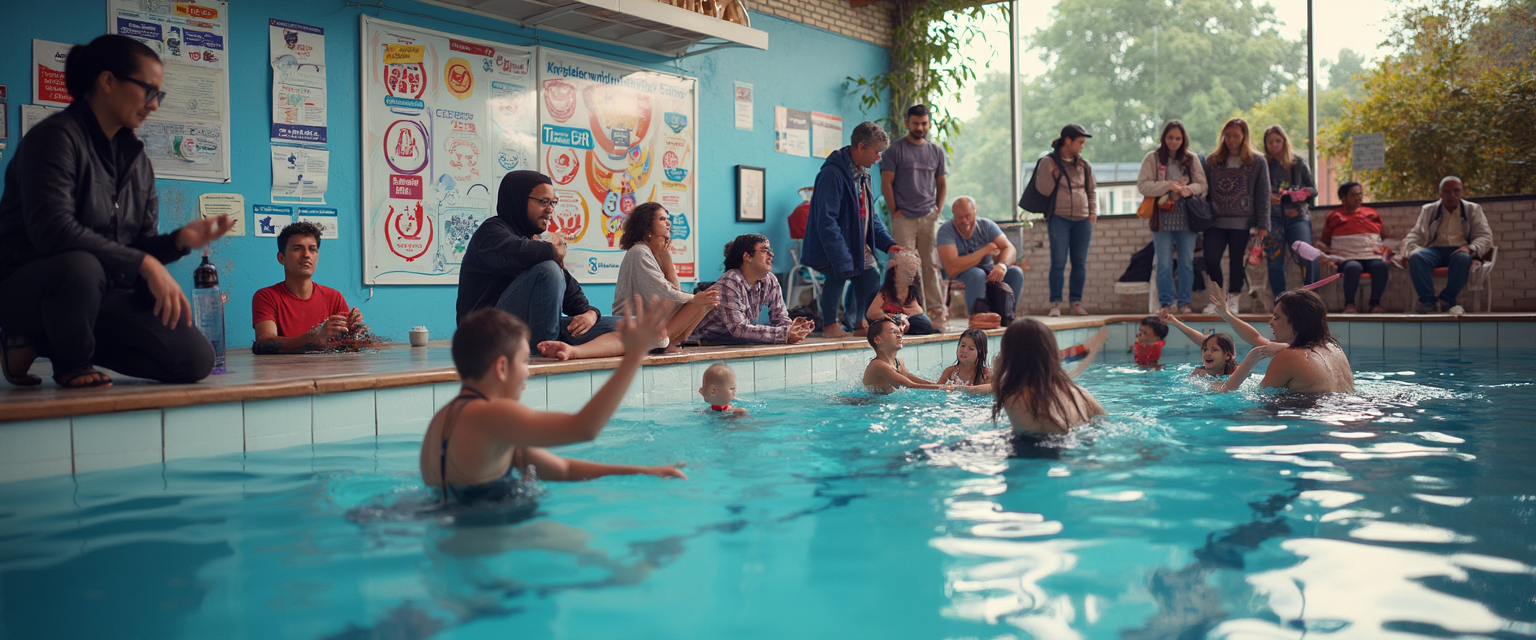
Good planning and organization are essential for the smooth running of swimming lessons for refugees. This chapter covers grouping students, creating lesson schedules, and maintaining clear communication with participants. This results in a clear and effective swimming lesson program.
Grouping Students
Grouping students starts with assessing the level and age of participants. Beginners, advanced swimmers, and adults can be placed in appropriate groups. Differentiation ensures that each participant can learn at their own pace. For example, children aged 6 to 10 can swim in a separate group, while adults have their own lesson.
It is also important to consider cultural aspects, such as offering women-only groups if desired. This promotes participation and comfort for swimmers. A clear group division helps instructors give focused attention and track progress well.
Creating Lesson Schedules
When creating lesson schedules, it is important to consider the availability of pools and instructors. Schedule fixed lesson times that fit the daily routines of participants, for example after school or work. Consistency in the schedule helps participants attend regularly.
It is also useful to build in flexibility for make-up lessons or extra practice sessions. A digital schedule can support this, so changes are communicated quickly and clearly. This maintains clarity for both the organization and participants.
Communication with Participants
Clear communication with participants is crucial for the success of swimming lessons. Use simple language and visual aids to convey information about lesson times, locations, and rules of conduct. This helps overcome language barriers.
Translations or interpreters can also be used for important announcements. Regular updates via SMS, WhatsApp, or an app ensure that parents and participants stay well informed. This builds trust and involvement in the swimming program.
4. Accessibility and Support
In this chapter, we discuss how swimming lessons for refugees can be made accessible. Attention is given to arranging financial support, offering specific lesson programs, and dealing with cultural and language barriers. This creates a clear picture of practical possibilities and points of attention.
Arranging Financial Support
Financial support is often an important factor in enabling participation in swimming lessons. Organizations such as the COA can contribute to costs for residents between 5 and 35 years old. This lowers the threshold for participation and encourages enjoyment and awareness of water safety.
Municipalities and pools can also provide subsidies or special arrangements. It is wise to communicate clearly in advance which costs are reimbursed and how parents or participants can register. This keeps the process transparent and clear.
Specific Lesson Programs
Specific lesson programs play a role in better meeting the needs of refugees. For example, there are separate groups for adults and women, which take cultural sensitivities into account. This promotes participation and comfort during lessons.
Lesson programs can also be adapted to the level and experience of participants. This allows step-by-step work on swimming skills and confidence. Local collaboration with schools and pools helps organize these tailored lessons.
Cultural and Language Barriers
Cultural and language barriers can complicate communication and understanding during swimming lessons. Using interpreters or multilingual instructors can help. Visual materials such as pictograms and videos also support explanations.
It is important to show respect for different backgrounds and customs. By adopting an open and patient attitude, participants feel more welcome and safe. This contributes to a positive learning environment and better results.
5. Monitoring and Evaluation
In this chapter, we discuss how the progress of swimming lessons for refugees can be systematically tracked. We also cover how feedback from participants and instructors is collected. Finally, we explain how this information can be used to improve the lesson approach.
Tracking Progress
Tracking swimmers’ progress is essential to gain insight into their development. This can be done with a digital tracking system that records skills and obtained certificates. This allows instructors to quickly see which parts need extra attention.
For parents and participants, this overview provides clarity about learning steps. It also helps maintain motivation because progress is made visible. Regular updates ensure everyone stays involved in the learning process.
Collecting Feedback
Collecting feedback is an important part of monitoring swimming lessons. This can be done through short evaluations after each lesson or by periodically holding conversations with participants and instructors. This reveals experiences and possible bottlenecks.
Cultural and language differences can also affect the lesson experience. By actively asking about these, instructors can better respond to the group's needs. Practical examples from the lessons help make feedback concrete.
Improving the Lesson Approach
The collected data and feedback form the basis for improving the lesson approach. Instructors can adjust teaching methods or provide extra support where needed. This contributes to a more effective and accessible swimming lesson for refugees.
Additionally, the program can be tailored to specific groups, such as women or young adults. By continuously evaluating and adjusting, the swimming lesson offer remains relevant and suitable for participants.

Summary
Summary of Swimming Lessons for Refugees: Overview and Organization
The progress of swimming lessons for refugees is systematically tracked with a digital tracking system. This system records skills and certificates, allowing instructors to make targeted adjustments.
For parents and participants, the system provides clarity about learning steps and motivates through visible progress. Regular updates keep everyone involved in the learning process.
Accessibility of swimming lessons is increased through financial support and adapted lesson programs. Organizations and municipalities offer subsidies and special arrangements to enable participation.
Clear communication about reimbursements and registrations ensures transparency and clarity. This lowers the threshold for participation and encourages swimming enjoyment.
Planning and Grouping
Good planning is essential for a smooth swimming lesson program. Groups are divided by level, age, and cultural preferences, such as women-only groups.
Differentiation makes it possible for each participant to learn at their own pace. This helps instructors give focused attention and track progress well.
Collaboration with local partners such as municipalities, schools, and pools is important. Early involvement creates broad support and better coordination.
Municipalities inform newcomers and facilitate locations, while schools can integrate swimming lessons into their programs. This promotes accessibility of swimming lessons.
Importance of Water Safety
Refugees often have insufficient swimming skills and are unfamiliar with the Dutch water environment. This increases the risk of accidents in and around water.
Cultural differences and language barriers complicate conveying water safety. Early recognition of risks enables targeted measures.
A digital tracking system supports the overview and organization of swimming lessons. It helps monitor swimming progress and improve lesson planning.
This creates a structured approach that contributes to safe and accessible swimming lessons for refugees.
Dear reader, this blog post was about clearly organizing swimming lessons for refugees.
We would love to hear if you have experience organizing or attending swimming lessons in this context. Feel free to leave a comment below this article.
You can try Swimmigo for free via https://swimmigo.com. We hope this tool can be of value.
Sources

Bob van Soest
As an expert in operating sports facilities (such as swimming pools) and developer of, among others, Swimmigo.com, I am passionately committed to making swimming lessons simpler, more fun and more insightful for parents, swimming instructors and everyone who wants to learn to swim.
Frequently Asked Questions
Related articles

Benefits of Paid Swimming Lesson Software for Scheduling
Discover how paid swimming lesson software simplifies lesson scheduling and payments while improving cash flow.
![Complete Overview of Swimming Lesson Scheduling and Software for Swim Schools [2026]](/_next/image?url=https%3A%2F%2Fzvblogpostimages.s3.eu-west-3.amazonaws.com%2FAUTOMATISCH_UPLOAD%2F1_849dd336ecee.jpg&w=3840&q=75&dpl=dpl_DqUHNtsMUTtGEGNaUbbB2t9YQZM4)
Complete Overview of Swimming Lesson Scheduling and Software for Swim Schools [2026]
Compare free and paid swimming lesson scheduling software in 2026. Discover how digital scheduling halves no-shows and saves swimming instructors up to 5 hours per week.
Discover Swimmigo
The all-in-one app for swimming lesson progress. For parents, swim schools, and adult swimmers.