HowtoScheduleSwimmingLessonswithLimitedPoolCapacity:PracticalTipsforSwimInstructors[2026]
![How to Schedule Swimming Lessons with Limited Pool Capacity: Practical Tips for Swim Instructors [2026]](/_next/image?url=https%3A%2F%2Fzvblogpostimages.s3.eu-west-3.amazonaws.com%2FAUTOMATISCH_UPLOAD%2F1_cae0c9146e62.jpg&w=3840&q=75&dpl=dpl_4AUuAwv1Nj9Xw7H4fXp7HhhGZ8V8)
Summary
- Too little pool water and too many students is the biggest scheduling headache for swim instructors in the Netherlands
- With a few simple strategies, you can get 20 to 30 percent more lessons from the same pool capacity
- Digital scheduling tools save on average 3 to 5 hours of administration per week compared to paper schedules
- Discover how to reduce waiting lists and still provide high-quality swimming lessons with limited lanes
The Biggest Problem for Every Swim School: Too Little Water, Too Many Students
As a swim instructor, you know the feeling: the phone keeps ringing with new registrations, but your pool only has three lanes available on Tuesday afternoon. The waiting list grows and parents become impatient. You want to deliver quality, but how do you do that with too few square meters of water?
You are not alone. Data from the National Council for Swimming Safety shows that over 60 percent of Dutch swim schools struggle with a shortage of pool water hours. The combination of a swim instructor shortage, rising rental prices for pool halls, and the ongoing demand for swimming lessons makes this the biggest scheduling challenge of 2026.
The good news: with a few smart adjustments to your schedule, you can get up to 30 percent more lessons from the same pool capacity. In this overview, I share practical strategies that are immediately applicable, without compromising the quality of your swimming lessons.
Why Pool Capacity is the Bottleneck of 2026
The pressure on pools has increased significantly in recent years. Municipal budget cuts lead to shorter opening hours, while the number of swimming lesson registrations continues to rise. Parents have become extra aware of the importance of swimming safety after the corona years, and waiting lists can sometimes stretch up to a year.
Additionally, the shortage of swim instructors plays a major role. Even if you could rent extra pool water, you don’t always have the people to give those lessons. Smart scheduling is therefore not only about filling lanes but also about optimally deploying your instructors.
What is Your Actual Capacity?
Before optimizing, you first need to know your current situation. Make an honest inventory:
- How many lanes do you have available per time slot?
- How many instructors can you deploy at each moment?
- What is the minimum turnaround time between two lessons?
- Which ages and levels swim at which times?
Most swim schools discover during such an inventory that there is actually quite some hidden space, for example in overly long turnaround times or unused corners of the pool.
Practical Strategies to Get More Lessons from Your Pool
1. Shorten the Turnaround Time Between Lessons
The standard turnaround time of 15 minutes between two lessons is often longer than necessary. By making good agreements with your instructors and parents, you can reduce this to 8 to 10 minutes. That may seem small, but over an afternoon with four lesson blocks, it yields an extra half hour of lesson time. Enough for one full extra group.
Make sure the next group is already ready at the edge while the current lesson finishes. Use the first and last lesson minute for getting in and out, so the transition runs smoothly.
2. Work with Overlapping Lesson Times
Instead of having all groups start and stop at the same time, you can work with a staggered schedule. Group A starts at 3:00 PM and ends at 3:35 PM, Group B starts at 3:10 PM and ends at 3:45 PM. The instructor of Group A moves on to the next lane at 3:10 PM. This requires a bit more coordination but effectively doubles the number of groups you can have swimming in the same pool.
3. Zone Your Pool Instead of Thinking in Lanes
Traditionally, we think in lanes: one lane equals one group. But many swimming lessons don’t need a full 25-meter lane. Beginners and water familiarization take place in the first five meters from the edge. By dividing your pool into zones (shallow, middle, deep), you can teach more students simultaneously with mixed-level groups.
4. Schedule Your Instructors, Not Your Lanes
Most swim schools schedule from the pool perspective: "we have three lanes, so three groups." Turn it around: schedule from your instructors. How many children can one instructor responsibly supervise? In a zone setup, one experienced instructor can sometimes manage two subgroups, each working on their own exercise. This requires tight preparation but yields significant capacity gains.
5. Use Off-Peak Hours Creatively
Most swim schools are full on Wednesday afternoons and Saturday mornings but have empty lanes on Tuesday mornings and Friday afternoons. Make these off-peak hours attractive to flexible parents: offer a 10 percent discount on lesson fees for off-peak hours, or start a "fast-track" program where children can swim twice a week during quiet hours and thus earn their diploma faster.
6. Switch to Digital Scheduling
Updating a paper schedule or Excel sheet takes time and is error-prone. A digital scheduling tool shows you at a glance:
- Which instructor is where at what time
- How many spots are still free per group
- Which students are on the waiting list and who you can call first in case of cancellations
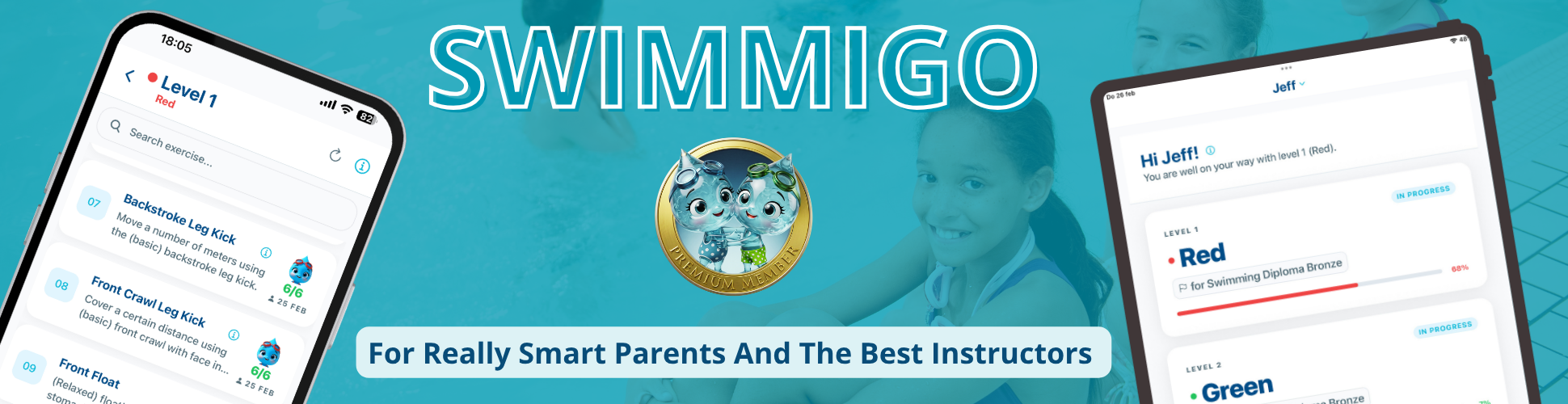
With Swimmigo, you not only schedule your lessons but also link the schedule directly to progress tracking. A student moves on to the next level? The system automatically finds a suitable group with a free spot. No more manual shuffling in spreadsheets.
See all scheduling features of Swimmigo →
7. Create a Clear Make-Up Policy
A missed lesson is a lost spot. Without a good make-up policy, 10 to 15 percent of your booked spots remain empty due to cancellations. Make clear agreements:
- Cancellations can be made up to 24 hours in advance, then the spot can go to the waiting list
- With timely cancellation: right to a make-up lesson within four weeks
- No or late cancellation: lesson is forfeited, no refund
- Use a digital tool that allows parents to cancel and schedule make-up lessons themselves
This saves you as a swim instructor hours of phone calls and messages, and ensures your pool water is used to the maximum.
8. Communicate Transparently About Waiting Lists
A waiting list is frustrating for parents but unavoidable with limited capacity. The difference between an angry parent and an understanding parent lies in communication. Clearly explain:
- How many spots become available per month (on average)
- What position their child holds
- What the estimated waiting time is
- Whether there are alternatives (private lessons, off-peak hours, other locations)
With automatic status updates via a parent app, everyone stays informed without you having to send manual emails. That saves at least two hours per week in administration.
9. Consider Collaboration with Other Swim Schools
If your swim school is full, you usually refer a potential customer to a competitor. What if you collaborate instead? Share each other’s available spots and waiting lists in a shared system. The parent is happy with a faster spot, and you build goodwill with a fellow swim school that can later refer students back to you.
10. Evaluate Your Occupancy Every Quarter
Schedule an hour every quarter to review your numbers:
- Which lesson times are consistently full and which remain empty?
- How many cancellations do you have on average per week?
- Does the waiting list flow through or does it keep growing?
With these insights, you can adjust accordingly. Maybe Thursday morning is more popular than you thought, or the Saturday afternoon group is consistently underbooked. A digital tool like Swimmigo gives you these figures automatically, without you having to tally yourself.
Discover how Swimmigo makes your scheduling clear →
From Paper Chaos to Digital Overview
The common thread in all the above strategies is: you need overview. As long as scheduling and progress are on loose papers and in different Excel sheets, you miss opportunities. An integrated system where scheduling, progress, and parent communication come together saves you as a swim instructor three to five hours per week.
Want to know more about how to run your swim school more efficiently? The complete overview can be found here:
Bob van Soest
As an expert in operating sports facilities (such as swimming pools) and developer of, among others, Swimmigo.com, I am passionately committed to making swimming lessons simpler, more fun and more insightful for parents, swimming instructors and everyone who wants to learn to swim.
Frequently Asked Questions
Related articles
Discover Swimmigo
The all-in-one app for swimming lesson progress. For parents, swim schools, and adult swimmers.