Tracking Swimming Lesson Progress: Tips for Parents

Summary
- Small groups and private lessons increase personal attention and motivation.
- Playful exercises stimulate fun, motor skills, and self-confidence in children.
- Digital tracking system provides insight and motivates parents and children together.
Tracking swimming lesson progress is an important part of the swimming journey for parents. With a digital tracking system, they get a clear overview of their child's development. This makes it easier to set goals together and align the swimming lesson schedule with the child's needs.
In this article, we discuss practical tips to keep track of progress clearly. We cover how a digital system works, the importance of a fixed routine, and ways to maintain children's motivation. Additionally, we address adjusting swimming lesson formats for a better fit with the child.
This information helps parents support swimming lessons in a structured and positive way.
1. Understand Motivation Loss
Motivation loss in swimming lessons often arises from various factors. Fatigue, routine, and social circumstances play a role. In this chapter, we explain why motivation decreases, how fatigue influences it, and which social factors are involved.
Why motivation decreases
Motivation can decrease because the enthusiasm after the first lessons fades. The swimming lesson then becomes a fixed routine that seems less exciting. Also, the feeling that progress is slow can be demotivating. It is important to understand that this is a normal process.
Additionally, children may find it difficult to do the same exercises repeatedly. This can lead to less desire to attend the lesson. By recognizing these causes, parents and instructors can better respond to the child's needs.
Influence of fatigue
Fatigue clearly affects children's motivation. After a busy day or other activities, they may have less energy for swimming lessons. This makes it harder to participate with focus and enthusiasm. Sometimes this leads to resistance or even crying spells.
Therefore, it is important to pay attention to the timing of the lesson and the number of activities a child has in a day. A well-rested child will participate more actively and positively in the swimming lesson. This helps maintain motivation better.
Social factors in lesson groups
Social factors within the lesson group can also influence motivation. Some children feel insecure in large groups or find it difficult to connect. This can lead to reluctance or even fear of going to swimming lessons.
Additionally, group dynamics can cause children to compare themselves with others. This can have both positive and negative effects. It is therefore important that instructors and parents pay attention to the social atmosphere and support the child in this.
What is Zwemlesmaatje?
Swimmigo is an independent app that allows you to track, assess, and celebrate swimming progress, whether you are a parent, adult swimmer, or instructor. You are not dependent on the swimming school but keep control yourself.
For parents, the app offers a clear learning path of 7 levels (from Red to Gold) with 86 exercises. You assess each exercise with a simple scoring system (0 to 6) and receive a personal swimming certificate for each achieved level. This way, you see at a glance where your child stands and what still needs work.
Adults who want to learn (better) swimming use Zwemlesmaatje discreetly and without group pressure. The app provides structure, breaks the learning process into manageable steps, and helps overcome insecurity. You train at your own pace, whenever it suits you.
Swimming schools and instructors use Swimmigo completely free as a digital system for student administration, schedules, and progress. Parents see real-time development of their child, without you having to do any work. A handy Marketing Toolbox also helps you create professional flyers, social media posts, and certificates.
2. Create a Fixed Routine
A fixed routine around swimming lessons helps children feel safe and familiar. This chapter discusses the benefits of fixed lesson times, the importance of rituals for swimming lessons, and planning rest and snack moments. This way, parents can positively support the swimming lesson experience for their child.
Benefits of fixed lesson times
Fixed lesson times provide predictability and structure in children's weekly rhythm. This reduces stress and resistance to swimming lessons. Children know exactly when to prepare and can mentally get ready for the lesson.
Additionally, a fixed time helps plan other activities better so the child does not become overloaded. This keeps swimming lessons a pleasant and manageable activity.
Rituals for swimming lessons
Rituals for swimming lessons, such as preparing swimming gear together or a fixed greeting at the pool, create a sense of safety. These small habits make the transition to the lesson easier for the child.
A short conversation about what the child wants to practice that day can also help increase focus. Rituals strengthen involvement and make the swimming lesson recognizable and familiar.
Planning rest and snack moments
Rest and snack moments before swimming lessons are important to prevent fatigue. A light snack, such as a piece of fruit, provides energy without making the child feel heavy.
Plan enough time to arrive calmly and relax before the lesson starts. This increases concentration and enjoyment during swimming.
3. Keep Progress Clear
Keeping track of swimming lesson progress clearly helps parents and children achieve goals together. Digital student tracking systems provide a clear picture of development. Additionally, it is important to set goals together and discuss experiences after the lesson.Use student tracking systems
Digital student tracking systems are handy tools to monitor swimming lesson progress. They provide insight into which skills are already mastered and where more attention is needed.
This way, parents and instructors can easily see which steps the child has already taken. This makes it easier to follow progress without having to remember everything themselves.
Additionally, these systems often offer visual overviews, such as graphs or badges, which motivate to continue. An example is an app where parents receive updates immediately after each lesson.
Set goals together
Setting goals together creates clear expectations and motivation. Discuss with the child and instructor which skills are achievable in the short and long term.
By making goals concrete, the child sees what can be achieved and stays motivated. For example: first learn to float, then swim independently.
It also helps to regularly evaluate and adjust goals. This keeps the swimming lesson aligned with the child's pace and needs.
Discuss experiences after the lesson
After each swimming lesson, it is valuable to talk with the child about their experiences. Ask what went well and what was difficult so the child feels heard.
These conversations give parents insight into the child's experience and strengthen involvement. It can also help to identify any concerns early.
By mentioning positive experiences and celebrating small successes, self-confidence grows. This makes it easier to stay motivated for the next lesson.
Swimmigo · Swim lesson app
Free for parents
Follow your child's swimming progress, see where you stand and report absences in the app.

4. Make Swimming Lessons Fun and Challenging
Maintaining fun in swimming lessons is important for children's motivation. This chapter discusses how playful exercises, involving friends, and small rewards can contribute to a positive swimming lesson experience. This way, swimming remains fun and challenging for every child.
Add playful exercises
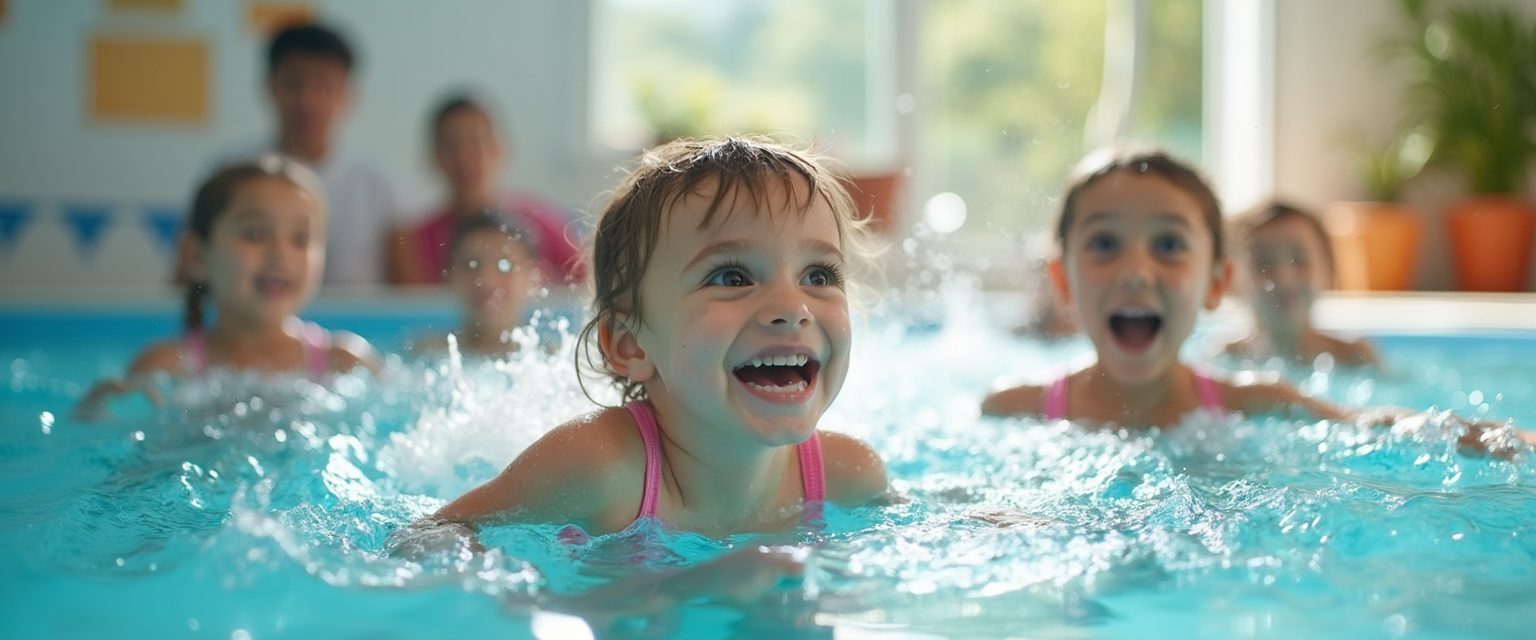
Playful exercises make swimming lessons more attractive and less burdensome. For example, by adding games with balls or underwater objects, the child stays active and engaged. This stimulates motor skills and self-confidence in the water. It is important to introduce variety so the child experiences new challenges without pressure.
An example is practicing breathing through a game where children blow bubbles underwater. This makes the exercise less boring and simultaneously helps improve technique. By regularly adding new playful elements, the lesson stays fresh and motivating.
Involve friends in the lesson
Involving friends in swimming lessons can increase motivation. Swimming together makes the lesson more enjoyable, and children often feel safer in a familiar group. This can also help develop social skills while learning to swim. It is advisable to consult with the swimming school about the possibility of swimming in the same group with friends.
Additionally, children can encourage each other and share successes, which strengthens self-confidence. Sometimes inviting a friend to practice together outside the lesson also contributes to more fun and involvement. This way, swimming becomes a social activity instead of an obligation.
Give small rewards
Small rewards can be a positive incentive to continue with swimming lessons. It is not about big gifts but recognition of effort and progress. For example, a sticker, a compliment, or extra playtime in the water after the lesson. This helps children appreciate their effort and encourages them to reach new goals.
It is important that the reward focuses on the process and not only on the result. This keeps the focus on learning and having fun. Parents can agree with the instructor on which rewards are appropriate for the child and the lesson phase.
5. Adjust Lesson Formats Where Needed
Adjusting swimming lesson formats can help better meet the child's needs. Small groups and private lessons offer more personal attention. Additionally, it is important to align the timing and intensity of lessons with the child's energy level.
Small groups as an alternative
Small groups provide a calmer learning environment where children feel more comfortable faster. This makes it easier to give personal attention and practice specific skills. In a smaller group, there are fewer distractions and instructors can better respond to individual needs. For example, a child can receive extra support with a difficult part.
Additionally, a small group often also promotes social interaction positively. Children get to know each other better and feel less overwhelmed. This contributes to a more pleasant swimming lesson experience and can increase motivation.
Private lesson options
Private lessons offer the possibility to fully tailor the pace to the child. This is especially useful if a child needs extra guidance or struggles with certain parts. During private lessons, the instructor can directly respond to the child's learning style and self-confidence.
Parents can also be more easily involved in the learning process. This makes it possible to better align at home with what happens in the lesson. Although private lessons are often more expensive, they can be a good investment for specific learning needs.
Align timing and intensity
The timing of swimming lessons is important to prevent children from being too tired or restless. Scheduling lessons at times when the child has enough energy increases the chance of a positive experience. For example, after a light snack and sufficient rest.
Additionally, the intensity of the lesson can be adjusted by choosing shorter or less frequent lessons. This helps prevent overload and keeps learning fun. It is important to regularly evaluate whether the chosen lesson format is still appropriate.

Summary
Summary of Improving Swimming Lesson Formats and Motivation with a Digital Tracking System
Adjusting swimming lesson formats, such as small groups and private lessons, helps better meet the child's needs. This provides more personal attention and a calm learning environment.
Small groups reduce distractions and promote social interaction. This contributes to a more pleasant swimming lesson experience and increases children's motivation.
Playful exercises and fun in swimming lessons
Playful exercises make swimming lessons more attractive and stimulate motor skills and self-confidence. Variety and involving friends keep the swimming lesson fun and challenging.
Examples include games with balls and breathing exercises like blowing bubbles underwater. This makes technique training less boring and motivating.
Benefits of a digital tracking system
A digital tracking system provides an overview of swimming lesson progress and makes development visible to parents and instructors. It shows which skills are mastered and where more attention is needed.
Visual overviews and direct updates motivate children and parents. This makes it easier to set goals together and discuss experiences.
Structure and fixed routines in swimming lessons
Fixed lesson times provide predictability and reduce stress in children. This helps them feel safe and familiar during the swimming lesson.
A fixed schedule prevents overload and makes it easier to combine with other activities. This keeps swimming a pleasant activity.
Understanding motivation loss and approach
Motivation loss often arises from fatigue, routine, and social factors. The feeling of slow progress can be demotivating, but this is normal.
Recognizing these causes helps parents and instructors better respond to the child's needs. This keeps swimming attractive and achievable.
Dear reader, this blog post was about tracking swimming lesson progress and handy tips for parents.
We would love to hear if you have experience with digitally tracking swimming lessons. Your feedback is welcome below this article.
You can try Swimmigo for free via https://swimmigo.com.
Thank you for reading and sharing your experience.

Bob van Soest
As an expert in operating sports facilities (such as swimming pools) and developer of, among others, Swimmigo.com, I am passionately committed to making swimming lessons simpler, more fun and more insightful for parents, swimming instructors and everyone who wants to learn to swim.
Frequently Asked Questions
Related articles
When to Start Swimming Lessons for Optimal Progress
Read from which age swimming lessons are effective for the best results and safety of your child in the water.
Effectively Registering Swimming Lesson Progress from What Age?
Discover from what age it is best to register swimming lesson progress and how to approach it practically.

Efficiently Registering Swimming Lesson Progress per Group
Practical tips for tracking swimming lesson progress per swimming lesson group for parents and instructors.
Discover Swimmigo
The all-in-one app for swimming lesson progress. For parents, swim schools, and adult swimmers.