RecordingSwimmingLessonProgressinYoungChildren
Summary
- Small groups and clear goals create a safe, familiar swimming lesson environment.
- Digital tracking system makes progress visible and simplifies communication.
- Step-by-step approach reduces fear and increases motivation in young swimmers.
Tracking swimming lesson progress in young children is important for both parents and swim instructors. A digital tracking system enables the development of each child to be recorded accurately and clearly. This helps in recognizing small successes and planning the next steps in the learning process.
In this article, we discuss how structured registration contributes to motivation and confidence in children. Additionally, we cover practical tips for communication and organizing swimming lessons that meet the needs of young swimmers.
The information provides a clear picture of how digital tools and good planning together ensure an effective swimming lesson experience.
1. Why swimming lesson progress is important
Recording swimming lesson progress in young children helps parents and instructors gain insight into development. This chapter discusses why this progress is important for the child and the parent. It also covers how confidence and motivation play a role and the benefits of structured tracking.
Meaning for child and parent
Tracking swimming lesson progress gives parents clarity about their child's development. This way, they can better estimate which skills are already mastered and where more attention is needed. For the child, it provides recognition of achieved steps, which strengthens self-confidence. This makes the learning process more transparent and engaging.
Additionally, it helps parents actively think along about the swimming journey. They can better align with their child's needs. This promotes a positive experience with swimming and encourages perseverance.
Role of confidence and motivation
Confidence is essential for young children taking swimming lessons. By recording progress, a clear picture emerges of what the child can already do. This gives the child a sense of safety and success. Parents also see the small steps forward, which strengthens their confidence in the learning process.
Motivation grows when children notice that their efforts become visible. Naming achieved goals encourages them to continue. This keeps swimming fun and challenging, without pressure or stress.
Benefits of structured tracking
Structured tracking of swimming lesson progress offers practical benefits for both parents and instructors. It makes it possible to adjust the lesson approach to the child's pace. This makes swim sessions more effective and personal.
It also helps to detect any delays early and provide targeted support. Moreover, it promotes open communication between parents and instructors. This contributes to pleasant collaboration and a better swimming experience for the child.
What is Zwemlesmaatje?
Swimmigo is an independent app that lets you track, assess, and celebrate swimming progress, whether you are a parent, adult swimmer, or instructor. You are not dependent on the swim school but keep control yourself.
For parents, the app offers a clear learning path of 7 levels (from Red to Gold) with 86 exercises. You assess each exercise with a simple scoring system (0 to 6) and receive a personal swimming certificate for each achieved level. This way, you see at a glance where your child stands and what still needs work.
Adults who want to learn (better) swimming use Zwemlesmaatje discreetly and without group pressure. The app provides structure, breaks the learning process into manageable steps, and helps overcome insecurity. You train at your own pace, whenever it suits you.
Swim schools and instructors use Swimmigo completely free as a digital system for student administration, schedules, and progress. Parents see their child's development in real time, without you having to do any work. A handy Marketing Toolbox also helps you create professional flyers, social media posts, and certificates.
2. Dealing with fear and loss of motivation
In this chapter, we discuss how to recognize and address fear and loss of motivation in young children during swimming lessons.
We explain how a step-by-step, familiar approach helps reduce water fear.
Additionally, we provide tips to make swimming lessons playful and motivating with appropriate rewards.
Recognizing water fear
Water fear in young children often shows as reluctance or crying when entering the pool.
A child may also have difficulty saying goodbye or refuse to enter the water.
It is important to recognize these signals early to provide appropriate support.
By observing attentively and approaching the child calmly, more understanding of the fear arises.
Step-by-step familiar approach
A step-by-step approach starts with familiar water activities outside the lesson, such as playing with water at home.
During the swimming lesson, it helps if the instructor is in the water and guides the child at their own pace.
Building trust happens by doing small, achievable exercises and gradually taking one step further each time.
This way, the child feels safe and the fear gradually decreases.
Playful stimulation and rewards
Playful stimulation makes swimming lessons more attractive for young children.
For example, use favorite toys or game forms that the child enjoys.
Celebrating small successes with a compliment or a sticker motivates them to continue.
Such positive experiences create a pleasant association with swimming and keep motivation up.
3. Use of digital student tracking systems
Digital student tracking systems offer a structured way to record swimming lesson progress in young children. They make it possible to accurately register small successes and easily share this information with parents and instructors. This chapter discusses the benefits, the importance of recording small steps, and the accessibility of these systems.Benefits of digital tools
Digital tools for tracking swimming lesson progress provide clear and efficient registration. They replace paper lists and make it easier to keep data up to date.
With a digital system, instructors can quickly add notes about the child's skills and behavior during the lesson. This helps to closely monitor development and provide targeted support.
Additionally, these systems often offer visual overviews, such as graphs or badges, that make progress visible to both parents and children. This strengthens motivation because small successes become visible.
Digital tools can also send reminders for upcoming lessons or goals, simplifying planning and providing structure.
Recording small successes
Recording small successes is essential with young children. By noting every step, such as going underwater independently or correctly performing a breathing technique, a complete picture of development emerges.
Digital systems make it possible to immediately record and categorize these small milestones. This way, nothing goes unnoticed and the instructor can adjust the lesson program where needed.
For children, it is motivating to see their progress, for example through a digital diploma or an overview of achieved skills. This strengthens self-confidence and encourages perseverance.
Parents also get a clear picture of what their child can already do and where attention is still needed, without having to observe everything themselves during the lesson.
Accessibility for parents and instructors
An important advantage of digital student tracking systems is accessibility for both parents and instructors. Parents can follow their child's progress via an app or online environment whenever it suits them.
This promotes involvement without parents needing to be present during the lesson. They can calmly ask questions or give compliments based on current information.
Instructors, in turn, have direct access to the progress history and can better respond to individual needs. This supports a personal approach within the swimming lesson.
This transparency creates better collaboration between parents and instructors, which benefits the child's learning process.
4. Communication with child and parents
Good communication with the child and parents is essential for a positive swimming lesson experience.
This chapter discusses how open conversations, discussing experiences after each lesson, and sharing visual progress contribute to involvement and motivation.
This creates constructive collaboration that supports the learning process.
Open and patient conversations
It is important to talk to the child calmly and patiently.
Use open questions that invite the child to talk about their feelings and experiences.
Acknowledge small successes and give positive feedback to strengthen self-confidence.
This way, the child feels heard and supported, which benefits motivation.
Discussing experiences after each lesson
After each swimming lesson, it is valuable to discuss experiences together with the child.
Ask what the child liked and what they might still find difficult.
This helps gain insight into the child's experience and detect any concerns early.
Parents can also better align with their child's needs and positively guide the learning process.
Sharing visual progress
Visual aids such as progress cards or digital overviews make development clear.
Sharing this progress with the child and parents increases involvement.
The child sees concretely which steps they are taking and parents can better think along about the next steps.
This strengthens motivation and makes the learning process more transparent for everyone.
5. Practical tips for swimming lesson planning
Good planning of swimming lessons helps young children feel safe and familiar.
In this chapter, we discuss how small groups, setting goals, and a fixed routine contribute to a positive swimming lesson experience.
These practical tips support both parents and instructors in organizing effective swimming lessons.
Small groups and calm atmosphere
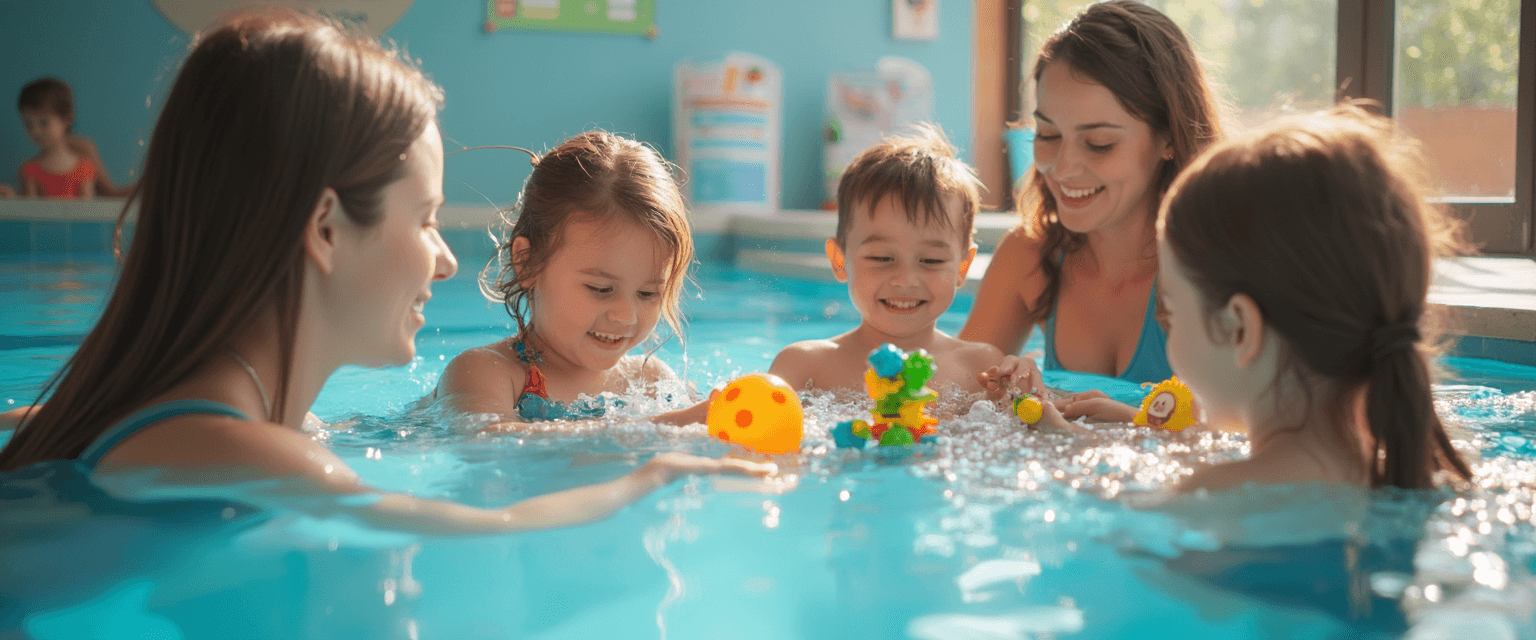
Small groups provide more personal attention from the instructor. This helps children feel more comfortable faster and concentrate better.
A calm atmosphere without much distraction promotes the learning process. For example, a group of four to six children is often ideal.
In such a setting, the instructor can better respond to individual needs and adjust the pace.
Additionally, it reduces the chance of overstimulation, which is especially important for young children.
Setting and celebrating goals
Setting clear, achievable goals motivates children to continue with swimming lessons. These goals can be small, such as learning a new breathing technique.
Celebrating achieved goals, for example with a compliment or a sticker, strengthens self-confidence.
This keeps learning fun and gives children a sense of progress.
Instructors and parents can jointly align goals with the child's level and development.
Weekly routine and flexibility
A fixed swimming lesson routine gives children stability and reduces uncertainty. By scheduling lessons on fixed days and times, predictability arises.
However, it is important to remain flexible in unexpected situations, such as fatigue or illness.
Adjusting the schedule prevents children from becoming discouraged or overloaded.
A good balance between regularity and flexibility contributes to a positive swimming experience.

Summary
Summary of Swimming Lesson Planning and Digital Progress Tracking
Good swimming lesson planning with small groups and clear goals creates a safe and familiar learning environment. This helps children feel more comfortable faster and improves their concentration during lessons.
Good communication between instructors, children, and parents strengthens involvement. Open conversations and sharing visual progress motivate children and support the learning process.
Why a digital tracking system helps
A digital tracking system records swimming lesson progress accurately and makes small successes visible. This system replaces paper lists and offers a clear and efficient way to keep data up to date.
Instructors can quickly add notes and parents gain insight through visual overviews. The system also helps with lesson planning and sending reminders, which provides structure.
Recognizing and addressing fear in young swimmers works better with a step-by-step approach. By observing attentively and approaching the child calmly, water fear is reduced and motivation remains.
Tracking swimming lesson progress gives parents clarity about their child's development. This strengthens the child's self-confidence and makes the swimming journey more transparent and engaging.
Dear reader, this blog post was about recording swimming lesson progress in young children.
We would love to hear if you have experience with digitally tracking swimming lessons. You can leave a comment below this article.
You can try Swimmigo for free via swimmigo.com. We hope it can support you in tracking swimming lesson progress.

Bob van Soest
As an expert in operating sports facilities (such as swimming pools) and developer of, among others, Swimmigo.com, I am passionately committed to making swimming lessons simpler, more fun and more insightful for parents, swimming instructors and everyone who wants to learn to swim.
Frequently Asked Questions
Related articles
When to Start Swimming Lessons for Optimal Progress
Read from which age swimming lessons are effective for the best results and safety of your child in the water.
Effectively Registering Swimming Lesson Progress from What Age?
Discover from what age it is best to register swimming lesson progress and how to approach it practically.

Efficiently Registering Swimming Lesson Progress per Group
Practical tips for tracking swimming lesson progress per swimming lesson group for parents and instructors.
Discover Swimmigo
The all-in-one app for swimming lesson progress. For parents, swim schools, and adult swimmers.