Recording swimming lesson progress in self-learning children
Summary
- Clear communication and tailored lessons boost self-learning children's swimming progress.
- Patience and celebrating small successes help overcome water fear and build motivation.
- Digital tracking and parent-instructor collaboration enhance progress and confidence.
Recording the swimming lesson progress of self-learning children requires a structured approach. Parents and swimming instructors need clear insights into the development of young swimmers. A digital tracking system can be a valuable tool in this regard.
In this article, we discuss various methods to monitor progress. We cover the use of digital systems, visual aids, and the importance of regular communication after the lesson. This approach supports a clear and motivating swimming lesson plan.
The information helps those involved to guide the children's learning process transparently and effectively.
1. Why self-learning swimming is important
Self-learning swimming helps children build self-confidence and encourages their independence in the water.
This approach offers benefits for the development and motivation of young swimmers.
Parents and instructors play an important role in guiding and supporting this learning process.
1.1 Development of self-confidence
Self-confidence is essential for children learning to swim. It gives them the courage to try new skills and persevere.
By swimming in a self-learning way, children experience that they have control over their own progress.
This strengthens their self-esteem and makes the learning process more positive.
Self-confidence also helps reduce fear of water and makes it easier to learn new techniques.
1.2 Benefits of the self-learning approach
A self-learning approach encourages children to actively think along and find solutions themselves during swimming.
This promotes their motor development and problem-solving skills.
Additionally, it increases involvement in the swimming lesson because children can set and experience their own goals.
This method contributes to sustainable motivation and enjoyment in swimming.
1.3 Role of parents and instructors
Parents and instructors are important as guides in the self-learning swimming process.
They provide a safe environment and encourage children to discover and practice on their own.
By listening patiently and acknowledging small successes, they strengthen the child's self-confidence.
Their involvement also helps to align the learning process well with the child's needs.
What is Zwemlesmaatje?
Swimmigo is an independent app that allows you to track, assess, and celebrate swimming progress, whether you are a parent, adult swimmer, or instructor. You are not dependent on the swim school but keep control yourself.
For parents, the app offers a clear learning path of 7 levels (from Red to Gold) with 86 exercises. You assess each exercise with a simple scoring system (0 to 6) and receive a personal swimming certificate for each achieved level. This way, you can see at a glance where your child stands and what still needs work.
Adults who want to learn (better) swimming use Zwemlesmaatje discreetly and without group pressure. The app provides structure, breaks the learning process into manageable steps, and helps overcome insecurity. You train at your own pace, whenever it suits you.
Swim schools and instructors use Swimmigo completely free as a digital system for student administration, schedules, and progress. Parents see their child's development in real-time, without extra work for you. A handy Marketing Toolbox also helps you create professional flyers, social media posts, and certificates.
2. Methods to record progress
There are various ways to record the swimming lesson progress of self-learning children.
In this chapter, we discuss the use of digital student tracking systems, visual aids, and the importance of conversations after the lesson.
These methods help parents and instructors make development transparent and maintain motivation.
2.1 Digital student tracking system
A digital student tracking system is an efficient tool to keep track of children's progress in swimming lessons.
In such a system, skills and achieved goals are registered per child, providing insight into development.
Parents and instructors can view the status at any time and see which steps are still needed.
This makes it possible to steer purposefully and adjust in time where necessary.
2.2 Using visual aids
Visual aids, such as progress boards or sticker charts, make development tangible and understandable for children.
By making achieved skills visible, children experience a sense of success and motivation.
These aids can be easily adapted to the child's level and boost self-confidence.
They are a good complement to digital systems and strengthen the child's involvement.
2.3 Conversations after the lesson
Conversations after the lesson are a valuable way to discuss progress without putting pressure on the child.
By asking open questions, parents and instructors can better understand what the child has learned and how they feel.
These conversations promote involvement and provide space to celebrate small successes.
This keeps learning fun and strengthens motivation.
3. Dealing with water fear and motivation
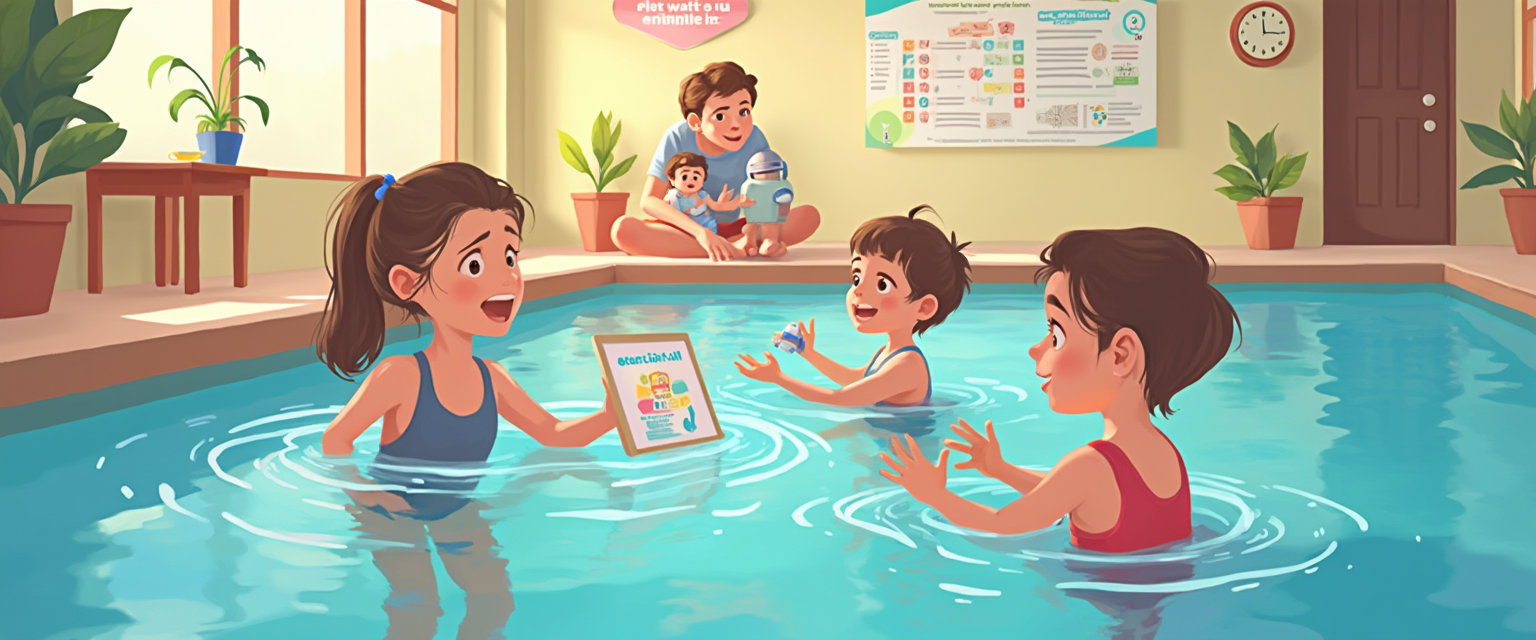
In this chapter, we discuss how to calmly address water fear in children. We explain how play and fun increase motivation. We also cover the importance of celebrating small successes during the learning process.
3.1 Patience and step-by-step approach
Water fear requires a patient and step-by-step approach. Start with short moments of water contact at home, for example with a small tub or spraying with a plant sprayer.
This way, the child gradually becomes familiar with water without pressure. During the swimming lesson, it is important that the instructor respects this pace and does not force the child.
A safe and calm environment helps increase confidence. This prevents fear from hindering progress.
3.2 Integrating play and fun
Playing and having fun are essential to keep children motivated. By combining swimming lessons with play forms, such as searching for toys underwater, the lesson becomes less intimidating.
Linking exercises to the child's interests, such as animals or favorite colors, increases involvement. This makes swimming feel less like an obligation.
Creating fixed rituals before and after the lesson, such as a high five or a song, also strengthens the positive association with swimming.
3.3 Celebrating small successes
Celebrating small successes helps children stay motivated. This can be done by naming progress, for example daring to go underwater or learning a new stroke.
Using a digital tracking system makes these successes visible to parents and child. This creates a clear overview of achieved goals.
By regularly complimenting and marking successes, self-confidence grows. This encourages the child to persevere and enjoy swimming.
Swimmigo · Swim lesson app
Free for parents
Follow your child's swimming progress, see where you stand and report absences in the app.

4. Structure and goals of swimming lessons
In this chapter, we discuss the structure and goals of swimming lessons for self-learning children. We look at the role of age and emotional readiness when starting swimming lessons. Additionally, we cover the importance of short- and long-term goals and the meaning of diplomas and certification.
4.1 Age and emotional readiness
The start of swimming lessons strongly depends on the age and emotional readiness of the child. Usually, children are ready for swimming lessons around four years old because they can better handle instructions and short separations from parents. It is important that the child feels safe in the water and in the lesson group. Emotional readiness also means that the child is open to new experiences without excessive fear.
For younger children, there are often special introductory lessons where parents are present. This allows them to get used to the water calmly. In practice, it helps to talk to the child beforehand about what will happen. This increases trust and motivation to participate.
4.2 Short- and long-term goals
Swimming lessons are built around clear short- and long-term goals. Short goals are small skills such as learning to float or blowing air out underwater. These goals give children regular success experiences and keep motivation high. Long-term goals focus on obtaining swimming diplomas and developing self-reliance in the water.
By setting goals step by step, instructors and parents can closely monitor progress. This makes it possible to adjust the lesson program to the child's pace. It also helps keep expectations clear and maintain enjoyment in learning.
4.3 Diploma and certification
Obtaining a swimming diploma is an important certification moment within swimming lessons. Diplomas such as the Zwem-ABC provide an overview of the skills a child masters. They offer a concrete goal and encourage children to continue practicing. It is not only proof of swimming ability but also of perseverance.
Certification usually follows a standardized program with clear criteria. This ensures transparency and recognizability for parents and schools. In practice, it helps to involve children in the process and show them which steps are still to come. This keeps obtaining diplomas a motivating part of the swimming lesson.
5. Tips for parents and instructors
In this chapter, we discuss practical advice for parents and instructors to properly support the swimming lesson progress of self-learning children.
We cover the importance of clear communication, adapting the lesson environment, and responding to individual needs.
These tips help make the learning process positive and effective for every child.
5.1 Maintain good communication
Open and calm communication between parents and instructors is essential to properly monitor the child's progress.
By regularly sharing experiences and observations, a better understanding of the child's needs and emotions arises.
Parents can encourage their child by naming small successes and asking questions about what they have learned.
This keeps the child involved without feeling pressure, which strengthens self-confidence.
5.2 Adapt the lesson environment
The lesson environment can be adapted to provide the child with more comfort and safety during learning to swim.
Small groups or quiet times can help reduce distractions and tension.
Additionally, using favorite materials or playful elements increases motivation.
A familiar environment with a fixed instructor contributes to a positive learning experience.
5.3 Attention to individual needs
Every child has unique needs and learns at their own pace, so attention to individual differences is important.
Instructors can adjust exercises to the child's level and interests.
Parents can support this by doing small water activities at home that align with the swimming lesson.
Through this personal approach, the child feels seen and motivated to continue.

Summary
Summary of Swimming Lesson Progress in Self-Learning Children
The swimming lesson progress of self-learning children is supported by clear communication and an adapted lesson environment. This ensures a positive and effective learning process that matches the individual needs of the child.
Regular exchange between parents and instructors strengthens the child's understanding and promotes self-confidence. Naming small successes helps the child stay involved without feeling pressure.
Structure and goals of swimming lessons
The start of swimming lessons depends on the child's age and emotional readiness. Usually, children start around four years old when they can better handle instructions and feel safe in the water.
Short- and long-term goals are important, as well as obtaining diplomas and certificates. Introductory lessons with parental presence help younger children get used to the water.
Dealing with water fear and motivation
Water fear requires a patient and step-by-step approach, for example by creating short moments of water contact at home. During the swimming lesson, it is important to respect the child's pace without forcing.
A safe and calm environment increases confidence and prevents fear from hindering progress. Celebrating small successes strengthens motivation.
Recording swimming lesson progress
Progress can be recorded with digital student tracking systems, visual aids, and conversations after the lesson. These methods make development transparent and keep motivation high.
A digital tracking system records skills and achieved goals per child. Parents and instructors can thus follow the swimming lesson progress and adjust purposefully.
Benefits of self-learning swimming
Self-learning swimming stimulates independence and self-confidence in children. This strengthens their motivation and makes the learning process more positive.
Self-confidence helps children try new skills and reduces fear of water. Parents and instructors play an important role in this guidance.
Dear reader, this blog post was about recording swimming lesson progress in self-learning children.
We would love to hear if you have experience with digitally tracking swimming lessons. You can leave a comment below this article.
You can try Swimmigo for free via https://swimmigo.com. We wish you much success in keeping track of swimming lesson progress.

Bob van Soest
As an expert in operating sports facilities (such as swimming pools) and developer of, among others, Swimmigo.com, I am passionately committed to making swimming lessons simpler, more fun and more insightful for parents, swimming instructors and everyone who wants to learn to swim.
Frequently Asked Questions
Related articles
When to Start Swimming Lessons for Optimal Progress
Read from which age swimming lessons are effective for the best results and safety of your child in the water.
Effectively Registering Swimming Lesson Progress from What Age?
Discover from what age it is best to register swimming lesson progress and how to approach it practically.

Efficiently Registering Swimming Lesson Progress per Group
Practical tips for tracking swimming lesson progress per swimming lesson group for parents and instructors.
Discover Swimmigo
The all-in-one app for swimming lesson progress. For parents, swim schools, and adult swimmers.