Track swim lesson progress clearly without software
Summary
- Software is especially useful for large groups and multiple instructors.
- A digital tracking system improves communication and parental involvement.
- Paper methods are simple and effective for small groups.
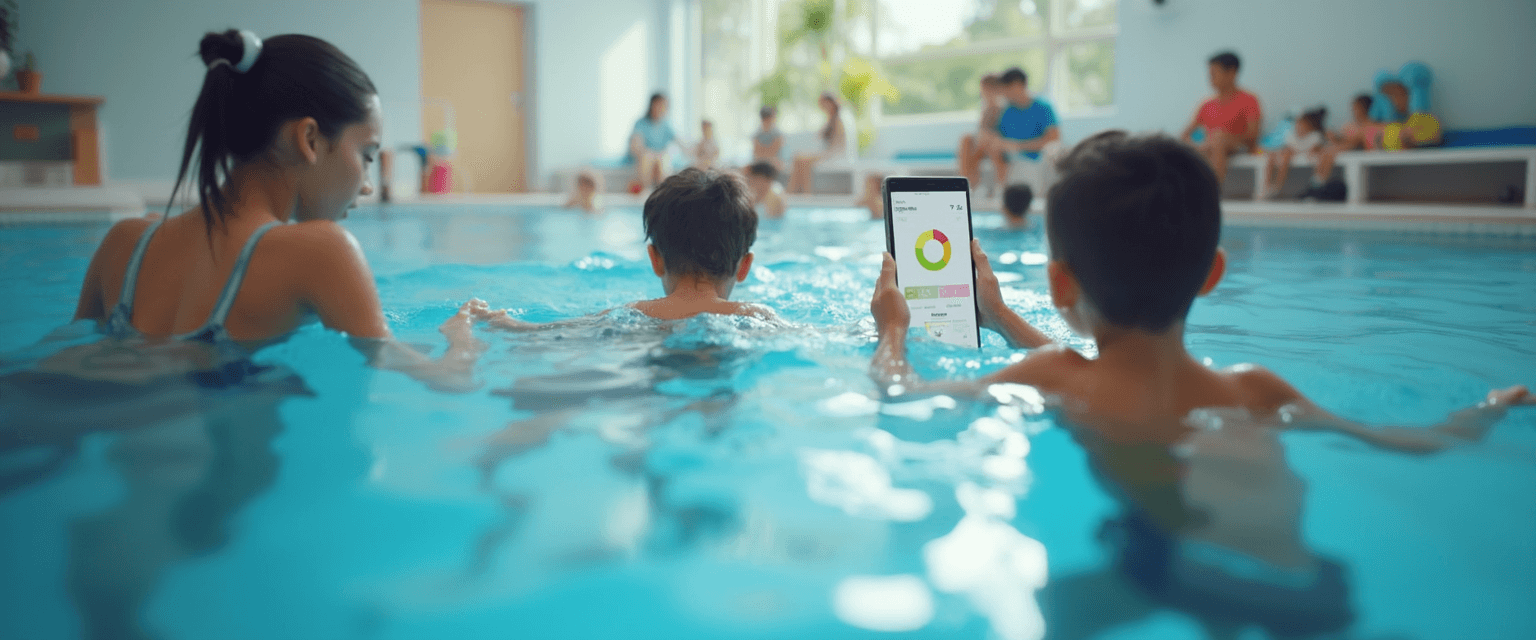
Keep track of swim lesson progress with paper logbooks, checklists, visual aids and a structured plan. This makes progress clear for both parents and instructors, and creates more consistency.
We also cover communication with parents and options to digitize step by step. That way you get a clear view of the learning process without immediately investing in a digital tracking system.
1. Why tracking progress matters
Recording swim lesson progress helps ensure safety, avoids unnecessary repetition and keeps students motivated.
This section explains why that matters and what benefits it offers without using software.
It gives you insight into the learning process, so you can provide targeted support.
Monitoring safety and learning goals
Monitoring safety and learning goals is an important reason to track swim lesson progress.
By knowing which skills a student already masters, the instructor can better judge which exercises are safe to do.
This prevents children from being exposed too quickly to exercises that are too difficult.
It also helps ensure that all important swimming skills are taught step by step.
Avoiding unnecessary repetition
Tracking progress prevents swim lessons from being repeated unnecessarily.
When it is clear which parts are already going well, the instructor can focus on new skills.
This saves time and keeps lessons efficient.
It also prevents students from getting bored by doing the same exercises over and over.
This keeps the learning process goal-oriented and aligned with individual development.
Motivating swimmers
An overview of swim lesson progress can also motivate students.
Students see which steps they have already taken and which goals are next.
This creates a sense of progress and encourages them to continue.
Parents also appreciate seeing how their child develops.
This increases involvement and confidence in the learning process.
What is Swimmigo?
Swimmigo is an independent app with which you can track, assess and celebrate swimming progress, whether you are a parent, an adult learner or an instructor. You are not dependent on the swim school, you stay in control.
For parents the app offers a clear learning path of 7 levels, from Red to Gold, with 86 exercises. You rate each exercise with a simple scoring system, from 0 to 6, and receive a personal swimming certificate for each level achieved. That way you see at a glance where your child stands and what still needs work.
Adults who want to learn or improve use Swimmigo discreetly and without group pressure. The app provides structure, breaks the learning process into manageable steps and helps overcome insecurity. You train at your own pace, when it suits you.
Swim schools and instructors can use Swimmigo completely free as a digital system for student administration, schedules and progress. Parents see their child’s development in real time, without extra work for you. A handy Marketing Toolbox also helps you create professional flyers, social posts and certificates.
2. Simple methods without software
There are several ways to track swim lesson progress without using software.
Here you will find practical methods such as paper logbooks, checklists and scorecards, and the use of photography and video. These tools help instructors and parents keep an overview and make swimmers' development visible.
Using paper logbooks
A paper logbook is a simple and accessible way to record swim lesson progress.
Instructors can make notes per lesson about achieved skills and points of attention. Parents can also consult this logbook to follow along at home. The advantage is that it does not require technical knowledge and can be used immediately during or after the lesson.
Make sure the logbook stays clear and is updated regularly. That gives you a clear picture of learning development.
Checklists and scorecards
Checklists and scorecards provide a structured way to assess skills.
They often contain a list of swimming techniques or goals the student should achieve. During or after the lesson, the instructor can simply tick off what has been achieved. This quickly shows which steps are still needed.
This method helps track progress objectively and prevents important skills from being overlooked. It is also useful for discussing goals with parents and students.
Photography and video as a tool
Photography and video are valuable tools for visually recording swimming skills.
By making images during the lesson, swimmers and parents can see how techniques develop. This supports understanding of what is going well and what needs attention.
Instructors can also review video to give more targeted feedback. It is important to ask permission before making recordings and to store them securely.

3. Bring structure to swim lessons
Good structure in swim lessons helps keep progress clear without software. This section covers standardizing lesson activities, working with clear levels and goals, and scheduling regular evaluation moments. That way you get a clear overview of what is being learned and what the next steps are.
Standardize lesson activities
By standardizing lesson activities, there is more clarity for both instructors and students. This means each lesson has a fixed structure, for example starting with a warm-up, followed by technique training and ending with games or relaxation.
A fixed structure makes it easier to measure and compare progress across lessons. Instructors can also respond faster if a student struggles with a part. For example, consistently practicing breathing techniques in every lesson makes it a recognizable and measurable component.
Clear levels and goals
Clear levels and goals give direction to the learning process. By defining in advance which skills belong to each level, students and parents know what to expect. This prevents confusion and helps set realistic goals.
An example is dividing swimming skills into basic skills, such as floating and breathing, and advanced skills, such as backstroke and breaststroke. Each level has concrete goals to be achieved by the end of a period. That makes it easier to track progress without digital tools.
Regular evaluation moments
Regular evaluation moments ensure progress is not lost. For example, plan a short evaluation after every five lessons to discuss achieved goals. This can be done verbally or with a simple written overview.
Evaluations provide insight into what is going well and where extra attention is needed. Instructors can adjust the lesson program and parents are involved in the learning process. A practical tip is to ask the student about their experiences and goals during these moments.
Swimmigo · Swim lesson app
Free for parents
Follow your child's swimming progress, see where you stand and report absences in the app.

4. Communication with parents and students
Good communication with parents and students is essential for a clear overview of swim lesson progress.
Here you will find how to record and share progress, schedule feedback conversations and use visual aids.
This approach helps keep expectations clear and increases involvement.
Record and share progress
Recording swim lesson progress can be done simply with a clear notebook or a folder with paper reports.
Regularly noting achieved skills and points of attention creates a complete picture.
Progress can then be shared with parents via a short report or a clear list.
This keeps them informed about development and helps them support practice at home.
Schedule feedback conversations
Schedule regular moments to talk with parents and students about progress.
These conversations provide room for questions and give insight into what is going well and what needs attention.
A fixed frequency, for example after every five lessons, helps keep communication structured.
This creates an open dialogue that strengthens trust and motivation.
Use visual aids
Visual aids such as charts, stickers or simple graphs make progress tangible and understandable.
A color system, for example, can clearly indicate which skills are already mastered.
Photos or short videos of exercises can also give parents and students a clear picture of development.
These tools support communication and make the learning process transparent.
5. Tips for future digitization
Here you will read when using software for tracking swim lesson progress can be useful. We also give practical tips to digitize step by step without making big changes right away. Finally, you can consider the costs and benefits of digitization.
When software is useful
Software is especially useful for managing large groups of students and automatically recording progress. If you have multiple instructors, digital registration helps share and synchronize information quickly. Software also offers advantages for scheduling lessons and communicating results to parents. This makes the process clearer and less error-prone.
For smaller swim groups or private lessons, software is less necessary. In those situations a simple paper method can often suffice. Still, software can support here as well, for example by sending reminders or generating reports. It is important to assess which features really add value in your situation.
Small steps toward digitization
Digitizing does not have to happen all at once. Start with small steps, such as entering student data into a spreadsheet. This makes it easier to track and analyze progress without buying a complex system right away. Next, you can use digital checklists to keep track of lesson goals.
Another step is taking digital photos or videos of swimming techniques, which you can easily share with parents. This way you slowly build a digital workflow that matches your pace and needs. That prevents digitization from becoming a big hurdle.
Cost-benefit considerations
When considering digitization, weigh the costs and benefits carefully. Software can require an investment of time and money, for example for purchase, training and maintenance. These costs must be balanced against benefits such as time savings and better communication.
Also think about which features you really need. A comprehensive system with many options is not always necessary and can be unnecessarily expensive. Choose a solution that fits your organization and goals, so digitization stays practical and affordable.

Summary
Summary
Software for tracking swim lesson progress is especially useful for large groups and multiple instructors. It helps automatically record progress and plan lessons.
For small groups a paper method can suffice, but software also offers extra support such as reminders and reports.
Why a digital tracking system helps
A digital tracking system clarifies communication with parents and students. Progress is recorded and shared, which increases involvement.
Standardizing lesson activities and having clear levels also creates overview. This makes it easier to measure progress and provide targeted support.
Practical methods such as paper logbooks and checklists are simple and effective. They provide a clear view of swim lesson progress without technical knowledge.
Tracking progress helps ensure safety and avoid unnecessary repetition. This lets the instructor better judge which exercises are appropriate.
You can try Swimmigo for free via https://swimmigo.com.
Sources

Bob van Soest
As an expert in operating sports facilities (such as swimming pools) and developer of, among others, Swimmigo.com, I am passionately committed to making swimming lessons simpler, more fun and more insightful for parents, swimming instructors and everyone who wants to learn to swim.
Frequently Asked Questions
Related articles
When to start swimming lessons for optimal progress
Read from what age swimming lessons are effective for the best results and your child’s safety in the water.
Effectively recording swim lesson progress: from what age?
Find out from what age it makes sense to record swim lesson progress and how to do that in practice.

Efficiently record swimming lesson progress per group
Practical tips for tracking swimming lesson progress per group for parents and instructors.
Discover Swimmigo
The all-in-one app for swimming lesson progress. For parents, swim schools, and adult swimmers.