HowOftenperWeekisOptimalforSwimmingLessons?1xor2xperWeek[2026]
![How Often per Week is Optimal for Swimming Lessons? 1x or 2x per Week [2026]](/_next/image?url=https%3A%2F%2Fzvblogpostimages.s3.eu-west-3.amazonaws.com%2FAUTOMATISCH_UPLOAD%2F1_7974bc92bef5.jpg&w=3840&q=75&dpl=dpl_GWyfLj8UVegbQ18STkVQms8Vj7LD)
Summary
- Twice per week swimming lessons lead on average to 40 to 50 percent faster diploma attainment than once per week
- Motor learning works best with short intervals: the more often you practice, the deeper the skill is ingrained
- The best frequency depends on your child's age, presence of water fear, your budget, and your family schedule
- With Swimmigo you track your child's progress in real-time, regardless of whether you choose 1x or 2x per week lessons
What Does Research Say About Swimming Lesson Frequency?
Most swimming schools in the Netherlands offer swimming lessons as a weekly session lasting 30 to 60 minutes. However, more and more schools are also offering intensive programs: twice a week, or even holiday courses with daily lessons. Which frequency really delivers the best results?
Children learn motor skills best through short, frequent practice sessions. This is one of the best-documented principles in sports science: the spacing effect. The shorter the time between two practice moments, the deeper the movement is ingrained. For swimming, this means concretely that two times 30 minutes per week yields more progress than one time 60 minutes.
Children who practice more often generally achieve their A diploma faster. In countries like Australia and the USA, where the CDC promotes swimming lessons as part of water safety policy, programs with two to three lessons per week are the norm.
Motor Learning: Why Repetition Matters
Motor learning occurs in three phases: the cognitive phase (understanding what to do), the associative phase (practicing and refining), and the autonomous phase (performing automatically). In swimming lessons, most of the lesson time is spent in the associative phase: repeatedly practicing arm strokes, leg movements, and breathing technique.
A child who has a 45-minute lesson once a week has seven days without guided practice between lessons. During that week, some of what was learned fades. The brain must "recall" where it left off at the next lesson. This explains why children who practice more often progress faster: the learning curve keeps rising instead of having to start over each time.
The International Context: What Do Other Countries Do?
Worldwide, there are large differences in how swimming lessons are offered. In Australia, a country with a strong swimming culture, twice-weekly lessons are the norm for young children. In Scandinavia, swimming lessons are often integrated into the school curriculum with multiple sessions per week. The World Health Organization (WHO) recommends that all children have access to basic swimming skills training, preferably with sufficient frequency to retain the skills.
This international perspective is relevant because Swimmigo is used in five languages by parents and instructors worldwide. What is standard in the Netherlands is not necessarily the optimal approach. Science points in one direction: more contact hours per week accelerate the learning process, regardless of the country or specific swimming diploma system.
The CBS reports that in 2024 a significant portion of Dutch children still do not complete the full Zwem-ABC before their twelfth birthday (CBS StatLine, 2024). This raises the question whether the traditional frequency of once per week is sufficient to make children water safe in time.
Once per Week Swimming Lessons: Advantages and Disadvantages
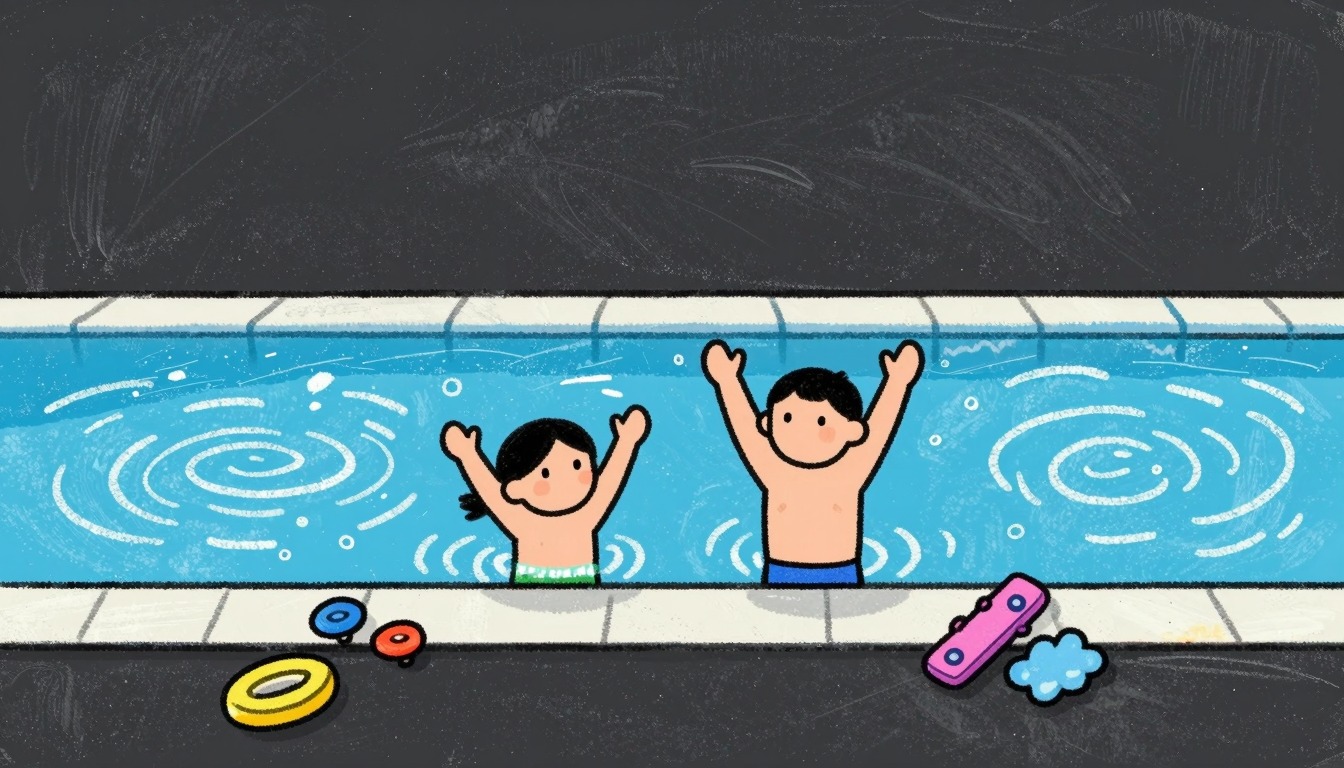
Once per week swimming lessons are the standard in the Netherlands. Most swimming schools schedule their lessons in fixed weekly blocks of 45 to 60 minutes. This approach has clear advantages but also serious limitations.
Advantages for the Family
The main reason parents choose once per week is practical. Swimming lessons are one of many activities in a busy family life. With work, school, other sports, and social commitments, a weekly lesson is often the maximum feasible. Costs also play a role: an average swimming lesson costs between €8 and €15 per session, and twice per week doubles that bill.
Additionally, there is the risk of overload. Children who already have a full week with school, homework, and other hobbies may benefit from the rest that a less intensive schedule offers. Swimming lessons should remain fun, and for some children, once per week is just right to keep motivation high.
Disadvantages for Progress
The biggest disadvantage of once per week is the lack of continuity. There is a whole week between two lessons during which the acquired skills slowly fade. Instructors often notice that the first ten minutes of each lesson are spent "refreshing" what was learned last time. This significantly slows overall progress.
From experiences of swimming schools offering both options, children who have lessons once per week take on average one and a half to two times longer to obtain a diploma than children who come twice per week.
Who is Once per Week Suitable For?
Once per week lessons can be a good choice if your child is young (3 to 5 years) and still in the water familiarization phase. Also, if there is no specific time pressure, for example because your child has years before swimming independently in open water, a relaxed pace can work well. The same applies to children who swim freely with the family besides the lessons, gaining enough water experience that way.
Twice per Week Swimming Lessons: Advantages and Disadvantages
Twice per week swimming lessons are for many children the fastest route to a swimming diploma. Swimming schools often call it a "turbo program" or "intensive program," but it boils down to the same principle: more hours in the water per week.
Faster Progress, Proven Results
Science is clear: frequency is the biggest predictor of learning speed for motor skills. Children who have lessons twice per week achieve their A diploma on average in 12 to 18 months, compared to 18 to 30 months with once per week. The difference is not only faster but also more thorough: skills are ingrained more deeply because there is less time between practice sessions.
An additional advantage is that the instructor has more opportunities to differentiate. With a higher lesson frequency, the instructor can dedicate one lesson to technique and the other to fitness or playful practice, without compromising overall progress.
Extra Costs and Time Investment
The downside is clear: twice per week swimming lessons cost twice as much. At an average rate of €12 per lesson, this amounts to about €96 per month instead of €48. For many families, this is a serious amount, especially if multiple children attend swimming lessons.
Additionally, it requires more organization: driving back and forth twice a week, changing and showering twice a week, and blocking time in the agenda twice a week. For working parents with multiple children, this can be quite a logistical puzzle.
Who is Twice per Week Suitable For?
Twice per week is ideal for children who are a bit older (from 6 years) and ready for a more serious pace. Also, if there is a concrete deadline, for example a holiday where the child must be able to swim safely in open water, an intensive program can be the best choice. Children with water fear also benefit from more contact hours: fear of water disappears faster as a child gains more positive experiences in the water.
Which Factors Determine the Best Choice for Your Child?
There is no universal right answer to whether you should choose swimming lessons once or twice per week. The optimal frequency depends on a combination of factors that vary per child and family.
Child's Age
Young children (3 to 5 years) have shorter attention spans and tire more quickly. For this group, two shorter sessions of 30 minutes per week are often more effective than one long lesson. Older children (from 6 years) can handle longer sessions and benefit maximally from the higher frequency because their motor learning ability peaks at this age.
Water Fear and Self-Confidence
For children who are anxious in the water, frequency may be the most important factor. Water fear often arises because water feels unpredictable and unfamiliar. The more often a child is in the water, the faster that unfamiliarity disappears. Twice per week lessons, supplemented with free swimming on weekends, can make the difference between a child enjoying swimming and a child struggling with fear.
Available Time and Budget
This is the decisive factor for most families. Be honest with yourself about what is feasible. A family that chooses twice per week but drops out after two months due to logistical pressure is worse off than a family that consistently attends once per week. Consistency weighs more than intensity.
Parental Goals
What do you want to achieve with the swimming lessons? Is it about short-term water safety, for example because you are going on holiday soon to a destination with lots of water? Then an intensive program is the best choice. Is it about a solid foundation for the long term, without time pressure? Then once per week can suffice. It helps to be clear about this beforehand so you don’t doubt your choice halfway through.
How Swimmigo Helps, Regardless of Your Choice
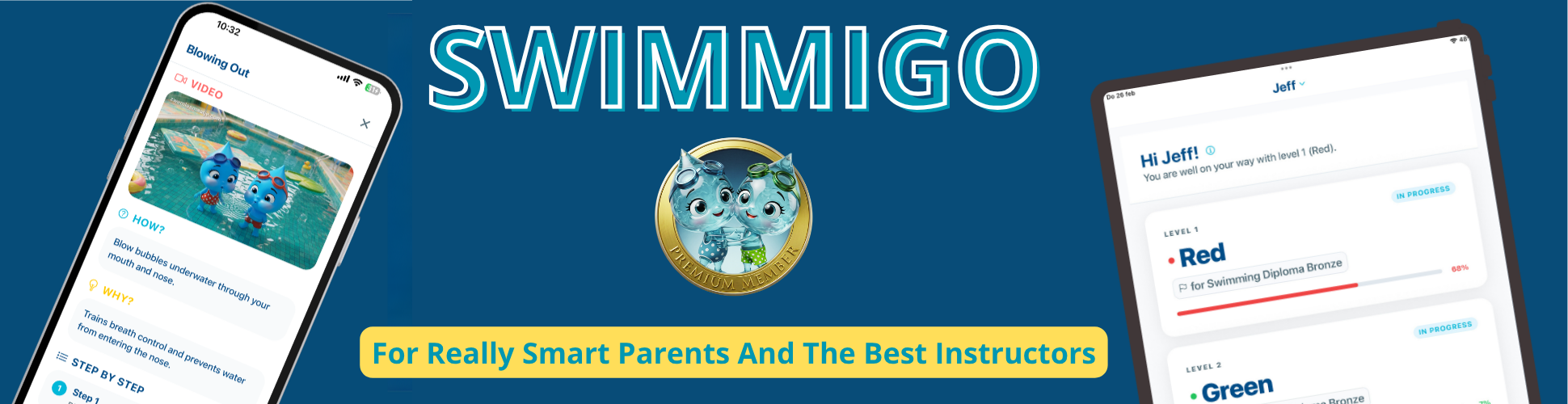
Whether you choose swimming lessons once or twice per week: what you really want as a parent is to know how your child is doing. You want to see if there is progress, which exercises go well, and what still needs work. This is exactly where Swimmigo makes the difference.
Tracking Progress, Week After Week
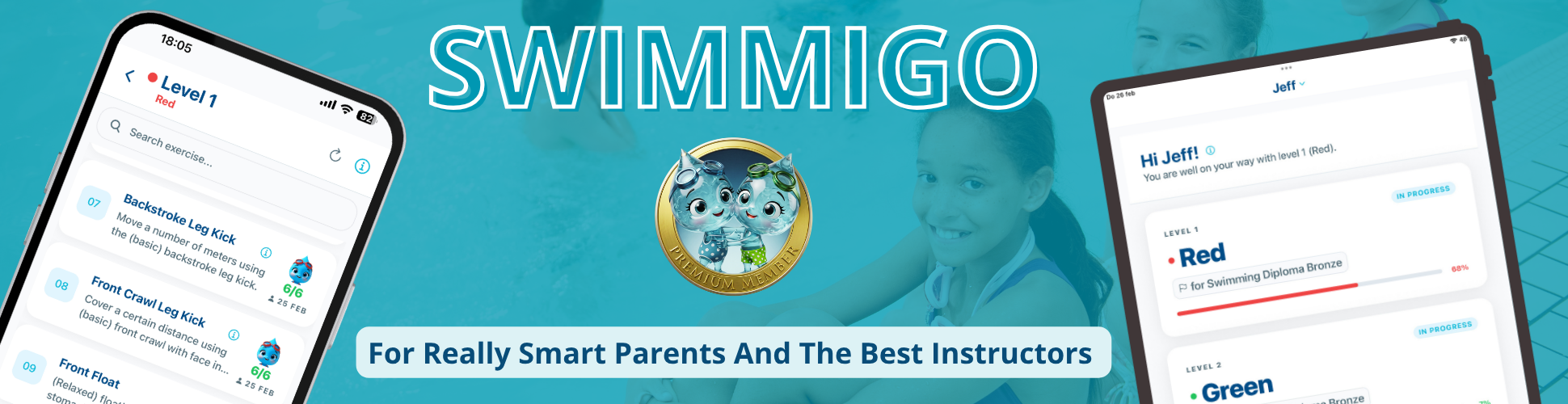
Swimmigo gives you real-time insight into your child's progress, regardless of lesson frequency. You see per exercise how your child scores on the 0 to 6 smiley system. This makes it easier to assess whether the chosen frequency works. If you notice progress stagnates with once per week, you know it’s time to consider an extra lesson. If you see rapid progress, you can confidently stick with once per week.
Parent Communication Without Hassle
Many parents feel frustrated because they don’t know what happens during the lesson. You drop your child off at the pool, wait an hour, and afterwards hear "it was fun." With Swimmigo, you get an update after each lesson: which exercises were done, how it went, and what the next goal is. This works whether your child swims once, twice, or five times per week. Full transparency makes choosing a lesson frequency much less stressful.
The choice between once or twice per week swimming lessons is personal. There is no wrong answer. The most important thing is that your child is consistently in the water, learns with pleasure, and that you as a parent are involved in the progress. With Swimmigo, you always have insight into how things are going, so you can adjust at any time if needed.
Sources
- National Council for Swimming Safety (NRZ): official website with guidelines for swimming lessons and water safety in the Netherlands
- NRZ Research and Knowledge: publications on swimming skills and diploma attainment
- CBS StatLine: Children's Swimming Skills: statistics on swimming diploma attainment among Dutch children, 2024
- WHO: Drowning Fact Sheet: global figures and recommendations for swimming skills training
- CDC: Drowning Facts: US guidelines and statistics on water safety and the importance of swimming lessons
- RoSPA: Water Safety: UK accident prevention organization with guidelines for swimming education

Bob van Soest
As an expert in operating sports facilities (such as swimming pools) and developer of, among others, Swimmigo.com, I am passionately committed to making swimming lessons simpler, more fun and more insightful for parents, swimming instructors and everyone who wants to learn to swim.
Frequently Asked Questions
Related articles

Why Showering Before Swimming Lessons Is So Important
Why shower before swimming lessons? Discover why hygiene and preparation are crucial for the best swimming experience. Read our tips and avoid surprises!
When to Start Swimming Lessons for Optimal Progress
Read from which age swimming lessons are effective for the best results and safety of your child in the water.

Effectively Registering Swimming Lesson Progress from What Age?
Discover from what age you should best register swimming lesson progress and how to do this practically.
Discover Swimmigo
The all-in-one app for swimming lesson progress. For parents, swim schools, and adult swimmers.