The First Swimming Lesson: How to Prepare Your Child for the Big Day [2026]
![The First Swimming Lesson: How to Prepare Your Child for the Big Day [2026]](/_next/image?url=https%3A%2F%2Fzvblogpostimages.s3.eu-west-3.amazonaws.com%2FAUTOMATISCH_UPLOAD%2F1_7b2f47322895.jpg&w=3840&q=75&dpl=dpl_HNfPD3TqcZ6YivYMd3CXCgSrAu42)
Summary
- Most children start swimming lessons between their fourth and fifth year, and the first lesson is about getting used to it, not performing.
- Make your child water-comfortable before the first lesson: blowing bubbles, floating, and splashing in the bath build confidence.
- Bring the right items: snug swimwear, towel, slippers, bathrobe, and a plastic bag for wet clothes.
- A child who cries or is quiet during the first lesson is normal. Stay visible on the side and let the instructor establish contact.
- Worldwide, around 300,000 people drown annually, and children under five make up nearly a quarter of that.
Your child's first swimming lesson. The swim bag is ready, the swimwear is laid out, and you both have butterflies in your stomach. What will happen? Will your child dare to go into the water? And what does the instructor actually expect from you? Every parent recognizes this moment, whether you live in Amsterdam, Berlin, or Madrid. The good news: with a few simple preparations, you can make that first lesson a great start for both of you.
Why the First Swimming Lesson is So Exciting
A New World for Your Child
A swimming pool is an overwhelming place for a four-year-old. Large spaces, echoing sounds, the smell of chlorine, unfamiliar children, and a teacher you've never seen before. No wonder many children are quiet or even cry during the first lesson. Zwemschool De Winter Sport sees this every week: a child who is a bit withdrawn during the first lesson often blossoms after just two or three lessons. It takes getting used to, but that takes time.
Also for You as a Parent
It's just as much of an adjustment for you. You're handing your child over to someone else in the water for the first time while you stand on the side. Can you watch? Are you allowed to say something? What if your child cries? Letting go is part of parenting, but it remains nerve-wracking. At most swimming schools, instructors are in the water themselves, close to your child, and groups are small. A group of five or six children is normal.
Why That First Impression Matters
The stakes are higher than just a diploma in the long run. Worldwide, around 300,000 people drown annually, and children under five make up nearly a quarter of all victims, reports the World Health Organization. Drowning is the fourth leading cause of death among children aged 1 to 4 years and the third among children aged 5 to 14 years globally. Learning to swim is therefore one of the most important skills a child can acquire, in any country, in any type of water. A good first experience ensures your child looks forward to lessons, and that enjoyment carries through the entire journey to the diploma.
At What Age Does Swimming Lesson Start?
The Recommended Age is 4 to 5 Years
Most children start between their fourth and fifth year. At that age, they can follow instructions, dress and undress themselves reasonably well, and have enough motor skills for the exercises. The requirements for the A diploma are still too demanding for a three-year-old, and starting primary school already takes a lot of energy. Pools like Merwestein therefore advise: the earlier a child is safe in the water, the better, but feel free to wait half a year if your child has just started school.
Being Water-Comfortable is Different from Swimming
Being water-comfortable means a child feels comfortable in the water: they dare to float, splash, and go underwater. Swimming is the next step, with official swimming strokes. That first phase of the swimming lesson is aptly called becoming water-comfortable. Ouders van Nu explains that learning through play is key here, with tasks like blowing bubbles and retrieving objects.
How to Know if Your Child is Ready
Age is a guideline, not a guarantee. Look at your child: do they listen to other adults, can they undress themselves, do they dare to have water over their face? Children who need a bit more time are not an exception. Merwestein uses the rule of thumb that eighty percent of children learn at an average pace, ten percent faster, and ten percent slower. That is normal, no problem.
How to Prepare Your Child for the First Lesson
Start at Home with Water Acclimatization
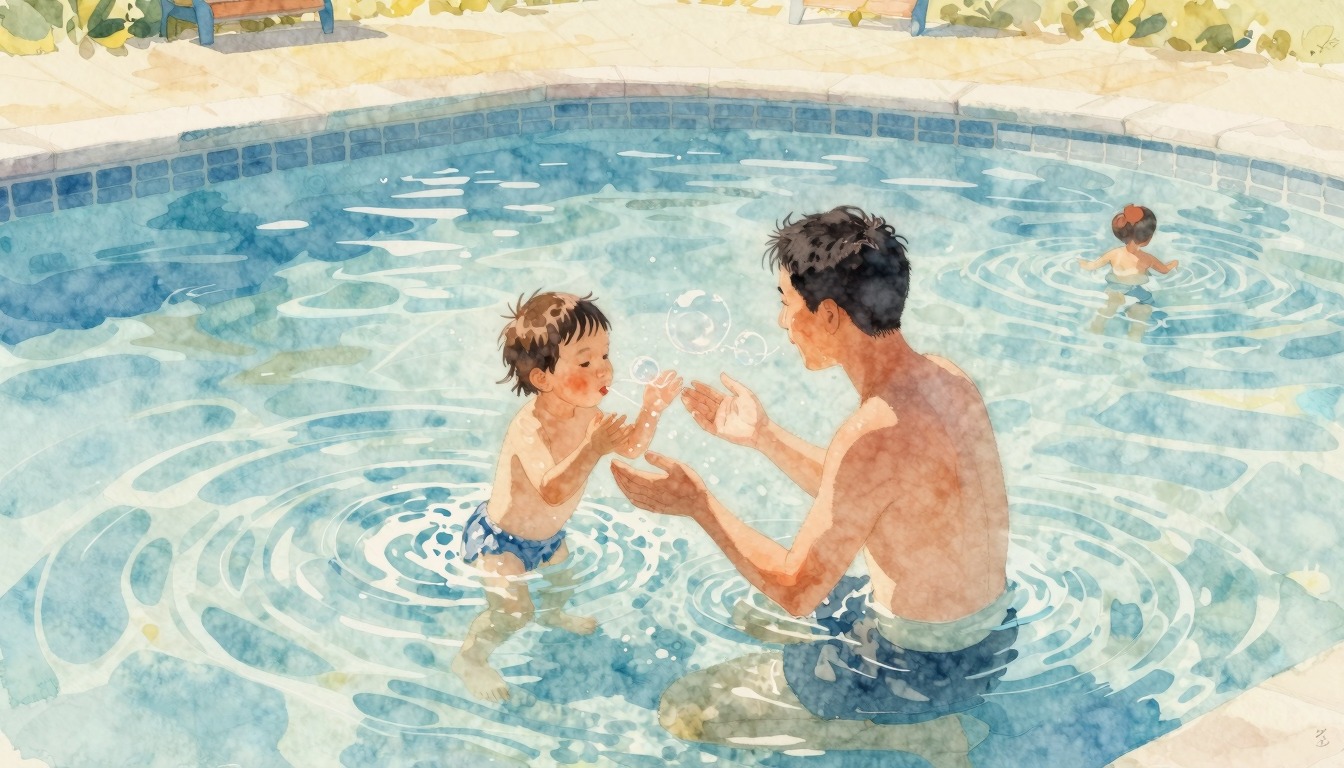
The easiest preparation happens at home, in the bath or shower. Let your child blow bubbles, let water run over their face, and pick up toys from the bottom of the bathtub. Small steps, without pressure. A child who is already used to water on their face at home has an advantage in the first lesson. It's the same exercise instructors recommend worldwide, whether the lesson takes place in the Netherlands, Germany, or Spain.
Go Together to the Leisure Pool
One or two visits to the leisure pool before the first lesson work wonders. Walking together through the shallow water, splashing, jumping from the edge into your arms. It's not training, it's fun. Children who already know the pool are less overwhelmed by the new environment and can focus their attention on the lesson itself.
Talk Positively About the Swimming Lesson
The words you choose determine how your child views the lesson. Tell them what will be fun: playing in the water, making new friends, a real teacher. Warnings like "be careful, water is dangerous" do more harm than good. Merwestein explicitly warns against this: children who hear that water is scary become afraid of it. Your own attitude is contagious, both positively and negatively.
Practice the Routine of Changing and Showering
For many children, changing in a busy changing room is just as exciting as the water itself. Practice the sequence at home: undress, put on swimwear, shower, dry off, get dressed again. This way, your child knows exactly what to expect during the first lesson and has energy left for swimming.
Swimmigo · Swim lesson app
Free for parents
Follow your child's swimming progress, see where you stand and report absences in the app.

What to Bring to the First Swimming Lesson?
The Swim Bag, a Complete Checklist
A complete bag prevents rushed hassle at the reception and in the changing room. This is what most swimming schools recommend:
| Items | Why |
|---|---|
| Swimwear that fits well | A bikini or snug swim trunks feel better than loose shorts or a swimsuit |
| Towel and bathrobe | To stay warm quickly after the lesson |
| Slippers | For the wet floors around the pool |
| Clean underwear | For after showering |
| Plastic bag | For all wet items on the way home |
| Water or a small snack | Swimming takes energy |
Choose the Right Swimwear
Loose swim shorts or an uncomfortable swimsuit hinder a child during practice. Choose something that fits snugly and allows your child to move easily. Ouders van Nu advises a bikini or snug swim trunks and recommends putting the swimwear on at home under regular clothes. This reduces hassle in the changing room and gives your child security.
Arrive Early
Being present ten minutes before the start is enough to change calmly, use the toilet, and get used to the sounds and warmth of the pool together. Coming in rushed passes that tension on to the child. De Winter Sport recommends that the accompanying adult wear light clothing because it is warm on the side.
What Happens During the First Lesson?
The Structure of a First Lesson
The first lesson follows almost the same pattern everywhere. The group gathers at the edge, the instructor introduces themselves, and the children enter the water one by one, often via the stairs or a step. Then short exercises follow: splashing, floating with help, blowing bubbles. Everything lasts only a few minutes so children don't get overwhelmed. The lesson is short, usually around thirty minutes for beginners.
Becoming Water-Comfortable is Central
The first phase is all about trust, not technique. Can your child float on their stomach and back, dare to go underwater, can they blow bubbles? These skills form the foundation on which breaststroke and backstroke are later built. Some swimming schools use flotation aids like corks or pool noodles, others start directly in shallow water. Both methods work.
Crying is Part of It
A child who cries or stays on the side during the first lesson is not a problem child. They just need to get used to it. Instructors are trained for this: they build contact calmly, give small successes, and do not force anything. Stay calm and visible on the side as a parent so your child knows you are there. Most children swim along after three or four lessons.
After the First Lesson: How to Track Progress
The First Lesson is the Start of a Journey
After the first lesson, dozens more follow. On average, a child who starts around age five obtains diploma A within one and a half years, about 48 to 50 clock hours of swimming lessons, estimates Ouders van Nu. Diplomas B and C usually follow faster, around twelve clock hours per diploma. Only with the full ABC is a child truly water-safe, also in open water. In the Netherlands, in 2024, 14 percent of children between 6 and 12 years still had no swimming diploma, reports the National Council for Swimming Safety. So keep going after the first lesson.
Record What Your Child Learns
Children rarely tell at home what they practiced during the lesson. "Fun" is often the only answer. Yet as a parent, you want to know where your child stands. Swimmigo lists swimming skills clearly: seven levels, 86 skills, from water acclimatization to diploma. You see per exercise whether your child masters it or is still practicing, and you get a notification when a level is reached. This way you track progress without your child having to say anything. The app is used worldwide and is available in Dutch, English, German, French, and Spanish.
Keep Swimming Between Lessons
One lesson per week is the minimum, but children who also swim in between progress faster. It doesn't have to be a lesson: sliding down the slide together, playing in the shallow pool, floating like a starfish. Regular water contact maintains acclimatization and makes every next lesson a party. British research by Swim England shows that 84 percent of parents see that swimming lessons increase their child's self-confidence. That effect starts with the first lesson.
Conclusion
The first swimming lesson is a milestone, for your child and for you. Prepare with water acclimatization at home, a complete swim bag, and a positive attitude, and little can go wrong. Crying and hesitation are part of getting used to it, and most children can't be kept out of the water after a few lessons. Then track progress so you see every step from water comfort to diploma.
Want to know more? See how Swimmigo for parents works, how the seven levels are structured, or what a student tracking system means for your child.
Swimmigo · Swim lesson app
Free for parents
Follow your child's swimming progress, see where you stand and report absences in the app.
Sources
- World Health Organization (WHO): Drowning fact sheet, May 2026
- Ouders van Nu: Swimming lessons, when to start and what your child learns, consulted August 2026
- National Council for Swimming Safety: More children obtain swimming diplomas A, B, and C, November 10, 2025
- De Winter Sport: The first swimming lesson, how to make it a success, consulted August 2026
- Merwestein: Handy tips for swimming lessons, consulted August 2026
- Swim England: How swimming lessons benefit children beyond the pool, consulted August 2026

Bob van Soest
As an expert in operating sports facilities (such as swimming pools) and developer of, among others, Swimmigo.com, I am passionately committed to making swimming lessons simpler, more fun and more insightful for parents, swimming instructors and everyone who wants to learn to swim.
Frequently Asked Questions
Related articles
When to Start Swimming Lessons for Optimal Progress
Read from which age swimming lessons are effective for the best results and safety of your child in the water.
Effectively Registering Swimming Lesson Progress from What Age?
Discover from what age it is best to register swimming lesson progress and how to approach it practically.

Efficiently Registering Swimming Lesson Progress per Group
Practical tips for tracking swimming lesson progress per swimming lesson group for parents and instructors.
Discover Swimmigo
The all-in-one app for swimming lesson progress. For parents, swim schools, and adult swimmers.