Effectively recording swimming lesson progress per student

Summary
- Consistent recording with fixed evaluation moments provides insight into each student.
- Digital tracking systems make progress clear and improve communication with parents.
- Motivation is maintained through fun, clear goals and tailored lessons.
Use a structured recording method per student by combining manual notes with a digital tracking system, so swim schools and parents get a clear overview of development. Clear communication with parents and attention to motivation improve scheduling and continuity of lessons.
The information helps instructors and parents better tailor guidance and keep the learning process clear.
1. Importance of swimming lesson progress
Recording swimming lesson progress per student is essential for a clear overview. In this chapter you will read why monitoring is important, what benefits it offers to students and parents, and what role the instructor plays.
This gives a clear picture of development and allows guidance to be better aligned.
Why monitor progress
Monitoring progress in swimming lessons helps to make each student’s development visible. This way you can determine which skills are already mastered and which still need attention.
That prevents important steps from being skipped or students from lingering too long at one level. It also provides an objective basis for adjusting the lesson program to the child’s pace.
By recording progress regularly, you create an overview that helps plan next steps and set realistic goals.
Benefits for student and parent
Tracking swimming lesson progress offers clear benefits for students and parents. Parents gain insight into what their child can already do and what still needs work.
This builds confidence and makes it easier to support practice at home. For the student, it is motivating to see which steps have already been taken.
It gives a sense of progress and encourages perseverance. Moreover, parents can more easily contribute to the learning process and ask focused questions.
Role of the instructor
The instructor plays a central role in recording swimming lesson progress. He or she observes carefully which skills the student masters and which need more practice.
By documenting this information, the instructor can better tailor the lessons to individual needs. This creates a more efficient learning process and prevents frustration for the student.
Good records also help keep communication with parents clear and transparent. That creates a joint approach that improves learning outcomes.
What is Swimmigo?
Swimmigo is an independent app that lets you track, assess and celebrate swimming progress, whether you are a parent, an adult learner or an instructor. You are not dependent on the swim school, you stay in control.
For parents the app offers a clear learning path of 7 levels (from Red to Gold) with 86 exercises. You score each exercise with a simple scoring system (0 to 6) and receive a personal swimming certificate for each achieved level. That way you can see at a glance where your child stands and what still needs attention.
Adults who want to learn or improve swimming use Swimmigo discreetly and without group pressure. The app provides structure, breaks the learning process into manageable steps and helps overcome insecurity. You train at your own pace, when it suits you.
Swim schools and instructors can use Swimmigo completely free as a digital system for student administration, schedules and progress. Parents see their child’s development in real time, without extra work for you. A handy Marketing Toolbox also helps create professional flyers, social media posts and certificates.
2. Methods for recording
There are different ways to register swimming lesson progress per student.
These methods range from manual notes to advanced digital systems.
Communication with parents also plays an important role in sharing progress.
Manual progress notes
Manual progress notes are a traditional way to track a student’s development.
Instructors write short observations and recorded skills on paper or in a notebook during or after the lesson.
This can be simple, but it requires discipline to remain consistent and organized.
An advantage is that it is immediately applicable without technical tools.
A drawback is that the overview can sometimes be lacking and information is harder to share with parents.
Therefore, it is important to agree clearly on what and when is recorded.
Digital registration system
A digital registration system offers a structured and accessible way to document progress.
Instructors can enter skills, comments and earned diplomas via an app or web platform.
This system makes it easy to follow and analyze progress per student.
Parents can often view it directly, which increases engagement.
A practical example is using standard lists of swimming skills that can be checked off easily.
That gives a clear overview of what a child already can do and where attention is still needed.
Communication with parents
Communication with parents is essential to convey swimming lesson progress clearly.
Regular updates, for example by email or a parent portal, create transparency.
This allows parents to support and encourage practice at home.
It is important to keep information understandable and concrete, without jargon.
An example is sharing short reports after each course period with achieved goals and tips.
That way parents feel involved and know exactly how their child is developing.
3. Keeping children motivated
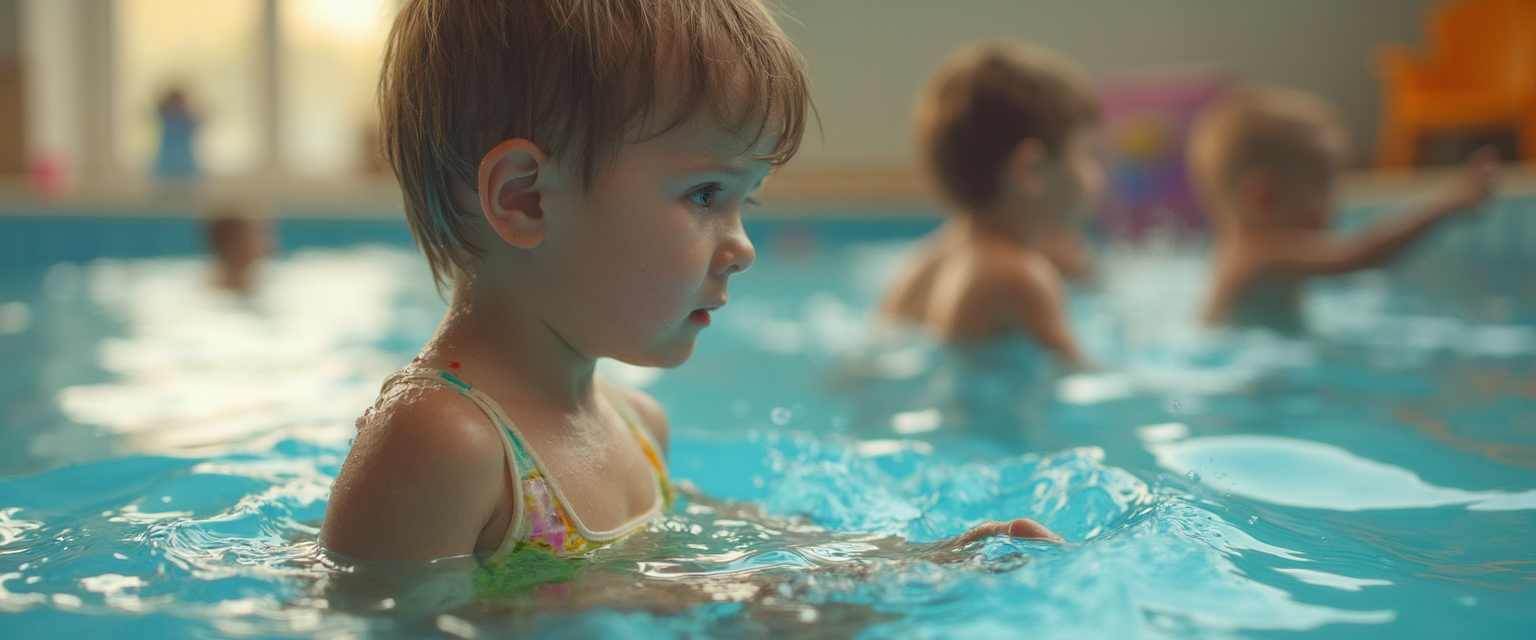
Maintaining motivation in children during swimming lessons requires attention to fun, clear goals and customization.
By adding playful elements, setting and celebrating goals, and adapting lessons to individual needs, learning stays attractive.
This approach helps children remain engaged and enthusiastic throughout the swimming journey.
Adding playful elements
Playful elements make lessons more fun and increase engagement.
For example, integrate games that align with the skills being practiced.
Swimming with friends or small rewards also boosts enjoyment.
That makes the lesson less routine and more something to look forward to.
Setting and celebrating goals
Setting achievable goals helps children see progress and stay motivated.
These goals can be short-term steps, like mastering a certain stroke, or long-term goals such as earning a diploma.
Celebrating achieved goals, for example with praise or a small token, reinforces the sense of success.
This shows children their effort is valued and keeps them focused on improvement.
Adapting to individual needs
Not every child learns the same way or at the same pace.
Adapting lessons to individual needs, for instance with smaller groups or private lessons, makes the learning process more effective.
Also aligning lesson content with the child’s preferences and energy level supports motivation.
This personal approach prevents frustration and makes swimming more enjoyable and accessible.
Swimmigo · Swim lesson app
Free for parents
Follow your child's swimming progress, see where you stand and report absences in the app.

4. Dealing with challenges
Here you learn how to recognize signs of fatigue and busy schedules in students. Alternatives to group lessons that may better suit individual needs are discussed. Finally, you will read how parents and children can be actively involved in the lesson process.
Recognizing fatigue and busyness
Fatigue in children can show as less concentration and reluctance during lessons. Watch for signs such as yawning, irritability or reduced enthusiasm. Busy days with school and other activities can strongly affect a child’s energy. By recognizing this early, lesson planning can better match the child’s energy level.
A practical tip is not to schedule lessons immediately after an intensive day. A light snack before the lesson can also help improve focus. That keeps the child motivated and progress easier to record. The registration system can support these observations by adding comments about fatigue.
Alternatives to group lessons
Group lessons are not always the best option for every child. Some children become overwhelmed faster or need more individual attention. Small groups or private lessons are then a good alternative. These formats offer more calm and space to practice at one’s own pace.
Offering alternatives allows the swim school to better respond to different learning needs. This increases lesson effectiveness and prevents children from dropping out. The digital tracking system can help by monitoring progress by lesson format. That keeps it clear which approach works best for each student.
Involving parents and the child
Involving parents and children in the learning process strengthens motivation and confidence. By sharing progress regularly, parents better understand where their child stands. This can be via digital reports or short conversations after the lesson.
It is also valuable to let the child indicate what they like during lessons. This promotes a positive experience and encourages involvement. Setting goals together with parents and the child makes progress concrete and visible. That creates a shared responsibility for the learning process.
5. Tips for consistent recording
Consistent recording of swimming lesson progress requires a fixed approach. Regular evaluations, clear reports and visual aids help. These three aspects provide overview and clarity for everyone.
Regular evaluation moments
Schedule fixed moments to evaluate each student’s progress. This can be, for example, after every five lessons or at the end of a lesson block. That keeps records up to date and makes it easier to spot changes.
During these evaluations you note concrete skills and points for attention. This prevents important details from being lost. It also helps work specifically on improvements.
An example is recording mastery of a specific stroke or breathing technique. That gives a clear picture of development per student.
Clear and simple reporting
Keep reports clear and simple. Use short, clear descriptions without jargon. This makes them understandable and useful for parents and students.
A standard format with fixed sections helps stay consistent. For example: skills, points for attention and tips for practicing at home. This enables quick and clear communication.
It is also handy to make reports available digitally. That way parents can always find them and the information stays centrally stored.
Use of visual progress
Visual aids make progress visible and motivate students. Think of charts, color codes or stickers that mark achieved goals. This makes results tangible.
An example is a progress chart where each new skill is ticked off. This gives a clear overview of what has been learned and what still needs attention.
Visual displays also help instructors quickly see where extra focus is needed. That keeps guidance targeted and effective.

Summary
Summary
Consistent recording of swimming lesson progress requires fixed evaluation moments and clear reports. This creates an overview and insight into each student’s development.
It is important to recognize signs of fatigue and busy schedules in children. That way lesson planning can better match the child’s energy level.
Motivation is maintained through fun, clear goals and customization in lessons. Playful elements and small rewards make lessons more appealing.
There are various methods to record progress, from manual notes to advanced digital systems. Communication with parents plays an important role.
Monitoring progress helps make development visible. This prevents students from staying too long at the same level and supports setting realistic goals.
Why a digital tracking system helps
A digital tracking system provides a structured way to record and share swimming lesson progress. It makes evaluations clear and accessible for instructors and parents.
Regular recording creates a clear picture of skills and points for attention per student. This supports a focused approach and better alignment of the lesson program.
You can try Swimmigo for free via https://swimmigo.com.
Thanks for your time and interest.
Sources

Bob van Soest
As an expert in operating sports facilities (such as swimming pools) and developer of, among others, Swimmigo.com, I am passionately committed to making swimming lessons simpler, more fun and more insightful for parents, swimming instructors and everyone who wants to learn to swim.
Frequently Asked Questions
Related articles
When to start swimming lessons for optimal progress
Read from what age swimming lessons are effective for the best results and your child’s safety in the water.
Effectively recording swim lesson progress: from what age?
Find out from what age it makes sense to record swim lesson progress and how to do that in practice.

Efficiently record swimming lesson progress per group
Practical tips for tracking swimming lesson progress per group for parents and instructors.
Discover Swimmigo
The all-in-one app for swimming lesson progress. For parents, swim schools, and adult swimmers.