Easily track swimming lesson progress during class
Summary
- Tailored swimming lessons improve learning and motivation in children.
- Digital tracking system records progress and increases engagement.
- Consistent lesson structure and breaks provide safety and effectiveness.
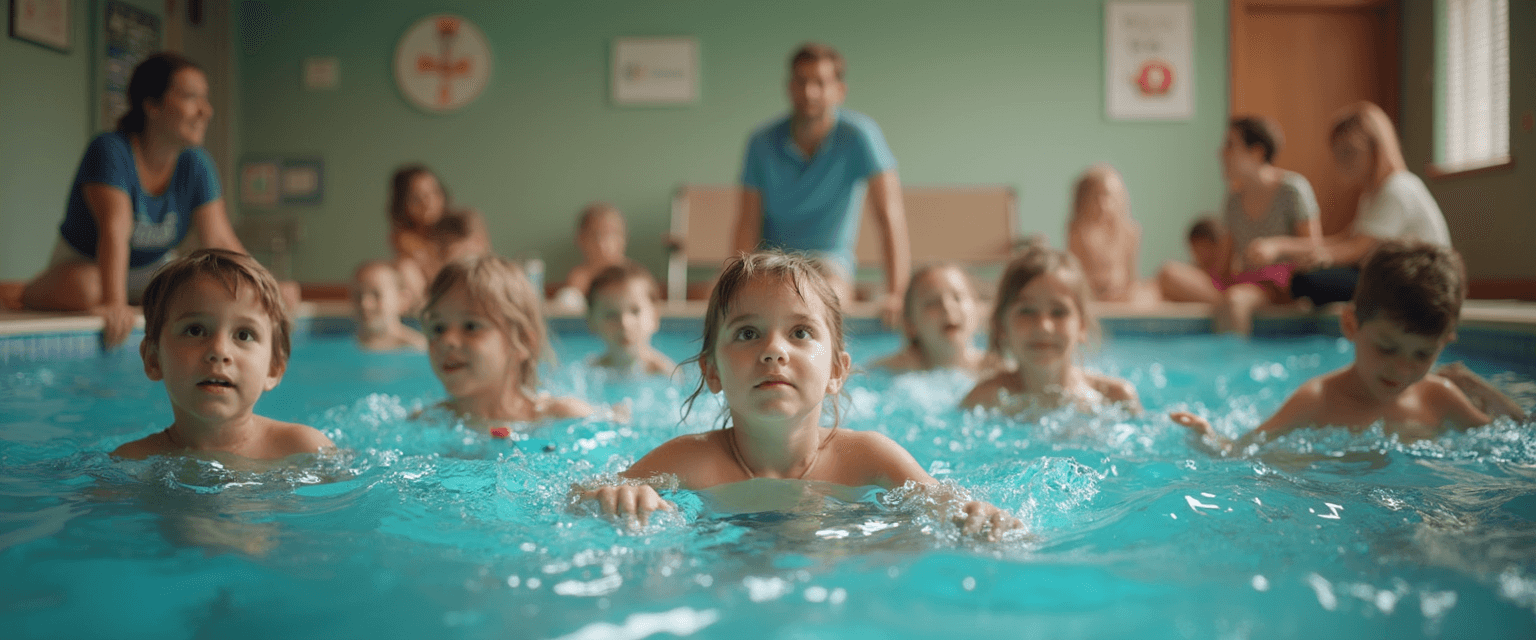
Easily track swimming lesson progress with a digital tracking system that accurately records swimmers' development during class, combined with focused observation and immediate feedback. This lets you plan lessons and quickly adjust the program to individual needs, contributing to a structured learning process.
These insights support a goal-focused approach to swimming lessons, keeping the learning process clear and transparent for children and adults.
1. Importance of tracking swimming lesson progress
Keeping track of swimming lesson progress matters for motivation, insight and confidence.
This section explains why tracking progress helps keep children motivated.
It also shows how this contributes to swimmers' safety and self-confidence.
Motivation during lessons
Motivation during swimming lessons is essential for a positive learning experience.
By making progress visible, children can see what they have already achieved.
This encourages them to continue and reach new goals.
A clear overview of achieved skills helps keep the lesson fun and challenging.
Benefits of tracking progress
Tracking swimming lesson progress offers several benefits.
Instructors can better respond to each student's individual development.
Parents gain insight into progress and can support practice at home.
It also helps to spot and address any bottlenecks in time.
Impact on safety and confidence
Recording progress also affects swimmers' safety and confidence.
When children know what they can already do, they feel more secure in the water.
This confidence contributes to a safer swimming environment.
It also helps set realistic expectations and reduces stress.
What is Swimmigo?
Swimmigo is an independent app that lets you track, assess and celebrate swimming progress, whether you are a parent, adult learner or instructor. You are not dependent on the swim school, you keep control yourself.
For parents the app provides a clear learning path with 7 levels (from Red to Gold) and 86 exercises. You rate each exercise with a simple scoring system, from 0 to 6, and receive a personal swimming certificate for each level achieved. This gives you an immediate overview of where your child stands and what still needs work.
Adults who want to learn or improve swimming can use Swimmigo discreetly and without group pressure. The app provides structure, breaks the learning process into manageable steps and helps overcome uncertainty. You train at your own pace, when it suits you.
Swim schools and instructors use Swimmigo completely free as a digital system for student administration, schedules and progress. Parents see their child's development in real time, without extra work for you. A handy Marketing Toolbox also helps you create professional flyers, social posts and certificates.
2. Routine and planning during lessons
A fixed routine and good planning during swimming lessons provide clarity and calm.
It is important to use a consistent lesson structure, allocate time well and include breaks.
Preventing overloading also helps keep the learning process pleasant and effective.
Creating a consistent lesson structure
Creating a consistent lesson structure helps children and instructors know what will happen during class.
By keeping the same format, children know what to expect and feel safer in the water.
An example is starting with a warm-up, followed by technique and practice moments, and finishing with a game or cool-down.
This predictability reduces stress and makes it easier to track progress.
Time planning and breaks
Good time planning during the lesson ensures that all components receive enough attention.
It's important to create realistic time blocks for exercises and explanations.
Short breaks are essential to let children rest and catch their breath.
This helps them maintain concentration and absorb the material better.
Preventing overload
Overload can slow the learning process and reduce enjoyment of swimming.
Therefore, it is important to recognize signs of fatigue or frustration in time.
By adjusting lesson content and building in enough rest moments, you prevent children from becoming overloaded.
This contributes to a positive experience and lasting motivation.

3. Practical methods to track progress
This section presents three practical ways to keep track of swimming lesson progress. We look at using logbooks or apps, the importance of observation and focused feedback, and setting short-term goals. This gives you insight into how to monitor progress clearly and effectively during class.
Using logbooks or apps
Logbooks and dedicated apps are useful tools to record swimming lesson progress. They provide a structured way to note skills and achieved goals.
With an app an instructor can, for example, enter updates immediately after class, so parents and students are always informed. This prevents important details from being lost and makes it easier to spot development trends.
A practical example is tracking which strokes a child masters and which still need attention. This creates a clear overview that can be updated each lesson.
Apps can also send reminders for next steps or exercises, which increases engagement.
Observation and giving feedback
Observation is an essential part of tracking progress during swimming lessons. Instructors watch technique, posture and confidence in the water.
By giving focused feedback, students know exactly what they do well and what to work on. This helps them practice purposefully and make faster progress.
An example is pointing out a specific improvement, such as extending the arms more in breaststroke, followed by praise for effort. This keeps motivation high.
Regular observation and feedback ensure continuous alignment between lesson goals and the swimmer's personal development.
Setting short-term goals
Setting short-term goals makes progress tangible and achievable. These goals are small, concrete steps that can be reached within a few lessons.
By focusing on learning a specific stroke or improving breathing technique, the student stays motivated.
These goals are discussed with the swimmer and, if needed, with parents, so everyone knows what to work toward.
Regularly evaluating these goals helps celebrate successes and make adjustments when necessary.
Swimmigo · Swim lesson app
Free for parents
Follow your child's swimming progress, see where you stand and report absences in the app.

4. Stimulating children's motivation
Motivation plays a large role in children's success with swimming lessons. This section shows how fun, small rewards and social interaction can contribute to a positive swimming experience. That way children stay motivated and engaged during lessons.
Making learning fun
Increasing enjoyment in lessons helps children stay motivated. By alternating exercises with water games, the lesson becomes less boring. For example, a simple game where children throw a ball to each other makes practice more fun. This not only improves swimming skills, but also engagement.
Using favorite exercises can also boost enthusiasm. If a child likes swimming underwater, this can be practiced more often. That way the child feels valued and continues to join the lesson with pleasure.
Using small rewards
Small rewards can positively affect children's motivation. It is not about big gifts, but about recognizing effort and progress. A compliment or a sticker after a well-executed exercise often provides encouragement.
These rewards help children keep pursuing goals. They experience that their effort is noticed, which strengthens self-confidence. This keeps the child motivated to learn new skills.
Swimming with friends
Swimming with friends can significantly increase motivation. Practicing together makes the lesson more fun and less scary. Children often feel safer and more at ease in a familiar group.
Social interaction also provides extra incentive to participate actively. For example, a child swimming with a friend will more quickly try new exercises. This promotes both swimming skills and enjoyment during class.
5. Adapting to individual needs
Adapting swimming lessons to children's individual needs improves the learning experience.
This section covers the importance of smaller groups and private lessons, planning breaks with healthy snacks, and effective communication between parents and teachers.
These elements help tailor the lesson to the child and keep progress clear.
Small groups and private lessons
Small groups provide more personal attention during lessons.
In a smaller group the instructor can better respond to each child's specific learning needs.
Private lessons offer even more room to adjust pace and exercises to the student's level.
This allows children to make progress at their own speed without comparing themselves to others.
Breaks and healthy snacks
Regular breaks are important to prevent fatigue and maintain concentration.
During these breaks it is useful to offer healthy snacks, such as fruit or nuts, that provide energy without being too heavy.
A short break helps children start the next exercises fresh and motivated.
This contributes to a positive experience and better learning results.
Communication with parents and teachers
Good communication between parents and teachers is essential to align the lesson with the child.
By regularly discussing progress and points of attention, parents can better support practice at home.
Teachers also gain insight into any changes in the child's behavior or motivation.
This collaboration provides a coherent approach and a clear overview of swimming lesson progress.

Summary
Summary
Adapting swimming lessons to children's individual needs improves the learning experience. Small groups and private lessons provide more personal attention and a better-matched pace.
Motivation is important for success in swimming lessons. Fun, variation and social interaction keep children involved and enthusiastic.
Benefits of a digital tracking system
A digital tracking system makes recording swimming lesson progress simple and transparent. Instructors can enter updates right after class, so parents and students are always informed.
The system helps set goals and follow achieved skills. This increases children's motivation and engagement during lessons.
Effective lesson planning
A consistent lesson structure provides clarity and calm during class. With a predictable format children know what to expect and feel safer.
Good planning with breaks prevents overload and makes the learning process more pleasant. This contributes to an effective and enjoyable swimming lesson experience.
You can try Swimmigo for free via https://swimmigo.com.
Sources

Bob van Soest
As an expert in operating sports facilities (such as swimming pools) and developer of, among others, Swimmigo.com, I am passionately committed to making swimming lessons simpler, more fun and more insightful for parents, swimming instructors and everyone who wants to learn to swim.
Frequently Asked Questions
Related articles
When to start swimming lessons for optimal progress
Read from what age swimming lessons are effective for the best results and your child’s safety in the water.
Effectively recording swim lesson progress: from what age?
Find out from what age it makes sense to record swim lesson progress and how to do that in practice.

Efficiently record swimming lesson progress per group
Practical tips for tracking swimming lesson progress per group for parents and instructors.
Discover Swimmigo
The all-in-one app for swimming lesson progress. For parents, swim schools, and adult swimmers.