Continuous swim lesson progress across different levels
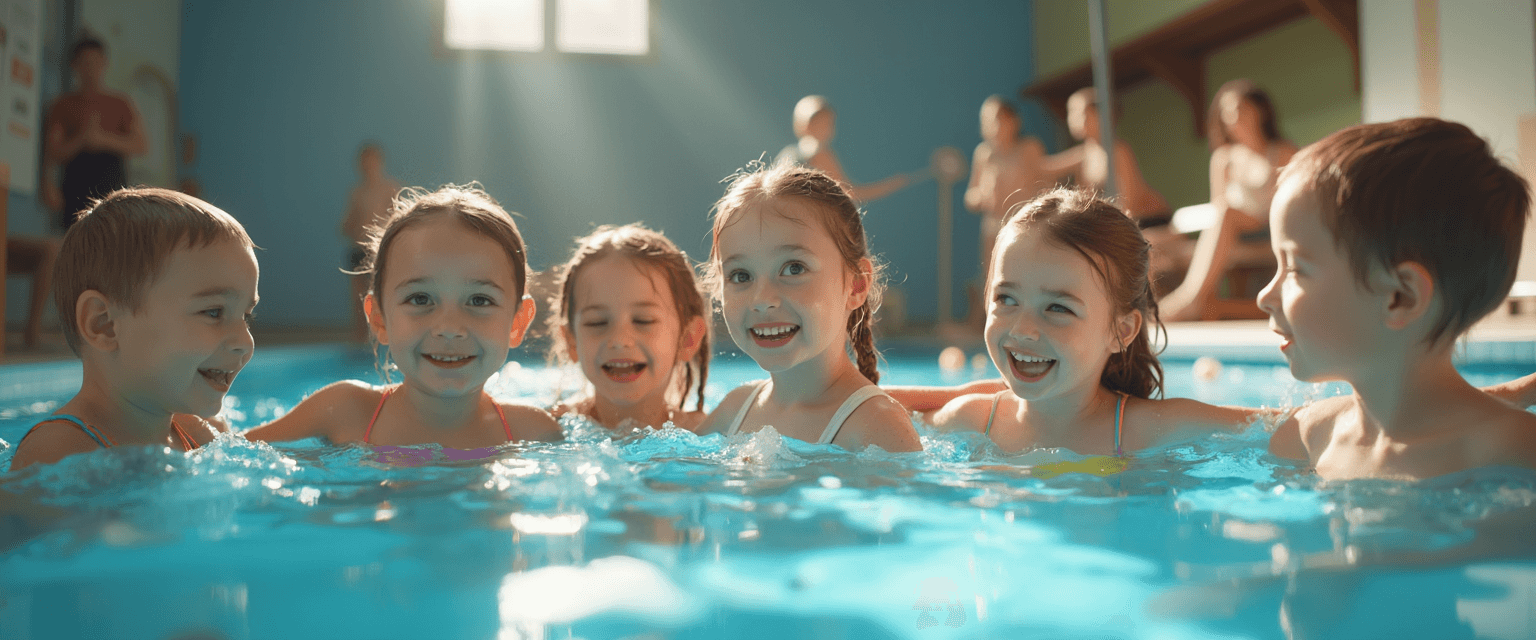
Summary
- A digital tracking system improves individual swim lesson guidance and parent communication.
- Adapt the swim lesson approach to each child’s motor development and motivation.
- Systematic observation and measurement ensure appropriate and challenging swim lessons.
A digital tracking system is the most effective way to record and analyze continuous swim lesson progress across different levels. It provides an overview per level, makes skills and motivation measurable, and helps instructors tailor lessons better.
It also discusses how different factors influence the learning process and which approach works best for the various levels within a group.
1. Differences between starting levels
When starting swim lessons, children differ greatly in their initial skills. These differences are influenced by previous swimming experience, motor development, and confidence in the water. This chapter explains how these factors determine the starting level.
1.1 Influence of previous swimming experience
Children with previous swimming experience or who already play other sports often start with higher swimming ability. They usually feel more at ease in the water and show less fear. That gives them an advantage in the first lessons. The starting level is therefore not the same for all children.
This experience also helps them pick up new swimming techniques faster. Still, an early advantage does not mean these children will always earn certificates faster. The lesson approach must match their needs to keep them challenged.
1.2 Motor skills and development
Motor skills and a child’s overall development play an important role in determining the starting level. Children who develop motorically earlier, for example start crawling and walking sooner, often have better coordination in the water. That makes learning swimming techniques easier.
Children who develop motorically more slowly sometimes start with a delay. However, they can often make rapid progress during lessons. It is important to take these differences into account when planning lessons.
1.3 Fear and confidence at the start
Confidence and fear in the water vary greatly per child at the start of swim lessons. Some children are relaxed immediately, while others need more time to feel safe. This affects their willingness to practice new skills.
A positive and patient approach helps children with fear to build confidence step by step. That can improve their starting level and lays the foundation for further progress.
What is Swimmigo?
Swimmigo is an independent app that lets you track, assess, and celebrate swimming progress, whether you are a parent, adult learner, or instructor. You are not dependent on the swim school, you remain in control.
For parents the app provides a clear learning path of 7 levels (from Red to Gold) with 86 exercises. You rate each exercise with a simple scoring system (0 to 6) and receive a personal swim certificate for each level achieved. That way you see at a glance where your child stands and what still needs work.
Adults who want to learn or improve their swimming use Swimmigo discreetly and without group pressure. The app provides structure, breaks the learning process into manageable steps, and helps overcome insecurity. You train at your own pace, when it suits you.
Swim schools and instructors can use Swimmigo completely free as a digital system for student administration, schedules, and progress. Parents see their child’s development in real time, without extra work for you. A handy Marketing Toolbox also helps create professional flyers, social media posts, and certificates.
2. Observation and measuring progress
This chapter explains how swim lesson progress is systematically observed and measured. You will read techniques for recording progress, measuring swimming skills and fear, and the value of parent feedback. This gives insight into monitoring different levels within continuous swim lessons.
2.1 Techniques for progress recording
Progress recording starts with noting concrete swimming skills and behavioral observations during the lesson. This can be done manually using checklists or digitally with special tracking systems that make updates easy.
It is important that recording takes place regularly, for example after each lesson or per block of lessons. That way you get a clear picture of development per child and per level.
Through structured observations, instructors can quickly spot where extra attention is needed. This prevents children from staying too long on one level without the right challenge.
An example is tracking mastery of breathing, floating, and strokes, linked to the child’s level.
2.2 Measuring swimming skills and fear
Measuring swimming skills is done using predefined criteria per level. These criteria are concrete and measurable, such as being able to swim underwater independently or mastering a specific stroke.
It is also important to observe fear or insecurity, because that can affect progress. This can be done by noting the child’s behavior, such as reluctance to enter the water.
Regular evaluations help map both technical skills and emotional aspects. That way the lesson approach can be better tailored to the child.
An example is recording how often a child dares to enter the water independently without help.
2.3 Role of parent feedback in progress
Parent feedback plays an important role in tracking swim lesson progress. Parents can provide valuable information about their child’s behavior and experiences outside the lesson.
Through regular contact and targeted questions, instructors get a more complete picture of development. This helps identify possible bottlenecks or successes.
Involving parents also strengthens collaboration and trust in the swim lesson process. Parents feel more involved in their child’s progress that way.
A practical example is asking about the child’s experiences with water at home or during other activities.

3. Differentiation in lesson approach
This chapter explains how swim lessons can be adapted to different levels within a group. We look at the approach for slower learners, the challenge for advanced swimmers, and the importance of a good balance in group composition. That creates a lesson environment where everyone can grow at their own pace.
3.1 Attention for slower learners
Slower learners deserve extra attention to strengthen their confidence and skills. Through targeted exercises and repetition they can make step-by-step progress. It is important to respect their pace and celebrate small successes so they stay motivated.
An example is offering simple water exercises that match their motor development. That lets them feel safe and gradually get used to the water. This approach prevents discouragement and helps them eventually reach the desired level.
3.2 Challenge for advanced swimmers
Advanced swimmers need more challenge to further develop their skills. This can be achieved by offering more complex techniques or increasing exercise intensity. That keeps them motivated and prevents stagnation.
A practical way is introducing different strokes or improving breathing techniques. That refines their swimming ability and prepares them for higher certificates. It is essential to give these students enough space within the lesson.
3.3 Balance in group composition and levels
A good balance in group composition ensures that swimmers at similar levels are taught together. This makes it easier to align the curriculum with the group. At the same time, there can be room for differentiation within the group so everyone can practice at their own level.
For example, form smaller subgroups within a lesson where instructors give specific attention to different levels. This promotes an efficient lesson structure and prevents students from feeling bored or overwhelmed. Group composition thus contributes to a positive learning experience.
Swimmigo · Swim lesson app
Free for parents
Follow your child's swimming progress, see where you stand and report absences in the app.

4. Factors that influence progress
Various factors influence the progress of swim lessons at different levels. Age, motor development, and participation in other sports play a role. Psychosocial aspects and motivation are also important for the learning process.
4.1 Age and motor milestones
A child’s age affects the speed at which swimming skills develop. Older children often show faster progress because they are further developed motorically. The timing of motor milestones like crawling and walking is also relevant. Children who reach these milestones later may initially lag behind, but often catch up during swim lessons.
This motor development supports learning swimming techniques and confidence in the water. It is therefore important to consider each child’s individual motor phase. That allows the lesson approach to be better matched to the learner’s capabilities.
4.2 Influence of participating in other sports alongside swim lessons
Participation in other sports alongside swim lessons can positively affect swimming ability. Children who play sports regularly often have better basic fitness and coordination. That helps them learn new swimming techniques faster. They also tend to experience less fear of the water, which facilitates learning.
Children without sports experience sometimes show greater progress because they have more to catch up on initially. Still, lacking a sporty background can mean they need more time to develop motor skills important for swimming. It is useful to recognize these differences when planning lessons.
4.3 Psychosocial aspects and motivation
Motivation and psychosocial factors play a large role in swim lesson progress. Children who feel comfortable and have positive experiences generally learn faster. Confidence in the water encourages practicing new skills. Attention and support from instructors and parents also contribute to good motivation.
The social environment can also influence perseverance. A child who feels accepted within the group is more likely to take on challenges. It is therefore important to create a safe and stimulating atmosphere during swim lessons.
5. Practical tips for instructors
This chapter provides practical advice for instructors to guide the progress of swimmers at different levels.
It focuses on tracking individual development, adapting lesson plans, and improving communication with parents.
These tips help make swim lessons more effective and clearer.
5.1 Pay attention to individual progress
It is important to monitor each swimmer’s progress separately, because children learn at different paces.
By observing regularly and setting small goals, an instructor can better respond to the child’s needs.
For example, use a digital tracking system to record performances and points of attention.
That keeps an overview and allows instruction to be adjusted in a targeted way.
5.2 Flexible lesson plans per level
Lesson plans should be flexible and take account of the group’s level and individual swimmers.
For beginners it is important to include lots of repetition and safety exercises.
Advanced swimmers benefit from more challenging exercises that improve technique and endurance.
By adjusting the lesson content, everyone stays motivated and progress is encouraged.
5.3 Improve communication with parents
Good communication with parents strengthens cooperation and trust in the swim pathway.
Inform regularly about progress and give concrete tips for practicing at home.
A short debrief after the lesson or a digital report helps keep parents involved.
That way they can better estimate how their child is developing and where extra attention is needed.

Summary
Summary
Instructors receive practical advice to guide the progress of swimmers at different levels. Tracking individual development and adapting lesson plans improves communication with parents.
It is important to follow each swimmer’s progress separately. A digital tracking system helps record performances and points of attention, and keeps an overview.
Factors that influence swim lesson progress
Age, motor development, and participation in other sports influence swim lesson progress. Psychosocial aspects and motivation also play an important role.
A child’s motor phase partly determines the pace of swimming skills. Lesson approach can be better matched to the individual possibilities that way.
Adapting swim lessons to different levels
Swim lessons are adapted for slower learners and advanced students within a group. Extra attention and targeted exercises help slower swimmers make progress.
Respecting the pace and celebrating small successes keeps motivation high. That creates a safe and effective learning environment.
Systematically observing and measuring swim lesson progress
Progress is recorded with checklists or a digital tracking system. Regular updates provide insight into development per child and level.
Structured observations help instructors give extra attention in time. That keeps lessons appropriate and challenging.
Starting level and influence of previous experience
Starting levels differ due to previous swimming experience, motor development, and confidence. Children with experience often feel more at ease in the water.
This advantage requires an adjusted lesson approach to challenge all children sufficiently. That way everyone can progress at their own pace.
A digital tracking system offers clear benefits for making swim lesson progress visible and supporting effective lesson planning.
You can try Swimmigo for free via https://swimmigo.com.
Sources

Bob van Soest
As an expert in operating sports facilities (such as swimming pools) and developer of, among others, Swimmigo.com, I am passionately committed to making swimming lessons simpler, more fun and more insightful for parents, swimming instructors and everyone who wants to learn to swim.
Frequently Asked Questions
Related articles
When to start swimming lessons for optimal progress
Read from what age swimming lessons are effective for the best results and your child’s safety in the water.
Effectively recording swim lesson progress: from what age?
Find out from what age it makes sense to record swim lesson progress and how to do that in practice.

Efficiently record swimming lesson progress per group
Practical tips for tracking swimming lesson progress per group for parents and instructors.
Discover Swimmigo
The all-in-one app for swimming lesson progress. For parents, swim schools, and adult swimmers.