SwimmingLessonsDuringRamadan:LessonTimes,Safety,andAgreementswithParents[2026]
![Swimming Lessons During Ramadan: Lesson Times, Safety, and Agreements with Parents [2026]](/_next/image?url=https%3A%2F%2Fzvblogpostimages.s3.eu-west-3.amazonaws.com%2FAUTOMATISCH_UPLOAD%2F1_b0a7acbfd786.jpg&w=3840&q=75&dpl=dpl_DqUHNtsMUTtGEGNaUbbB2t9YQZM4)
Summary
- Ramadan is a month of fasting between sunrise and sunset, and the fasting month shifts about eleven days earlier each year in the calendar.
- Children are only required to fast from puberty. Participation is allowed, and then the swimming lesson should be at a different time.
- Fasting costs energy and alertness. Lessons just before iftar should be kept short, and new material should be planned after the meal.
- What a swim school arranges in advance: lesson times, cancellations and make-up, and one message to parents with the new agreements.
- Fewer lessons in this month does not automatically mean regression, as long as you see which exercises a child already mastered.
What Ramadan Has to Do with Swimming Lessons
The fasting month falls in late winter in the coming years. For families, a lot changes, and you notice this immediately at the poolside. Students who don’t come for a few weeks, parents asking if their child is still allowed to swim, instructors fasting themselves while in the water. The most frequently asked question is simple: can my child attend swimming lessons while fasting? The answer is almost always yes. Only the timing and structure of the lesson change, and that is exactly the work for a swim school.
The Fasting Month Shifts Every Year
Ramadan is the ninth month of the Islamic lunar calendar. That year is about eleven days shorter than a solar year, so the fasting month starts earlier each year in our calendar. The Knowledge Center for Sport & Exercise explains how this shift works and what fasting does to energy and concentration. In the coming years, the fasting month falls in late winter, with short days. What fit into your schedule last season does not automatically fit this year.
Why This Affects Almost Every Swim School
Worldwide there are about two billion Muslims, about a quarter of the world population, reported Pew Research Center in June 2025. In almost every city, part of your student base follows a different rhythm during this month: going to bed later, waking early for the pre-dawn meal, and no eating or drinking during the day. One school loses a handful of students, another sees a third of a group stay away. The question is how well you are prepared for this.
Participation Is a Family Choice
One parent lets a seven-year-old fast half a day, another thinks that is too early and does not participate at all. Both are normal. There is no standard and no policy that fits every family. What you can do as a school: keep the conversation open and do not assume anything based on a last name or a headscarf. Just ask what a family wants.

Children, Fasting, and Swimming
Fasting Is Mandatory from Puberty, Not Before
Youth nurse Esma Aytar from CJG Rijnmond explains that fasting is only mandatory from puberty, while younger children are often curious and want to participate. Her advice to parents is on the CJG website: build it up slowly, start with half days, and know that a growing child gets tired faster, gets headaches, or has extra hunger and thirst. For swimming lessons, this usually means that a child fasts part of the day and therefore does not have to enter the lesson on an empty stomach and without water.
Children Who Fast: What to Watch For
Fatigue and dizziness are the signals that really matter. A child who turns pale halfway through the lesson or keeps looking at the clock should be able to stop the lesson without it being a problem. Agree with parents that stopping is always allowed and that they can indicate in advance if their child has a difficult day. Shorten the exercises and choose technique over endurance: that is the wisest thing you can do as an instructor during these weeks.
What Religious Rules Say About Swimming While Fasting
Swimming during fasting is allowed in most interpretations, as long as the swimmer prevents water from entering the stomach. Al-Yaqeen summarizes the scholars on this: for an experienced swimmer who can protect their fast, there is nothing against it, but those who cannot exclude water intake better avoid it. Some parents therefore choose that their child does not enter the water during fasting hours, and some children only swim after iftar. That is a family decision. You do not have to judge it. Make room for it in your schedule.
What Fasting Does to a Child in the Water
Less Energy and Less Alertness
It is well researched that fasting affects performance. In a systematic review with meta-analysis in Sports Medicine (2020), endurance performance, strength, and jump height remained almost the same, but sprint performance in the morning and peak power in repeated sprints decreased. Sportzorg, the site of sports dietitians, describes the same pattern: reaction time and alertness decrease, especially later in the day. For swimming lessons with fasting children, this means: short series, many short instructions, no heavy endurance rounds at the end of a long day.
Fluid Loss You Don’t Feel in the Water
In water, you feel thirst less quickly and there is no drinking break during the lesson. A fasting child can easily become dehydrated without noticing. The evidence-informed guideline from sports clinic Aspetar advises keeping fluid loss under two percent of body weight, drinking in small portions of about 200 milliliters every half hour between iftar and the pre-dawn meal, and keeping sessions before iftar within about 60 to 75 minutes. The practical lesson for you as an instructor: a lesson just before iftar is allowed, but keep it short and not heavy.
A Missed Lesson Is Not a Lost Lesson
If a student comes less for a few weeks, the rhythm drops out. That is normal and also happens after summer vacation, as described in this article about relapse and restart. That swimming skills are not a side issue is shown by global figures: the World Health Organization reports about 300,000 drowning deaths per year, and drowning is the third leading cause of death among children aged 5 to 14. What helps is keeping visible where a child was before they dropped out. With a student tracking system, you see at a glance which exercises were already at level 5 or 6, so you don’t have to start over after the fasting month.
Choosing Lesson Times During the Fasting Month
You don’t have to change the entire schedule. Look at each lesson time to see what is happening and adjust your lesson accordingly. The table below is a tool, not a rule.
| Lesson Time | What Happens with a Fasting Child | How to Adjust the Lesson |
|---|---|---|
| Early Morning | Just eaten and drunk, but the day is still long | Full lesson, but build up more calmly than usual and no heavy final series |
| Late Morning | Energy drops, concentration decreases | Technique and short exercises, extra instructions in small steps |
| Early Afternoon | Longest without food and drink, alertness lowest | Shorten, reschedule, or a calm lesson with lots of repetition |
| Just Before Iftar | Hunger and thirst strongest, then quick replenishment possible | Keep short, about an hour, and drink and eat immediately afterwards |
| After Iftar | Eaten and drunk again, most energy of the day | Room for new material and practicing heavier skills |
Early Morning: The Lesson That Changes the Least
Lessons before school or directly after the pre-dawn meal remain the easiest. The child has eaten and drunk and can participate normally. Keep in mind shorter nights: families get up early for that meal, so a group that is normally sharp is a bit less so now. Build up calmly and skip the heaviest exercises.
Midday: Shorten or Reschedule
The early afternoon is the most difficult time. The child has gone the longest without food or drink and alertness is lowest. If you cannot shift the lesson time, make the lesson shorter and calmer. Think of floating, floating with aids, calm leg exercises at the edge, and lots of repetition of what is already known. Save new, exciting skills for a better moment.
After Iftar: The Best Time for New Material
If you really want to teach something new this month, schedule it after the meal. Aspetar advises waiting about one to three hours after eating before training again, depending on how large the meal was. Many families already choose to swim in the evening, so an evening group fills more easily during these weeks than an afternoon group.
Set Make-Up Lessons at a Fixed Time
Missed lessons are inevitable. Make make-up easy instead of expensive: a fixed make-up lesson on the weekend or an extra spot in a group that is not full. Tell parents in one message which times are available, so you don’t have to explain it per family. This is how you arrange cancellations and make-up without discussion.
Schedule, Team, and Staffing
Fasting Instructors in the Water
Not only students fast. An instructor who fasts stands all day in a warm pool without being able to drink. The advice from the sports nutrition world applies to them just as well: drink during allowed hours, keep fluid loss small, and do not schedule heavy lessons at the end of the day. Consult within your team who teaches which lessons and if someone wants to temporarily reduce their hours.
Substitutes and Overview per Group
In a month when everyone shifts, you want to see who is where. Put the time, level, and staffing per group in your system, so a colleague who substitutes does not have to search. Changing groups and moving students to another lesson time then takes a few seconds instead of a phone call.
What You Agree on in Advance
Start a month before the fasting month with three agreements: which lesson times remain, how parents cancel and make up, and who informs the parents. Nothing more is needed. Write down the agreements, otherwise parents and instructors interpret them differently. A parental advice from education practice is to discuss this together with parents as a school instead of quietly making an exception: Parents & Education interviewed a lifestyle coach about Ramadan at school and comes to the same point: make it discussable and do it together.
Informing Parents Without Assumptions
Tell Them a Month in Advance
Send a message showing you know the fasting month is coming and that you are thinking along. Mention the lesson times, the rules around cancellations, and make-up options. Ask parents if there is anything the school should know.
Arrange Cancellations and Make-Up Smoothly
Make cancellation easy and keep track of who has canceled and who has already made up. With an absent marking and an overview per student, you see that immediately, without having to look it up in a notebook or app group. This way, the conversation stays about the child instead of administration.
Message in the Parent’s Language
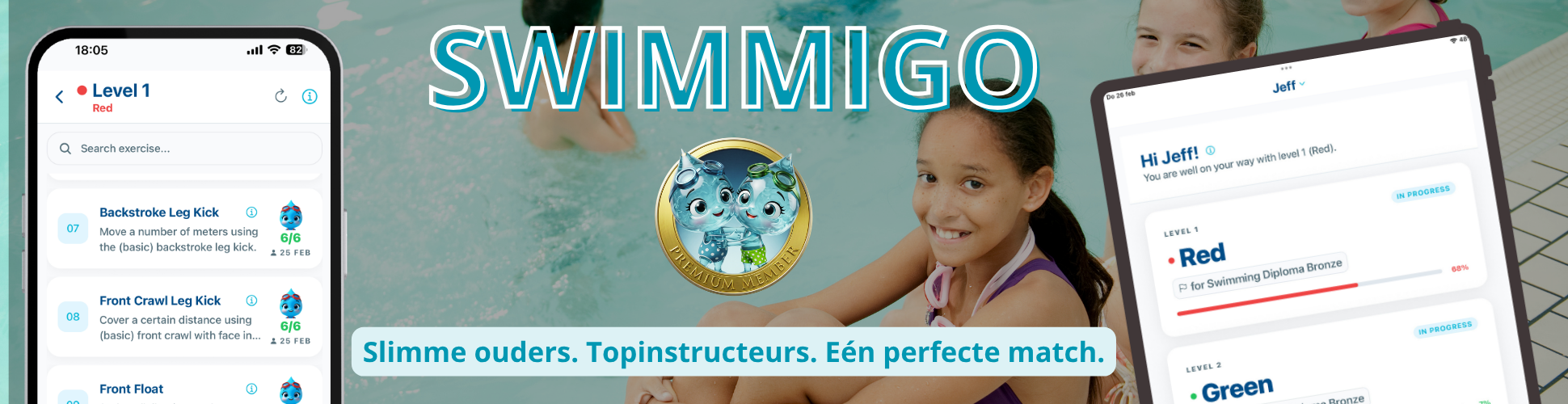
A message that parents read in their own language comes across differently than a message they have to decipher with a translation app. Swimmigo sends notifications in the recipient’s language, in five languages. Messages between school and parent come with a read receipt, so you know an agreement about a lesson time has really arrived.
What Parents Can Do Themselves
Choose the Lesson Time That Fits Your Child
Does your child have a difficult day or is fasting for the first time? Then choose the morning lesson or move to the evening. Consult with the school which lessons you skip and which you make up, so there is no confusion.
Eating and Drinking Around the Lesson
Make sure your child drinks enough at the pre-dawn meal and at iftar, in small amounts, and watch portion sizes. The CJG also advises agreeing with your child on how to handle sweets and to take signals of fatigue and dizziness seriously. If you go to the lesson together during fasting hours, bring a bottle for immediately after the lesson if iftar has already passed.
Keep Practicing in a Calm Month
A month of less swimming does not have to be a month of regression. Repeat at home what your child already can do and ask the instructor which two or three exercises have the most effect. Your child can see in the app which skills are checked off and what comes next. This is how parents follow progress without having to ask every week.
What the Swimmigo App Costs
Parents use Swimmigo for free. For a swimming instructor or swim school there is a subscription, with a 30-day free trial starting at the first linked student. There are no costs per student, per instructor, or per invoice: you choose one fixed amount per month.
| User | Per Month | What You Get |
|---|---|---|
| Parents | free | progress per child, certificates, messages from the school, and payment reminders, in five languages |
| Swimming Instructor, Solo | €9.99 | unlimited number of students, one fixed monthly fee, you as the only instructor |
| Swim School, School | €59.99 | unlimited instructors and students, multiple locations, team roles |
| Trial Period | 30 days free | starts at the first linked student, then cancellable monthly |
Swimmigo is available in five languages and is used by swim schools in multiple countries, from sole proprietors to schools with multiple locations. This is what the side for swim schools looks like.
Conclusion
Ramadan does not change your lesson program, but it does change your schedule. Look at what a fasting child can handle per lesson time: keep lessons before iftar short, use the evening for new material, and make make-up easy. Tell parents a month in advance what changes and ask what their child needs. A month of less swimming does not have to be a step back, as long as you see where each child was.
Also Discover
- Planning Swimming Lessons Efficiently During Holidays
- Managing Waiting Lists and Utilizing Open Spots
- Cancelling and Making Up Swimming Lessons
- Swimmigo for Parents, the Levels and Skills, for Swim Schools and the Subscriptions
Sources
- Knowledge Center Sport & Exercise, Allesoversport: tips for exercising during Ramadan, May 2020
- Sportzorg, Dutch Association of Sports Dietetics: exercising during Ramadan, consulted September 2026
- CJG Rijnmond: how to help your child during Ramadan with fasting, nutrition, and rhythm, consulted September 2026
- Parents & Education: a healthy Ramadan at school, February 2026
- Abaïdia, Daab, and Bouzid: effects of Ramadan fasting on physical performance, systematic review with meta-analysis in Sports Medicine, May 2020
- Aspetar: Ramadan, evidence-informed guide for nutrition, hydration, and training, consulted September 2026
- Al-Yaqeen: does swimming break the fast, March 2024
- Pew Research Center: Islam was the world's fastest growing religion from 2010 to 2020, June 2025
- World Health Organization: drowning factsheet, global drowning statistics, consulted September 2026
Bob van Soest
As an expert in operating sports facilities (such as swimming pools) and developer of, among others, Swimmigo.com, I am passionately committed to making swimming lessons simpler, more fun and more insightful for parents, swimming instructors and everyone who wants to learn to swim.
Frequently Asked Questions
Related articles
Adjusting Swimming Lesson Planning for Fear of Swimming
Tips to reduce fear of swimming with home water activities and adjusted swimming lesson planning. Learn how to practice at home and build confidence for safety.

Effective Swimming Lesson Planning for Children in Foster Families
Discover practical tips to plan and manage swimming lessons for foster children clearly and purposefully.

Adapting Swimming Lesson Goals for Swimmers with Multiple Disabilities
Practical tips for adapting swimming lesson goals for swimmers with multiple disabilities. Discover adapted lessons and certificates for inclusive and.
Discover Swimmigo
The all-in-one app for swimming lesson progress. For parents, swim schools, and adult swimmers.