Practicaltoolsforswimminglessonplanningandprogress

Summary
- Digital tracking system simplifies planning, attendance, and progress of swimming lessons.
- Automatic adjustment of lesson schedules and transparency to parents increase involvement.
- Efficient group division and progress registration improve learning environment and results.
Effective swimming lesson planning and tracking swimming lesson progress are essential for a structured swimming lesson organization. Many swimming schools and instructors look for practical ways to make these processes clear and efficient. A digital tracking system can play an important role by providing insight into lesson planning, group division, and individual development.
In this article, we discuss various tools and methods that help with planning swimming lessons and monitoring progress. Additionally, we cover how these tools contribute to better communication between swimming schools, instructors, and parents.
The information provides a clear picture of the possibilities to organize swimming lessons professionally and purposefully.
1. The importance of good swimming lesson planning
Good planning is the foundation for effective swimming lessons. In this chapter, we discuss why planning is important, how it affects lesson results, and which methods exist to plan swimming lessons. This gives you insight into the importance of structure and overview in swimming lesson organization.
Why planning is essential
Planning is essential to ensure swimming lessons run in a structured and goal-oriented manner. It ensures that each lesson has a clear objective and that skills are built up step by step. Without planning, lessons can be chaotic and students may miss important learning steps. Additionally, good planning helps instructors use time efficiently and distribute attention among all students.
For parents and students, a clear planning also provides peace of mind and overview. They know what to expect and see the progress being made. This promotes trust in the learning process and motivation to continue with the lessons.
Impact on lesson results
A well-thought-out planning has a direct impact on the results of swimming lessons. By setting goals in advance, instructors can work specifically on certain skills. This prevents lessons from being too random and ensures a consistent build-up.
Planning also helps to monitor the progress of each student well. Weak points can be identified and addressed in time. This contributes to a higher chance of passing and a better swimming level.
Different planning methods
There are various methods to plan swimming lessons, depending on the size of the group and available time. Some instructors use a fixed lesson structure with fixed goals per lesson. Others work with flexible schedules that respond to the progress of the students.
Digital planning tools are also increasingly used. These provide overview and make it easy to adjust lessons. Choosing a suitable method depends on the organization and the lesson offer.
What is Swimmigo?
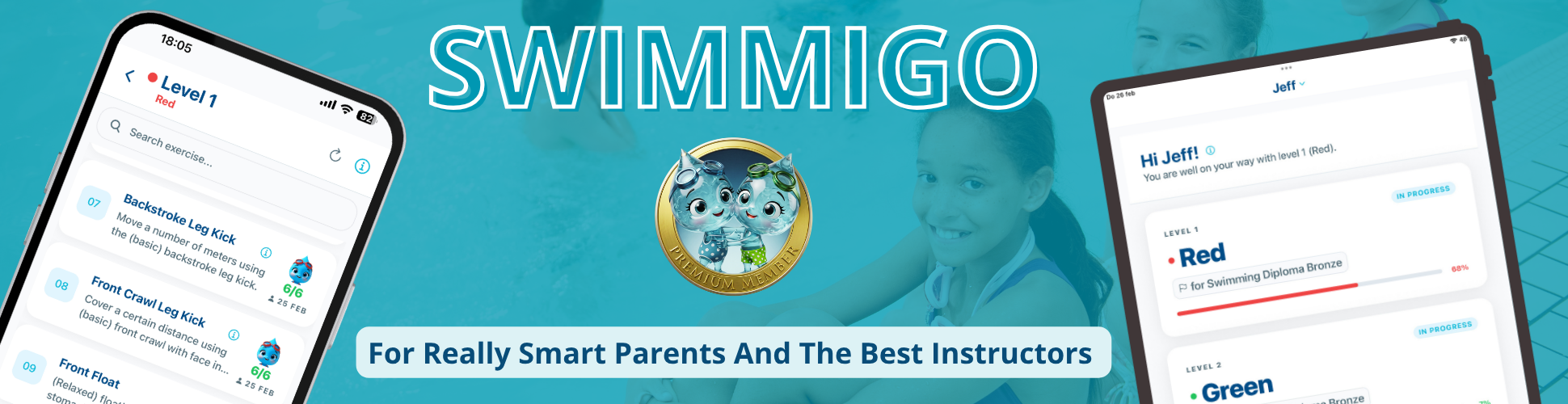
Swimmigo is an independent app with which you can track, assess, and celebrate swimming progress, whether you are a parent, adult swimmer, or instructor. You are not dependent on the swimming school but keep control yourself.
For parents, the app offers a clear learning path of 7 levels (from Red to Gold) with 86 exercises. You rate each exercise with a simple scoring system (0 to 6) and receive a personal swimming certificate for each achieved level. This way, you see at a glance where your child stands and what still needs to be worked on.
Adults who want to learn (better) swimming use Swimmigo discreetly and without group pressure. The app offers structure, divides the learning process into manageable steps, and helps overcome insecurity. You train at your own pace, whenever it suits you.
Swimming schools and instructors use Swimmigo completely free as a digital system for student administration, schedules, and progress. Parents see the development of their child in real time, without you having to do any work. A handy Marketing Toolbox also helps you create professional flyers, social media posts, and certificates.
2. Tools for tracking swimming lesson progress
In this chapter, we discuss how swimming schools and instructors can track the progress of swimming lessons. We cover the benefits of structured progress registration, the possibilities of digital systems, and how parents can effectively receive feedback. This creates a clear picture of the development of each swimmer.
Benefits of progress registration
Tracking swimming lesson progress offers clear benefits for both instructors and parents. By systematically registering which skills a student masters, insight into learning development arises. This helps to give targeted attention to weak points and adjust the lesson program where necessary.
Additionally, progress registration provides transparency towards parents. They can see exactly which steps their child has taken and which goals are still open. This promotes involvement and trust in the swimming process.
Digital progress systems
Digital progress systems make tracking swimming skills clear and efficient. Instructors can easily make notes per student, check off skills, and generate progress charts. This saves time compared to paper files and reduces errors.
Many systems also offer the possibility to add photos or videos, which visually support the evaluation. Moreover, these systems can often be linked to parent portals, so parents stay directly informed about the progress.
Giving feedback to parents
Effective feedback to parents is essential for good cooperation. Digital systems make it possible to share updates regularly and in a structured way. This can be via email, an app, or an online dashboard.
By naming concrete examples and achieved goals, parents better understand where their child stands. They can also receive tips to practice at home, which accelerates progress. Regular communication prevents misunderstandings and strengthens trust in the swimming school.
3. Efficiently dividing swimming groups
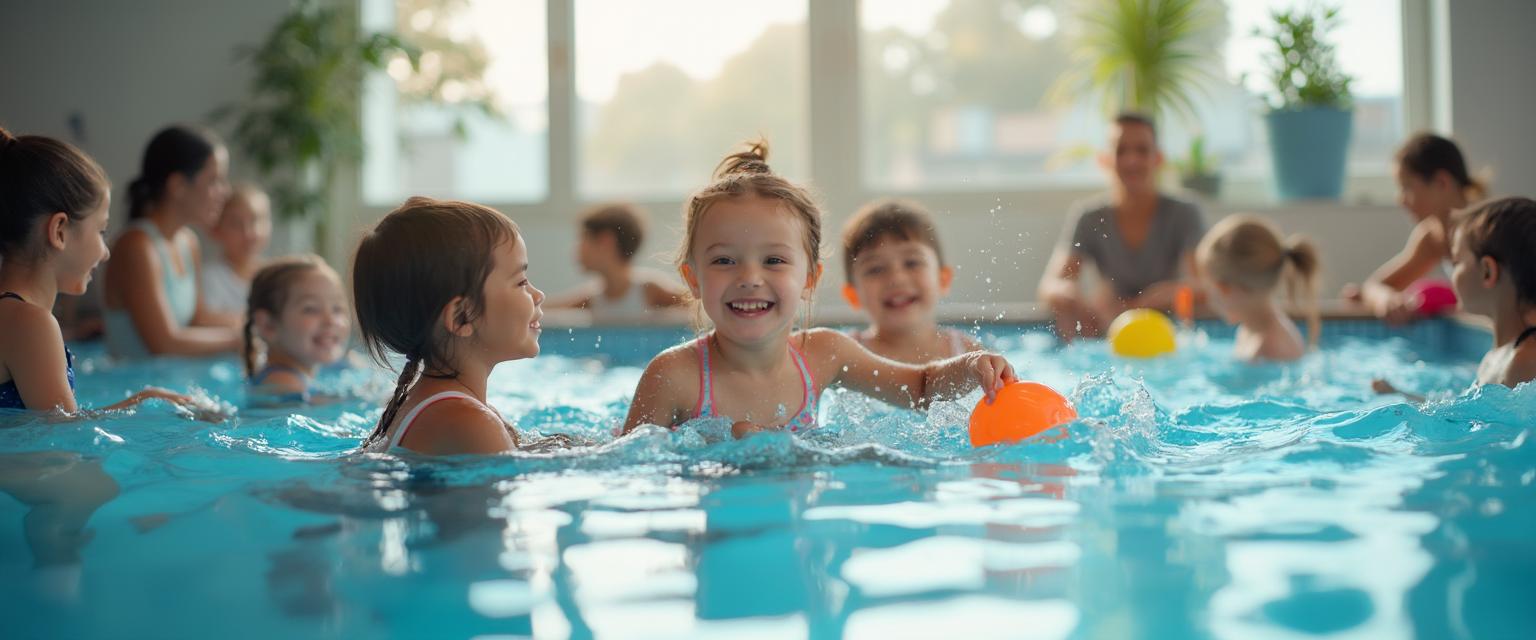
Efficiently dividing swimming groups is essential for good swimming lesson organization. In this chapter, we discuss the main criteria for group division, the optimal size and levels of groups, and how flexible division can contribute to better learning results. This gives you insight into practical approaches to compose groups appropriately and effectively.
Criteria for group division
When dividing swimming groups, it is important to consider different criteria. Age and swimming ability are often the most important factors. Motivation and social aspects also play a role, such as swimming together with friends. By combining these criteria, a group is formed that matches well in terms of level and character.
An example is merging children who pursue the same diploma. This ensures uniform lesson content and prevents some children from feeling under- or over-challenged. Special needs can also be taken into account, such as fear of water or motor challenges. This creates a safe and stimulating learning environment.
Size and level of groups
The size of a swimming group strongly influences the quality of the lesson. Small groups of a maximum of six to eight swimmers provide more personal attention. Larger groups can be more efficient, but there is a risk that individual guidance decreases. The level of the group should also be homogeneous to properly tailor the lesson material.
For example, a group with beginner swimmers needs different exercises than a group preparing for the B diploma. By dividing groups by level, instructors can teach more targeted and better monitor progress. This increases the effectiveness of swimming lessons and the enjoyment of participants.
Applying flexible group division
Flexible group division means that groups are regularly evaluated and adjusted. Swimmers develop at different speeds, so sometimes it is necessary to move children to another group. This prevents them from staying too long in a group that is too easy or too difficult.
Practically, this can be done through digital progress registration, which gives instructors quick insight into the level of each swimmer. Flexibility can also mean there is room for private lessons or smaller subgroups. This keeps the swimming lesson tailored to the current needs of the swimmers.
4. Practical tips for instructors
In this chapter, we discuss practical advice for swimming lesson instructors. Attention is given to improving lesson preparation, maintaining motivation in children, and dealing with different levels within a group. These tips help instructors teach more effectively and purposefully.
Optimizing lesson preparation
Good preparation starts with clearly planning the lesson goals per lesson moment. Use a clear lesson planning in which you note the skills to be practiced per child or group. This helps to work purposefully and prevents important parts from being skipped.
It is also useful to prepare materials and tools in advance so the lesson runs smoothly. By regularly reviewing previous lessons, you can better estimate progress and adjust the lesson material where necessary. This keeps the lesson tailored to the needs of the swimmers.
Maintaining children's motivation
Children sometimes lose enthusiasm due to routine or fatigue. It is therefore important to keep the lessons varied and playful. Small games and challenges can hold attention and increase enjoyment.
Giving positive feedback and celebrating small successes also motivates children to continue. Involve friends where possible, because swimming together makes it more fun. Also, provide a fixed structure so children know what to expect.
Dealing with varying levels
In a group, swimmers can be at different levels. It is important to be flexible and apply differentiation. For example, give extra attention to children who need more support without making the others wait too long.
Use exercises that you can easily adjust in difficulty so everyone can practice at their own pace. It can also help to divide children into small subgroups during certain exercises. This keeps the lesson challenging and appropriate for everyone.
5. Software and apps for swimming lesson management
In this chapter, we discuss how software and apps can support the management of swimming lessons. We look at important features, user-friendliness, and how to make a choice that remains practical in the long term. This gives you insight into which digital tools best fit your swimming school or lesson practice.
Comparing functionalities
Software for swimming lesson management often offers various functionalities, such as planning lessons, registering attendance, and tracking progress. Additionally, some systems can generate reports for parents and instructors. It is important to compare which functions you really need, for example automatic reminders or integration with payment modules. This prevents paying for unnecessary options and helps you choose a solution that fits your daily work.
A practical example is an app that automatically adjusts lesson schedules when students are absent. This saves time and prevents misunderstandings. Also pay attention to possibilities for sharing progress with parents so they remain involved in their child's learning process.
Assessing user-friendliness
User-friendliness is essential for successful implementation of swimming lesson software. Both instructors and parents must be able to navigate easily without extensive training. A clear interface with obvious buttons and clear instructions makes the difference. Think of an app that gives parents quick access to the lesson planning and progress of their child.
Always test a demo or trial version before making a choice. Also ask for feedback from colleagues and parents about the user experience. This prevents frustration and ensures a smooth transition to digital management.
Making a future-proof choice
A future-proof choice means the software grows with your organization. Check if the supplier regularly offers updates and responds to new wishes or regulations. It is also useful if the system is scalable so you can easily add more users or functions. This prevents having to look for another system within a few years.
Additionally, it is wise to choose software with good support and backup options. This ensures continuity and prevents data loss. An example is a cloud-based system that automatically stores data and is secured against failures.

Summary
Summary of Efficiently managing swimming lessons with a digital tracking system
Software and apps support the management of swimming lessons by tracking functions such as planning, attendance, and progress. A good choice of a digital tracking system is important for ease of use and practical use in the long term.
The system can automatically adjust lesson schedules and share progress with parents. This saves time and increases involvement in the learning process.
Why a digital tracking system helps
A digital tracking system offers swimming lesson instructors practical tools for lesson preparation and motivating students. It helps plan lesson goals and adjust lesson material based on progress.
The system also supports efficient group division based on age, swimming ability, and social factors. This creates a safe and stimulating learning environment.
Progress registration with a digital system provides insight into the development of each swimmer. Parents gain transparency about achieved skills and open goals.
Good swimming lesson planning provides structure and overview. This makes lessons goal-oriented and helps instructors use time efficiently, improving learning results.
Dear reader, in this blog post we have discussed practical tools for swimming lesson planning and progress.
We would love to hear if you have experience with digitally tracking swimming lessons. Feel free to leave a comment below this article.
You can try Swimmigo for free via swimmigo.com. We hope it can support you in planning and tracking swimming lessons.
Sources

Bob van Soest
As an expert in operating sports facilities (such as swimming pools) and developer of, among others, Swimmigo.com, I am passionately committed to making swimming lessons simpler, more fun and more insightful for parents, swimming instructors and everyone who wants to learn to swim.
Frequently Asked Questions
Related articles
Choosing the best swimming lesson level for young beginners
Discover which swimming lesson level is suitable for young beginners and how parents can plan the start of swimming lessons.
Efficiently planning swimming lessons during holidays
Tips to practically and effectively organize swimming lessons during holidays for better progress and less stress.
Discover Swimmigo
The all-in-one app for swimming lesson progress. For parents, swim schools, and adult swimmers.