HowtoKeeptheEntireGroupEngagedandSafeintheWaterasaSwimmingInstructor[2026]
![How to Keep the Entire Group Engaged and Safe in the Water as a Swimming Instructor [2026]](/_next/image?url=https%3A%2F%2Fzvblogpostimages.s3.eu-west-3.amazonaws.com%2FAUTOMATISCH_UPLOAD%2F1_2dffb3a5071e.jpg&w=3840&q=75&dpl=dpl_FEcJLWFaZFj4CsT2F159aPzMcoRK)
Summary
- One instructor can actively coach only one child at a time; the rest of the group waits and cools down.
- Stations, rotation, and fixed routines keep everyone moving and significantly reduce waiting time.
- Active supervision and the right instructor-to-student ratio are the basis of a safe lesson.
- With a student tracking system, you see at a glance who is at which level, enabling targeted differentiation.
You are standing in the water with ten children. One child is practicing backstroke, two are hanging on the edge, three are slowly drifting towards the deep end. You can only be in one place at a time. Every swimming instructor knows this feeling: you want to help everyone progress, but you only have two eyes and two hands. Good group management is therefore not a luxury; it is the core of a safe and effective lesson.
The numbers make clear why this matters. Worldwide, about 300,000 people drown annually, and children under five years old make up nearly a quarter of all drowning deaths, according to the World Health Organization. A well-organized swimming lesson where every child actively participates and is supervised is the first line of defense in every country.
Why Good Group Management Makes the Difference
Group management revolves around one question: how do you ensure all children are active at the same time, at their own level, while you maintain oversight? Those who do this well notice it immediately in the lesson.
More Lesson Time per Child, Less Waiting
The longer a child waits their turn, the less they learn and the colder they get. American research shows that formal swimming lessons are associated with an 88 percent lower risk of drowning in children aged 1 to 4 years, but that benefit only applies if children are actually swimming and not standing still at the edge.
Safety Begins with Oversight
An instructor who does not oversee the group misses signals: a child slipping underwater, a student getting tired, two children bumping into each other. Active supervision means you know where everyone is at all times, even while individually coaching one child.
Engaged Children Learn Faster
Children who wait get bored. Bored children start messing around, and messing around leads to unsafe situations. A group that is constantly moving not only learns faster but also gives you more peace of mind to coach.
Techniques to Keep Everyone Moving
The techniques below require no expensive equipment, just a different way of organizing. They work just as well in a small lesson pool in the Netherlands as in an outdoor pool in Australia or a swimming complex in France.
Work with Stations and Rotation
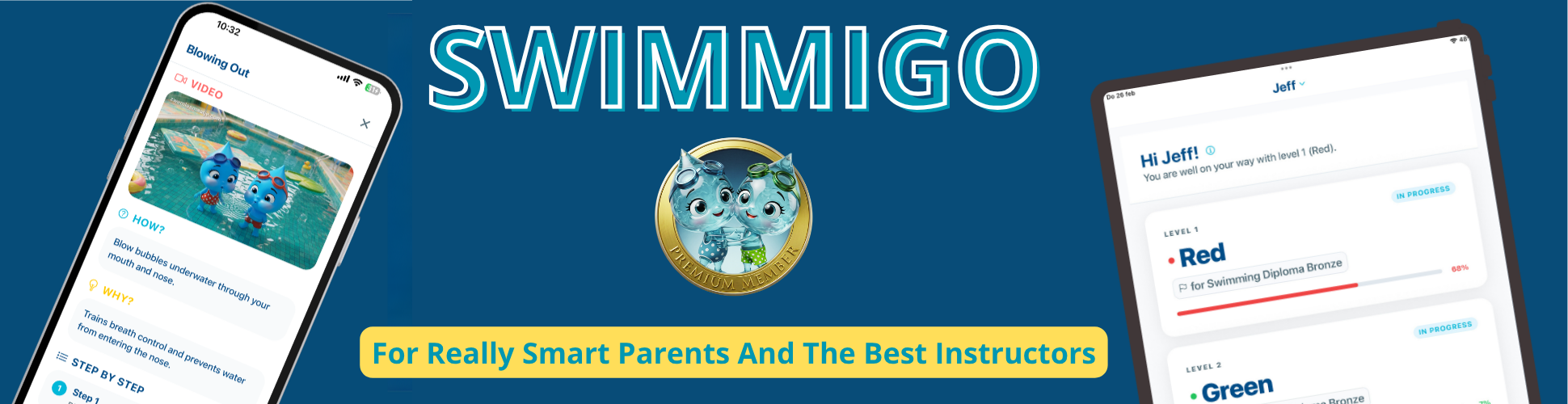
Divide the pool into two or three zones, each with its own exercise. One group practices floating, another blows bubbles at the edge, the third swims a short distance. After a few minutes, everyone rotates. This way, someone is always active and waiting times remain limited.
Shorten Waiting Time with a Fixed Routine
If children know exactly what to do as soon as they reach the edge, you don’t have to explain repeatedly. Fixed rituals, such as sitting on the edge first and then entering the water, provide structure and save minutes per lesson.
Differentiation Within One Group Using Levels
Within each group, there are fast and slow swimmers. By organizing the lesson by levels, from red to gold, you can give each student a task just above their current level. The fastest swimmer gets an extra challenge, the slower student a smaller step. No one has to wait because someone else is holding up the group.
Give Instructions to the Whole Group, Not Just One Child
Formulate your instruction so that everyone does something at the same time. Instead of having one child practice ten times while the rest watch, have the whole group blow bubbles or float on their backs simultaneously. You walk around, correct here and there, and keep the pace up.
Use Waiting Children as Helpers or Judges
Children who are standing at the edge can be given a task: count the strokes of their buddy, give a thumbs up, or check if the arms are straight. They stay involved in the lesson, even without being in the water.
Split the Group into Pairs
Have children practice in pairs: one swims, the other observes and gives feedback using a few fixed words. Then they switch. This way, everyone practices twice as much in the same lesson time and children also learn from each other.
Vary Tempo and Energy Consciously
Alternate calm exercises with short, energetic games. After a few minutes of focused practice, a sprint or a diving game is often enough to regain attention. A child who gets cold or tired can be re-engaged this way.
Active Supervision as the Basis of a Safe Lesson
All the organization in the world won’t help if supervision lapses. Safety is not a coincidental byproduct; it is something you actively organize, in every body of water and in every country.
Know the Ideal Instructor-to-Student Ratio
For young or beginner swimmers without a parent in the water, best practice is a ratio of 1 instructor to a maximum of 4 children, and never more than 1 to 6. This advice comes from American guidelines for swim lesson programs and is used worldwide as a basis for safe swim education.
| Level | Recommended Ratio | Maximum |
|---|---|---|
| Young or beginner swimmers without a parent in the water | 1 instructor per 4 or fewer | 1 per 6 |
| Advanced swimmers | Larger groups possible | Always dependent on supervision and pool setup |
Continuously Scan the Group, Even While Coaching
Work with a fixed scanning rhythm: while coaching one child, briefly scan the entire group every few seconds. Position yourself so you can see the whole group at a glance, and never keep your back to the water for long.
Recognize Signs of Cooling and Fatigue
Children get cold in the water faster than adults. Blue lips, chattering teeth, slower movements, or becoming quiet are signals to intervene. A child who cools down loses coordination and becomes a risk, even in shallow water.
Group Management Becomes Easier with a Student Tracking System
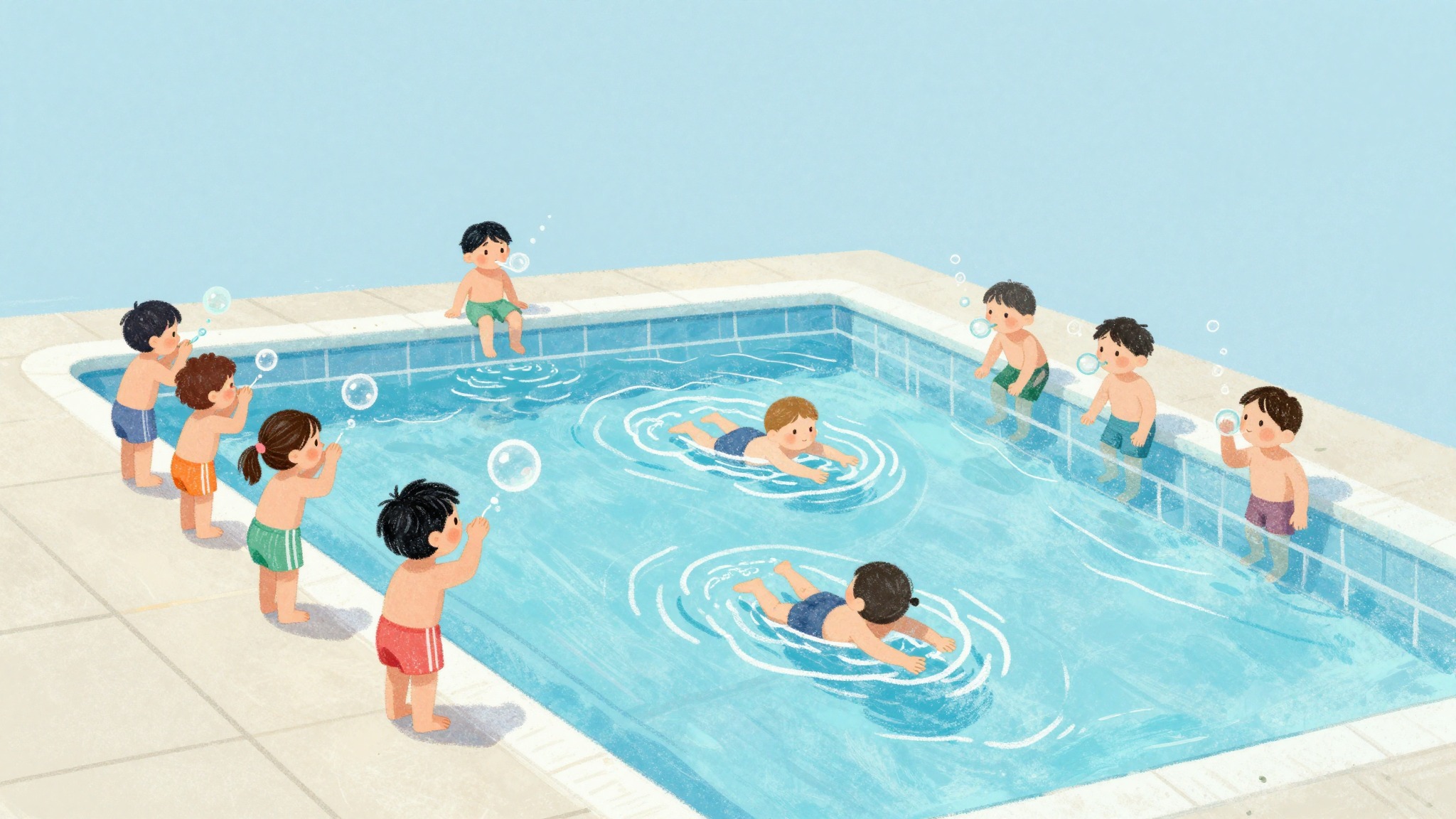
The difference between a chaotic and a smooth lesson often lies not in your swimming skills but in how quickly you see who needs what. A digital tool that tracks the levels and progress of each student takes that mental work off your hands. Swimmigo offers this free for swimming instructors, is available in five languages, and is used worldwide by independent instructors and small swim schools.
See at a Glance Who Is at Which Level
Instead of a paper list you have to look up repeatedly, Swimmigo shows you immediately the level of each student, from red to gold. You know the levels and skills of your group and can give each student a suitable task without digging through your paperwork first.
Move Students Between Groups Without Losing Information
If a student progresses faster than the rest, you move them to another group and their full progress automatically follows. No handover via loose notes, no colleague having to start over. Handy when working with multiple instructors.
Involve Parents in the Progress
Parents who see their child making progress stay motivated and ask you fewer questions. In Swimmigo, parents see what their child can do per exercise and receive a notification when a level is increased. This saves you explanation time after the lesson.
Conclusion
Good group management is not about working harder but organizing smarter. With stations, routines, and clear levels, you keep all children moving and safe without running yourself ragged. Those who have this in order give not only a safer but also a more enjoyable lesson, anywhere in the world.
Further Reading
- Swimmigo for instructors: discover all free tools
- The levels and skills from red to gold
- The student tracking system for swim schools
Sources
- World Health Organization (WHO): Drowning fact sheet, accessed 2026
- Water Safety USA: What to look for in a learn-to-swim program, accessed 2026
- USA Swimming: Learn-to-Swim, instructor-to-student ratio, accessed 2026
- Brenner et al.: Association Between Swimming Lessons and Drowning in Childhood, 2009
- National Council for Swimming Safety (NRZ), accessed 2026

Bob van Soest
As an expert in operating sports facilities (such as swimming pools) and developer of, among others, Swimmigo.com, I am passionately committed to making swimming lessons simpler, more fun and more insightful for parents, swimming instructors and everyone who wants to learn to swim.
Frequently Asked Questions
Related articles
Choosing the Right Swimming Instructor for Swimming Lesson Planning
Practical tips for selecting a qualified swimming instructor for your swimming lessons. Pay attention to certification, experience, and motivation for the best results.

Efficiently Sharing Swimming Lesson Materials with Colleagues
Tips to easily share swimming lesson materials and knowledge with colleagues for better collaboration. Read how to efficiently manage schedules and knowledge with digital tools.
![Complete Overview of Tools for Swimming Instructors: Independent and Free [2026]](/_next/image?url=https%3A%2F%2Fzvblogpostimages.s3.eu-west-3.amazonaws.com%2FAUTOMATISCH_UPLOAD%2F1_6f2058ca0818.jpg&w=3840&q=75&dpl=dpl_FEcJLWFaZFj4CsT2F159aPzMcoRK)
Complete Overview of Tools for Swimming Instructors: Independent and Free [2026]
Overview of tools for swimming instructors: student tracking system, lesson planning, and parent communication compared. Swimmigo offers everything free in one platform [2026]
Discover Swimmigo
The all-in-one app for swimming lesson progress. For parents, swim schools, and adult swimmers.