Swimming with a Cast or Brace: Can Your Child Attend Swimming Lessons? [2026]

Summary
- A regular cast is not allowed in the pool, but a waterproof cast with special lining usually is.
- After surgery or with an open wound, wait until the wound is closed.
- A brace, sling, or tape rarely needs to keep your child from swimming lessons.
- Ask your doctor clearly once if the cast can get wet and from which day.
- During a break, progress remains visible and the instructor notes where your child pauses.
The Short Answer
A regular cast is not allowed in the pool. A waterproof cast with a special lining is often allowed, if your doctor approves. After surgery or with an open wound, you wait until the wound is closed. A brace, sling, or tape rarely needs to keep your child from swimming lessons.
The tricky part is determining which situation applies to your child. The swim school and pool staff do not decide this. That is the job of the orthopedist or pediatrician, and it helps if you have the answer in writing before canceling the swimming lesson.
What Determines if Your Child Can Swim with an Injury?
Three factors matter: the type of cast or bandage, whether there is an open wound, and how long the injury has been present. Your child's age is less important than parents often think.
The Type of Cast is the First Question
There are two types of casts, and they behave completely differently in water. A plaster cast is made of chalky material and becomes heavy and soft once it absorbs moisture. A fiberglass cast is light plastic, but with the standard cotton lining underneath, it is not waterproof either. According to the Mayo Clinic, plaster and fiberglass casts with regular lining are not waterproof, and swimming with such a cast is discouraged.
There is also a waterproof cast: fiberglass with a lining that does not absorb water. This type can get wet. However, it is not used for every fracture. Pediatricians at Children's Health do not apply it if surgery, open wounds, or stitches are involved, due to infection risk.
Why a Wet Cast is More Than a Wet Towel
Water trapped under a cast cannot escape. The lining stays moist, the skin underneath becomes soft, and this is exactly the environment where fungi and bacteria thrive. KidsHealth from Nemours lists rash and infection as the two risks of a wet non-waterproof cast. For a waterproof cast, the opposite routine applies: after swimming, rinse with clean water and dry using a hairdryer on the cool setting.
Who Decides This
Ask when the cast is applied, not just at the next check-up. One question is enough: is this cast allowed to get wet, and if so, from when? Write down the answer or request a note in the patient record. With that answer, you can approach the swim school without anyone having to guess.
Swimmigo · Swim lesson app
Free for parents
Follow your child's swimming progress, see where you stand and report absences in the app.

Cast, Brace or Wound: The Four Situations Side by Side
Most confusion arises because parents, swim schools, and pools each assume slightly differently. This table lays out the four situations as described by medical guidelines.
| Situation | Swimming Lesson Allowed? | What is Allowed | What to Watch For |
|---|---|---|---|
| Regular cast (plaster or fiberglass with cotton lining) | No | Dry exercises, theory, observing the lesson | Wet lining causes skin irritation and infections |
| Waterproof cast with special lining | Often yes, with your doctor's permission | Swimming in a clean pool, then rinsing and drying | No natural water, no sand or mud in the cast |
| Brace, sling, tape or compression bandage | Usually yes, sometimes adjusted | Swimming without the affected arm or at a slower pace | Whether the material can get wet and if the support stays in place |
| Open wound, stitches or just operated | No, until the wound is closed | Watching, dry exercises, keeping parents informed | Redness, swelling, pus or fever: return to the doctor |
Regular Cast: No Swimming Lessons, Not Even with a Cover
With a non-waterproof cast, the answer is simple. Your child sits out the lesson on the bench or stays home. This is inconvenient, but the alternative is a cast that becomes soft and no longer supports, exactly when the fracture still needs to heal.
Waterproof Cast: Usually Allowed, Only in a Clean Pool
With a waterproof cast, more is usually allowed than parents expect. Swimming in a normal pool is included. Natural water, sea, and sand are not: sand and gravel get under the lining and cannot be removed without damaging the cast. Pediatricians therefore advise only the pool. Have your child rinse the cast with clean water after the lesson and then dry it with a hairdryer, and inform the swim school so the instructor knows there is an aid in the water.
Brace, Tape or Sling: Usually Allowed, with Adjustments
A brace is not a cast. There is no lining underneath that retains moisture, so the infection risk is different. What matters: not all brace materials can get wet, and some braces lose their support when soaked. Check with your doctor or physiotherapist. If the answer is yes, swimming is actually one of the gentlest ways to keep moving because the water supports the body's weight. The WHO cites bone health and motor development as benefits of physical activity for children, which also applies during periods when not everything is possible.
Sprains and muscle strains have their own timeline. KidsHealth estimates four to six weeks for a sprain, sometimes longer. Return to sport only when the doctor gives the green light, your child no longer limps, movement is fully restored, and strength is back to the old level. The same four points apply to swimming.
Open Wound, Stitches or Just Operated: Wait Until It’s Closed
The Royal Children's Hospital in Melbourne is strict about this: a child does not swim until the wound is healed, and bathing is also avoided for a long time. Reason: an open wound in chlorinated water is an open door for bacteria. During this period, watch for redness around the wound, swelling, pus, or fever. When in doubt, return to the doctor sooner rather than later.
Why a Cover is Not a Solution for Swimming Lessons
There are cast covers available that keep a cast dry in the shower. Parents then wonder why that cannot simply be used during swimming lessons. The answer has to do with time and water pressure.
What a Cover Does and Does Not Do
A cover is intended for a few minutes of showering. Thirty minutes of swimming with movement, splashing, and a child moving their arm through the water is different. The seal is in one place and stays intact as long as your child stands still. Once they dive, climb, or wave their arm, water gets in. The Mayo Clinic therefore keeps it short: do not swim with a cast that is not waterproof.
Why the Swim School is Cautious
An instructor cannot check if a cover remains sealed. Once water gets in, the swim school shares responsibility for a wet cast and a child who will have pain for the rest of the week. Additionally, a child with an aid requires extra attention in a group. This can be managed, but it is something to discuss rather than expect.
Back to Swimming Lessons After a Healed Fracture
Once the cast is off, the real work begins. An arm or leg that has been inactive for weeks becomes thinner and weaker. You notice this sooner in swimming than in walking because you use your whole body in the water.
Don’t Let Your Child Start at the Old Level
The temptation is great to pick up where you left off. Usually, that is too much. Ask the instructor if your child can participate for a lesson or two at a lower level, with the old exercises as a future goal. A child who must perform immediately after a six-week break becomes frustrated, which often costs more lessons than the intermediate step.
Strength and Confidence Return Sooner Than Technique
Children usually recover faster than adults, but technique takes time. A swimming stroke that was smooth before the fracture often looks awkward after the break. That improves within a few weeks. What lasts longer is whether your child still dares. After a fracture that happened in the water or at the edge, a child may become more cautious around the pool edge and stairs.
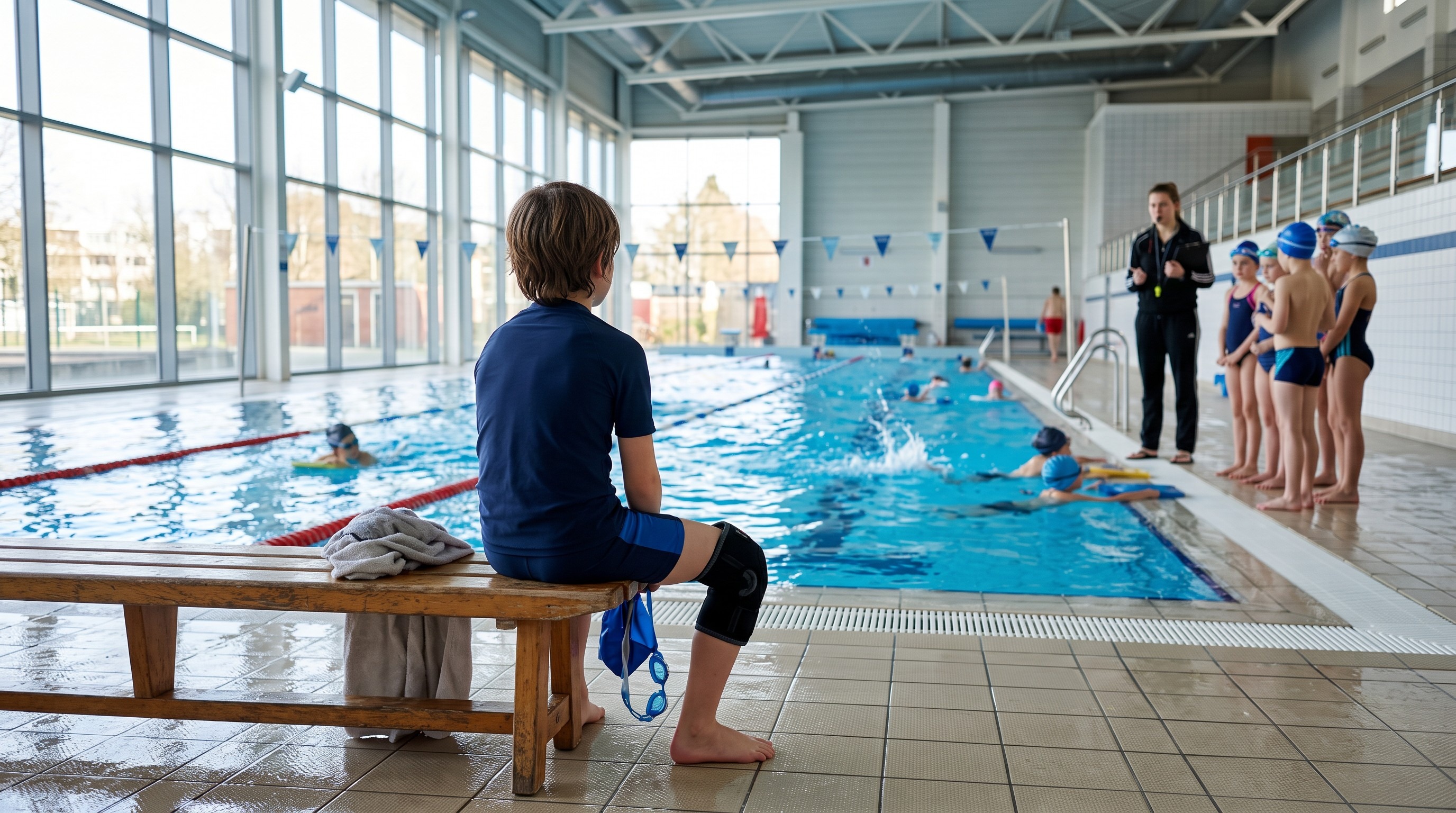
Ask for an Adjusted Start
A good swim school has a standard answer here: first participate at a calm pace, see how it goes, then return to the original level. Ask this in advance, by email or app, so it does not depend on the instructor of the day. With multiple instructors, a shared note is invaluable: one line about the injury and what your child can and cannot do.
A Head Injury: Rest First, Then Steps
A child can also be injured without a cast. In a fall from a bike, a bump against the diving board, or a collision on the schoolyard, the head is affected. Water and a head injury do not mix well: swimming involves low head positions, shaking, and risk of a second impact.
Why Water and a Head Injury Don’t Mix
After a concussion, the brain temporarily functions less well. Diving, turning, and somersaults require exactly the control that is lacking. The environment does not help either: a busy pool, loud noise, and an instructor who must raise their voice above the water.
The Swimming Sport’s Step-by-Step Plan
Swim England issued guidelines in 2023 with the rule "if in doubt, sit them out." It includes a stepwise return to training, and the same steps apply if the injury occurred outside the pool. The approach is always: full rest and recovery first, then light activity, then water entry, and if symptoms recur, step back. Have a doctor guide the return if you have doubts.
What Your Child Can Continue Doing During the Break
Doing nothing for six weeks is not necessary. A child who cannot put weight on their arm can still learn. It’s about the right exercises and the feeling that swimming lessons have not stopped.
Exercises Without Straining the Injury
Think of practicing breathing underwater in a basin or sink, reviewing the order of strokes, or dry practicing the arm stroke with the healthy arm. Watching videos of their own lesson works better for children than explanations: they see what happens themselves. What you should not do is experimenting with beads, boards, or exercises that the doctor has advised against.
Why a Long Break Costs More Than a Few Lessons
Swimming skills decline when inactive, faster than parents expect. A child who just moved up a level often drops a step upon return. That is not a disaster, but it helps to know before your child comes out of the water disappointed.
What Your Swim School Can Record for the Return
Swimmigo works with seven levels and 86 skills, and the instructor checks off what a child shows each lesson. With an injury, nothing is removed: progress remains visible, and the instructor can note where the child paused and which skill returns first. Parents see the same overview in the parent portal as the school, so you don’t have to explain where you left off at the first lesson back. The level structure shows what is required at each step.
Questions to Ask Your Doctor
Take these questions to the appointment. They prevent you from having to explain later to the swim school what you only half understood yourself.
- Is this cast or brace allowed to get wet, and if so, from which day?
- Does this also apply to chlorinated pool water, or only to showering?
- Does the aid need to be rinsed or dried after swimming, and how?
- Are there movements my child should avoid in the coming weeks?
- When do you expect swimming can resume, and how can I tell?
- For a wound: when is it closed enough for water exposure?
How to Handle This Together with the Swim School
Report an injury as soon as you know your child cannot participate for a few weeks. A swim school can only hold a spot in a group for so long, and an instructor prefers to plan ahead rather than afterward. Ask if the lesson can be postponed or if your child can observe. Many schools have a fixed arrangement for this, and if not, this is the time to make one.
For swim schools, there is a small organizational gain here: one field with the reason for absence and one note with the student saves a lot of searching in the instructor’s app and in the environment for swim teachers. Sick, injured, and on vacation are three different things and require different responses when a parent calls about make-up lessons.
With a long-term injury, it pays to set expectations honestly. A child returning after eight weeks is not at the same point as on the day of the fall. Naming this upfront prevents a disappointed child and a parent who thinks the lessons were wasted.
What This Means for Your Planning
An injury is rarely a reason to stop swimming lessons permanently. It is a break with an end, usually shorter than parents fear. Mark the date of the next check-up in your calendar, ask for swimming advice then, and pass it on to the swim school. This way, your child will not face an empty spot in the group upon return.
Meanwhile, keep an eye on what has already been achieved. The skills your child showed before the injury remain visible. That is where the conversation with the instructor starts at the first lesson back.
Swimmigo · Swim lesson app
Free for parents
Follow your child's swimming progress, see where you stand and report absences in the app.
Sources
- Mayo Clinic: Cast care, do's and don'ts, April 11, 2025
- KidsHealth (Nemours): Casts, medically reviewed March 2023
- Children's Health: Pediatric waterproof casting
- Royal Children's Hospital Melbourne: Wound care, updated July 2025
- KidsHealth (Nemours): Strains and sprains, reviewed September 2022
- Swim England: Concussion guidance for all of its sports, March 31, 2023
- WHO: Physical activity fact sheet, June 26, 2024

Bob van Soest
As an expert in operating sports facilities (such as swimming pools) and developer of, among others, Swimmigo.com, I am passionately committed to making swimming lessons simpler, more fun and more insightful for parents, swimming instructors and everyone who wants to learn to swim.
Frequently Asked Questions
Related articles

Swimmer's Ear in Children: How to Prevent Ear Pain After Swimming Lessons [2026]
Swimmer's ear is an inflammation of the ear canal that often occurs after swimming. Here's how to recognize it in your child, prevent it, and treat it. [2026]

Can My Child with Asthma Swim? How to Approach Swimming Lessons Safely [2026]
Can your child with asthma swim? Yes, usually. Here’s how to approach swimming lessons safely: doctor’s advice, medication, chlorine smell, and what the instructor needs to know [2026]

Complete Overview of Swimming and Health for Children: How to Keep Your Child Healthy In and Around the Pool [2026]
Swimming is healthy for children but also has risks: swimmer's ear, warts, chlorine smell, and stomach flu. Here's how to keep your child healthy in and around the pool [2026]
Discover Swimmigo
The all-in-one app for swimming lesson progress. For parents, swim schools, and adult swimmers.