Swimmer's Ear in Children: How to Prevent Ear Pain After Swimming Lessons [2026]
![Swimmer's Ear in Children: How to Prevent Ear Pain After Swimming Lessons [2026]](/_next/image?url=https%3A%2F%2Fzvblogpostimages.s3.eu-west-3.amazonaws.com%2FAUTOMATISCH_UPLOAD%2F1_c46e581d096a.jpg&w=3840&q=75&dpl=dpl_HNfPD3TqcZ6YivYMd3CXCgSrAu42)
Summary
- Swimmer's ear is a bacterial infection of the ear canal caused by water remaining in the ear too long, not a middle ear infection.
- Children aged 5 to 14 are most affected; in the U.S., it led to 2.4 million doctor visits in 2007.
- Prevention focuses on drying: tilting the head, drying ears, no cotton swabs, and acidic ear drops for recurrence.
- With proper ear drops, swimmer's ear usually heals within one to three weeks; avoid water until then.
Sunday evening, just home from the pool. Your child was splashing around two hours ago, and now they're sitting on the couch with a hand against their ear. Crying because it hurts. Sound familiar? You might be dealing with swimmer's ear, an inflammation of the ear canal that mainly affects children. It’s common, treatable, and there’s a lot you can do about it. In this overview, you’ll learn how to recognize, prevent, and treat swimmer's ear.
What exactly is swimmer's ear?
An inflammation of the outer ear canal
Swimmer's ear, officially acute otitis externa, is a bacterial infection of the ear canal: the passage between the outer ear and the eardrum. According to the U.S. Centers for Disease Control and Prevention (CDC), it occurs because water stays in the ear too long. This moisture softens the protective earwax and skin, creating a damp environment where bacteria can grow.
Why children get it more often
Children get swimmer's ear more frequently than adults, and the numbers show how common it is. The CDC calculated that acute otitis externa led to 2.4 million doctor visits in the United States in 2007. The highest numbers were among children aged 5 to 9 and 10 to 14 years. There is also a clear seasonal peak: 44 percent of visits occurred in June, July, or August. Good news: swimmer's ear is not contagious.
The problem is worldwide. According to the World Health Organization (WHO), 95.1 million children aged 5 to 19 years live with hearing loss globally, and nearly 60 percent of that is preventable. Ear infections are one of the major avoidable causes, according to an international analysis from 2024.
Swimmer's ear is not the same as a middle ear infection
This distinction is important because the treatment differs. A middle ear infection is behind the eardrum and often follows a cold in children. Swimmer's ear is in the ear canal itself and almost always related to water exposure. The Dutch GP information site Thuisarts states that ear pain in children is most often caused by the middle ear. If the pain starts right after swimming, the ear canal is a likely suspect.
How to recognize swimmer's ear in your child
The first signs
Swimmer's ear usually starts with itching in the ear, sometimes followed by pain that worsens when pulling on the outer ear or pressing the small bump in front of the ear canal. Many children say the ear feels "full." Symptoms often don’t appear on the evening of swimming but later.
When it gets worse
If the infection progresses, redness and swelling develop, sometimes with fluid or pus coming from the ear. Hearing may temporarily sound muffled due to swelling of the ear canal. The CDC lists these signs: pain when pulling the ear, itching, discharge, redness, and swelling.
When to see a doctor
When in doubt, have a doctor check it out. Call the GP or out-of-hours service if your child has a fever or feels unwell, or if the outer ear becomes swollen or red. Also, if symptoms do not improve after a week of ear drops, consult a doctor. The Dutch GP guideline for Otitis externa states that GPs can usually diagnose and treat swimmer's ear themselves.
Why sometimes yes and sometimes no
Cotton swabs and other objects make it worse
The biggest risk factor is not swimming itself, but what happens afterward. Cotton swabs scratch the skin of the ear canal and remove protective earwax. The CDC is clear: do not put objects in the ear and do not try to remove earwax, as earwax protects the ear canal against infections.
Eczema and sensitive skin
Children with eczema in or around the ear are more prone to swimmer's ear because their skin barrier is already vulnerable. Also, children who frequently touch their ears or wear earbuds are at higher risk. The Mayo Clinic mentions these factors in its overview of risk factors.
Long time in the water, especially in summer
The longer the ear stays wet, the higher the chance. The CDC analysis from 2011 showed that nearly half of all doctor visits for swimmer's ear occurred during the summer months. Hot and humid weather outside the pool also doesn’t help. Swimmer's ear is a typical summer visitor, but children who take swimming lessons year-round can get it in any season.
Swimmigo · Swim lesson app
Free for parents
Follow your child's swimming progress, see where you stand and report absences in the app.

How to prevent swimmer's ear
Dry, dry, dry
The most important measure is boring but effective: keep the ears dry. After every swimming lesson, have your child tilt their head to both sides so water drains out, dry the outer ear with a towel, and gently pull the earlobe while the head is tilted. If water remains, a hairdryer on the lowest setting at some distance from the ear is allowed. This advice comes from the CDC and takes less than a minute.
Earplugs and swim caps
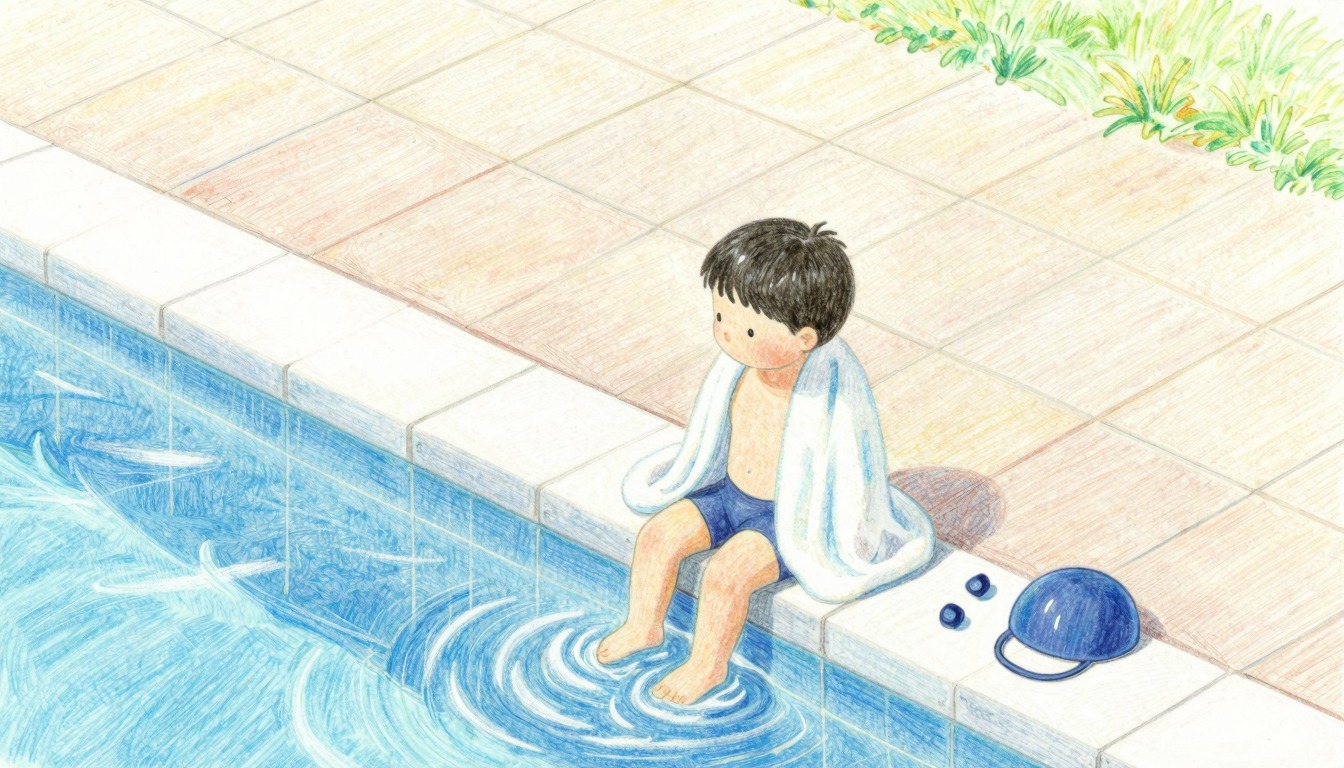
Children who often suffer can wear earplugs or a swim cap while swimming. Ready-made earplugs from the drugstore often work well, and for persistent problems, custom-made swim plugs are available.
Acidic ear drops for recurrence
If your child repeatedly gets swimmer's ear, ask the GP or pharmacist about preventive acidic ear drops. These restore the ear’s acidity after swimming, reducing bacterial growth. Many pediatricians recommend them for children who frequently suffer. The Mayo Clinic suggests a homemade alternative of equal parts vinegar and rubbing alcohol, but only if you are sure the eardrum is intact. These drops are not intended for children with tubes or a previously ruptured eardrum.
Swimming with ear tubes
Many parents think a child with ear tubes cannot swim. That is not true. According to Thuisarts, about 3 in 100 children get tubes and may shower and swim normally. Earplugs are not necessary but allowed if you prefer.
Treatment: what works when things go wrong
Ear drops from the GP
Swimmer's ear rarely goes away on its own but clears quickly with the right drops. The Dutch GP guideline recommends ear drops containing an acid and an anti-inflammatory; with these, the infection usually resolves within one to three weeks. Sometimes the GP prescribes antibiotic drops. Drops or spray, the key is to follow the treatment consistently, usually for seven to ten days.
Painkillers for the first days
The first days can be painful. Paracetamol helps, and if that’s insufficient, ibuprofen may be an option. Always follow the advice of the pharmacist or GP, especially for young children.
How long to avoid swimming
Keep the ear dry as long as it’s inflamed. In practice, this means no swimming and keeping the ear dry when washing hair. Consult the GP about when your child can return to the water, usually once symptoms have cleared. For more on hygiene around lessons, see why showering before swimming lessons is so important.
A few weeks without swimming lessons, and then?
Keeping progress visible
A few weeks without swimming lessons may feel like falling behind, but it doesn’t have to be. There’s plenty to do at home: keep up exercises, practice in the bath, and track progress so your child sees they are still improving. The free Swimmigo app is for parents and instructors, available in five languages and used worldwide. It tracks what your child can do at each level, even during a break from lessons.
What a swim instructor can do
Swim schools also have a role. Well-maintained water with correct chlorine and pH levels keeps bacteria under control, as the CDC emphasized in 2011. It also helps if a child with ear pain can easily cancel and make up a lesson without losing track of progress. That’s what the Swimmigo student tracking system is for: groups, levels, and parent communication all in one place, even if a lesson is missed.
Conclusion
Swimmer's ear is unpleasant but treatable and, above all, preventable. Dry your child’s ears after every swimming lesson, avoid cotton swabs, and consult about preventive ear drops if it recurs. Keep the ear dry and see a doctor as long as symptoms last. This keeps swimming lessons what they are meant to be: fun, in every country where your child goes into the water.
Swimmigo · Swim lesson app
Free for parents
Follow your child's swimming progress, see where you stand and report absences in the app.
Sources
- CDC MMWR: Estimated Burden of Acute Otitis Externa, United States, 2003-2007, May 2011
- CDC: Preventing Swimmer's Ear, updated May 2025
- NHS inform: Outer ear infection (otitis externa), accessed August 2026
- Dutch GP guideline Otitis externa, accessed August 2026
- Thuisarts: I have an ear canal infection, accessed August 2026
- Thuisarts: My child gets ear tubes, accessed August 2026
- WHO: Deafness and hearing loss, factsheet, accessed August 2026
- Mayo Clinic: Swimmer's ear, accessed August 2026
- Guy's and St Thomas' NHS: Otitis externa, accessed August 2026
- HealthyChildren.org (American Academy of Pediatrics): Swimmer's Ear in Children, accessed August 2026
- BMC Public Health: Global, regional, and national burden of hearing loss in children and adolescents, 1990-2021, 2024

Bob van Soest
As an expert in operating sports facilities (such as swimming pools) and developer of, among others, Swimmigo.com, I am passionately committed to making swimming lessons simpler, more fun and more insightful for parents, swimming instructors and everyone who wants to learn to swim.
Frequently Asked Questions
Related articles
![Can My Child with Asthma Swim? How to Approach Swimming Lessons Safely [2026]](/_next/image?url=https%3A%2F%2Fzvblogpostimages.s3.eu-west-3.amazonaws.com%2FAUTOMATISCH_UPLOAD%2F1_f517784b370a.jpg&w=3840&q=75&dpl=dpl_HNfPD3TqcZ6YivYMd3CXCgSrAu42)
Can My Child with Asthma Swim? How to Approach Swimming Lessons Safely [2026]
Can your child with asthma swim? Yes, usually. Here’s how to approach swimming lessons safely: doctor’s advice, medication, chlorine smell, and what the instructor needs to know [2026]
![Complete Overview of Swimming and Health for Children: How to Keep Your Child Healthy In and Around the Pool [2026]](/_next/image?url=https%3A%2F%2Fzvblogpostimages.s3.eu-west-3.amazonaws.com%2FAUTOMATISCH_UPLOAD%2F1_babb0737688b.jpg&w=3840&q=75&dpl=dpl_HNfPD3TqcZ6YivYMd3CXCgSrAu42)
Complete Overview of Swimming and Health for Children: How to Keep Your Child Healthy In and Around the Pool [2026]
Swimming is healthy for children but also has risks: swimmer's ear, warts, chlorine smell, and stomach flu. Here's how to keep your child healthy in and around the pool [2026]
![Swimmer's Warts in Children: Can Your Child Still Attend Swimming Lessons? [2026]](/_next/image?url=https%3A%2F%2Fzvblogpostimages.s3.eu-west-3.amazonaws.com%2FAUTOMATISCH_UPLOAD%2F1_98a34c47c601.jpg&w=3840&q=75&dpl=dpl_HNfPD3TqcZ6YivYMd3CXCgSrAu42)
Swimmer's Warts in Children: Can Your Child Still Attend Swimming Lessons? [2026]
Swimmer's warts are contagious but harmless. Can your child attend swimming lessons with them? Here's how to recognize them, prevent spreading, and keep swimming safe [2026]
Discover Swimmigo
The all-in-one app for swimming lesson progress. For parents, swim schools, and adult swimmers.