CompleteOverviewofParentCommunicationinSwimmingLessons:HowtoKeepParentsEngaged[2026]
![Complete Overview of Parent Communication in Swimming Lessons: How to Keep Parents Engaged [2026]](/_next/image?url=https%3A%2F%2Fzvblogpostimages.s3.eu-west-3.amazonaws.com%2FAUTOMATISCH_UPLOAD%2F1_bb9380f6b4e7.jpg&w=3840&q=75&dpl=dpl_GWyfLj8UVegbQ18STkVQms8Vj7LD)
Summary
- Parent communication is the weakest link in the traditional swimming lesson process: parents often only find out after months whether their child is making progress
- Fragmented communication via WhatsApp, notes, and brief conversations at the poolside costs instructors unnecessary time
- Digital tools like Swimmigo provide real-time progress insights for parents, completely free
- Engaged parents ensure faster swimming lesson progress: children practice more often at home and drop out less quickly
TLDR
- Parent communication is the weakest link in the traditional swimming lesson process: parents often only find out after months whether their child is making progress
- Fragmented communication via WhatsApp, notes, and brief conversations at the poolside costs instructors unnecessary time
- Digital tools like Swimmigo provide real-time progress insights for parents, completely free
- Engaged parents ensure faster swimming lesson progress: children practice more often at home and drop out less quickly
- This overview covers all aspects of parent communication: from classic problems to practical solutions
Introduction
A parent faithfully brings their child to swimming lessons every week, sits for an hour on a wooden bench by the poolside, and then doesn’t know what happened during the lesson. The child says "fun" and stomps off to the changing room. The instructor has no time for a conversation because the next group is already waiting. This scenario plays out daily in hundreds of Dutch swimming pools. Parent communication is the weakest link in the swimming lesson process, and this has direct consequences for children’s progress. In this complete overview, you will read why communication with parents makes a difference, what problems exist, and how you as a swimming school or instructor can structurally improve parent involvement.
Why Parent Communication Makes a Difference
Engaged Parents Ensure Faster Progress
Research by the Mulier Institute shows that children whose parents are actively involved in the learning process generally obtain their swimming diploma faster. When a parent knows which exercise is central, they can ask targeted questions at home. A child who hears "well done with your backstroke today" instead of "was it fun?" experiences more recognition and motivation. It’s not about pushy behavior, but meaningful involvement.
Gaining Parents’ Trust
Parents entrust their child to an instructor whom they often only see from the stands. Without clear communication, trust remains fragile. Every instructor knows the parent who, after three lessons, stands at the poolside asking, "When can my child actually swim?" That question doesn’t come from impatience but from uncertainty. Transparent progress information removes that uncertainty and builds a trust bond between instructor, parent, and child.
Fewer Questions at the Poolside, More Lesson Time
For instructors, it’s a familiar ritual: after the lesson, two parents are waiting with questions about progress. A short chat is fine, but when this happens after every lesson, lesson time is structurally lost. Moreover, the instructor cannot constantly take notes during the lesson for parent conversations. A structured communication system drastically reduces ad-hoc questions, allowing instructors to focus on what they do best: teaching.
The Classic Communication Problems
The Black Hole After Swimming Lessons
The biggest pain point for parents is the lack of information between swimming lessons. A child goes into the water for 45 minutes and comes out again. What exactly was practiced, which skills improved, and what the next step is: most parents have no idea. The classic answer from children to the question "how was swimming lesson?" is "fun" or "good," and parents have to make do with that for half a year until the next diploma moment. This information vacuum is fatal for parent involvement.
Fragmented Communication Channels
Many swimming schools communicate via a mix of channels: a WhatsApp group for quick announcements, a newsletter that comes out quarterly, a paper progress card stamped after each lesson, and occasional conversations at the poolside. Parents have to gather information from different sources. The result: important updates are missed, and parents don’t know where to turn with questions.
Time Pressure on Instructors
A swim instructor often teaches 4 to 6 groups per day, with minimal breaks in between. The administrative burden of tracking progress per student, filling out progress cards, and answering parent questions adds on top of lesson time. Without digital support, it is simply impossible to keep every parent personally and regularly informed. Instructors experience frustration: they want to communicate, but lack the time.
Language Barriers in International Families
In cities with large expat communities such as Amsterdam, The Hague, and Eindhoven, the language barrier is a growing problem. Swimming lessons are given in Dutch, but many expat parents speak little or no Dutch. They cannot have a conversation with the instructor, do not understand the progress card, and miss crucial information about their child’s water safety. This leads to uncertainty and exclusion. A multilingual communication solution is not a luxury but a necessity for this group.
What Parents Really Want to Know
Which Skills Does My Child Master Now?
Parents don’t want a vague answer like "it’s going okay." They want concrete information: which of the 86 skills does their child master, and at what level? Swimmigo uses the 7-level system (Red through Gold) with specific exercises per level. Parents see at a glance which skills are checked off, with a score from 0 to 6 per exercise. This provides an objective and detailed picture of progress, without the instructor having to hold separate progress conversations.
What Is the Next Step?
Besides the current level, parents want to know what’s coming next. Which exercises are still open? When will their child move to the next level? Is there a specific skill that needs extra attention? By making this information transparent, parents can encourage their child purposefully. "Two more exercises and then you go to Orange" is a much stronger message than "hang in there a bit longer."
How Can I Support at Home?
Not every parent knows how to contribute at home to swimming lesson progress. Yet there are simple things that help: practicing back floating together in the bath, encouraging the child to put their face underwater while showering, or talking about water safety during a day at the beach. When an app gives concrete suggestions per level, parents become active partners in the learning process instead of passive spectators.
When Is the Diploma in Sight?
The question every parent eventually asks: when will my child get their diploma? In the traditional system, this often remains vague until the last moment. With a digital progress system, parents see exactly how many skills are still open and can make a realistic estimate of the diploma moment. This prevents disappointments and impatience for both parents and children.
Digital Solutions for Parent Communication
Real-Time Progress Insight via an App
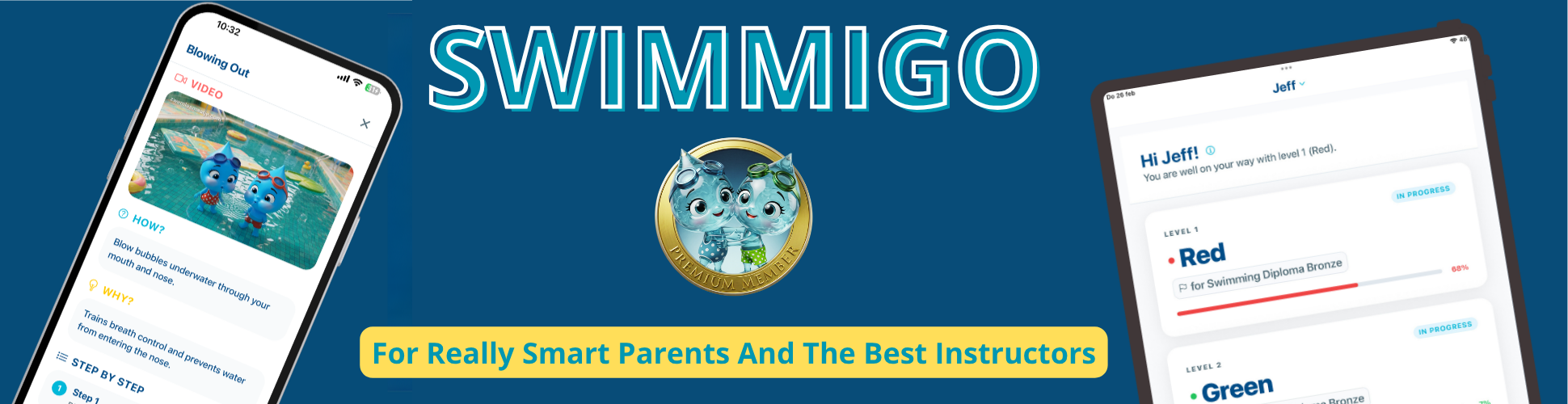
The most effective way to improve parent communication is a digital app that provides real-time insight into swimming lesson progress. The instructor ticks off achieved skills during or immediately after the lesson on a tablet or phone, and parents see the update instantly in their own app. No paperwork, no scattered WhatsApp messages, no months of waiting for a vague diploma moment. This model is not only more efficient for the instructor but also gives parents confidence that their child is being seriously monitored.
Automated Updates and Push Notifications
Parents don’t check an app every day. That’s why push notifications are essential: an automatic message when their child moves up a level, a reminder for the next lesson, or a notification about a special swimming activity. These small contact moments keep parents involved without the instructor spending extra time. They are like digital pats on the back that strengthen the bond between swimming school and family.

Swimmigo as a Communication Hub
Push Notifications for Level Increases
One of the most appreciated features of Swimmigo is the automatic push notification when a child moves up a level. Parents immediately receive a message: "Congratulations, Sophie has reached Yellow level!" These are the moments when parents feel proud, share the news with grandparents, and the child receives an extra compliment at home. This positive reinforcement strengthens the child’s motivation and the family’s involvement in the swimming lesson process.
Personalized Certificates and Diplomas
Swimmigo automatically generates a free swimming certificate for each achieved level, complete with the child’s name and date. At the higher levels (5, 6, and 7), this expands into a truly personalized swimming diploma. Parents receive this digitally, can print it, and proudly share it on social media. This replaces the traditional paper diploma ceremony that often takes place months after achievement and provides immediate recognition.
Holiday Mode for Practicing at Home
During school holidays, many swimming lessons pause, but parent involvement doesn’t have to stop. Swimmigo’s holiday mode allows parents to tick off exercises their child does at home or in the holiday pool. This keeps progress visible and motivates the child to practice outside regular lessons. For parents, this is a concrete way to contribute actively, and for instructors, it means children have fallen back less after the holiday.
Multi-Instructor Collaboration
At swimming schools with multiple instructors per group, internal communication is just as important as communication with parents. Swimmigo enables instructors to work within the same system, see each other’s notes, and provide consistent assessments. A child who has lessons with Karin on Tuesday and Thomas on Thursday receives the same structured feedback, and parents see a clear progress overview regardless of which instructor entered the scores.
Practical Tips for Better Parent Communication
Set a Fixed Communication Moment
Whether you use an app or traditional methods: consistency is key to good parent communication. Choose a fixed moment in the week to share progress information, for example every Friday afternoon. Parents then know when to expect an update and don’t have to reach out themselves. This provides peace of mind on both sides. With a digital tool like Swimmigo, this happens automatically, but even without an app, a weekly email with a short group update is a huge step forward.
Use a Central Platform
Fragmented communication via WhatsApp, email, paper cards, and verbal conversations leads to misunderstandings and lost information. Choose one central platform where all communication comes together. This can be an app, an online portal, or a structured email system. The most important thing is that both instructors and parents know where to go for information. Avoid the temptation to "quickly" answer a question via WhatsApp that actually belongs in the central system.
Share Successes, Not Just Problems
A pitfall in parent communication is contacting parents only when there is a problem: a child not listening, a missed lesson, or a payment delay. This creates a negative association for parents. Ensure that at least 80 percent of communication is positive or neutral. Share milestones, successes, and fun moments. A photo of the group mastering a new exercise, a message about a child finally daring to swim without floaties, or a group diploma ceremony. Positive communication builds trust and excites parents.
Make Communication Multilingual Where Needed
In many Dutch swimming pools, at least 10 to 20 percent of families speak another language. If your communication is only in Dutch, you exclude a significant group of parents. Digital tools that automatically translate into English, German, French, and Spanish (like Swimmigo) make a difference. But even without an app, you can take simple steps: a welcome letter in multiple languages, pictograms on the progress card, and an instructor who speaks a few words of English or French. Small gestures with big impact.
The Psychology Behind Parent Involvement
Why Uncertainty Leads to Dropping Out
When parents remain uncertain for a long time about their child’s swimming lesson progress, a negative spiral develops. The child senses the parent’s tension, performs less relaxed in the water, and progress stagnates. This is the moment when parents start doubting: is this the right swimming school? Does my child have the aptitude for swimming? Regular, transparent communication breaks this spiral before trust is damaged.
The Power of Small Victories
Every swimming lesson is full of small milestones: the first time a child dares to put their head underwater, the first independent back floating, the first successful breaststroke. When these moments are shared with parents, no matter how small, a positive feedback loop arises. The child feels seen, the parent is proud, and the instructor sees the enthusiasm reflected in the next lesson. This psychological mechanism of positive reinforcement is one of the strongest drivers behind swimming lesson success.
Conclusion
Parent communication is not a side issue but a crucial success factor in the swimming lesson process. Children with involved parents practice more often at home, drop out less quickly, and obtain their diploma faster. For instructors and swimming schools, structured communication means fewer ad-hoc questions, more lesson time, and satisfied parents. Modern, free tools like Swimmigo make it possible to share real-time progress, celebrate successes with personalized certificates, and bridge language barriers with multilingual support. Start improving your parent communication today and experience the difference in engagement and results.
Discover more about Swimmigo on the page for parents, or read how instructors use the app on the instructor page. Also check out the complete level system and the features for swimming schools.
Sources

Bob van Soest
As an expert in operating sports facilities (such as swimming pools) and developer of, among others, Swimmigo.com, I am passionately committed to making swimming lessons simpler, more fun and more insightful for parents, swimming instructors and everyone who wants to learn to swim.
Frequently Asked Questions
Related articles

Effectively Involving Parents in Their Child's Swimming Lesson Progress
Practical tips for good communication and collaboration with parents about their child's swimming lesson progress.

Improving Swimming Lesson Progress for Better Parent Communication
Discover how to clearly record swimming lesson progress and communicate effectively with parents for more involvement and better understanding.

Effectively Informing Parents About Swimming Lesson Progress
Practical tips to clearly and engagingly inform parents about their child's swimming lesson progress.
Discover Swimmigo
The all-in-one app for swimming lesson progress. For parents, swim schools, and adult swimmers.