Swimming lessons for toddlers: what the research says about language, math and listening [2026]

Summary
- Children who started swimming lessons before their fifth birthday were 5 to 18 months ahead in language, math and listening.
- That correlation is not proof, the study had no control group, so causality cannot be established.
- What is certain is that learning to swim reduces the risk of drowning.
- With Swimmigo you see progress per exercise, instead of waiting for the diploma.
Children who started swimming lessons before their fifth birthday were ahead of peers in language, math and following instructions. That comes from the largest study on this topic. Important to mention right away, this study does not prove cause and effect. It shows a correlation, nothing more.
What the study showed
The largest study so far
Robyn Jorgensen (Griffith University) studied swimming and development in young children for years. Parents of nearly 7,000 children under five were surveyed, and almost 180 children were tested extensively on their skills.
Five to eighteen months ahead
Children who started lessons early were 5 to 18 months ahead in language, math and following instructions, compared with children who did not start early.
No control group
The study had no control group. That is not a minor detail, but a fundamental limitation, you cannot therefore say that swimming itself caused that advantage.
What you can and cannot conclude
No evidence of cause and effect
The correlation exists, but not the direction. It may just as well be that families who enroll their child in lessons early also provide more stimulation in other areas. Or that children who naturally develop quickly are more likely to start lessons earlier.
What the researchers themselves emphasize
Independent experts warn that causality cannot be established here. Reading the study as "swimming makes your child smarter" reads more into it than the paper states.
What is certain
Undisputed is that learning to swim reduces the risk of drowning. Drowning is among the leading causes of death for children worldwide. That is the clear, proven reason to start early.
Why starting early can still make sense
Getting used to the water takes time
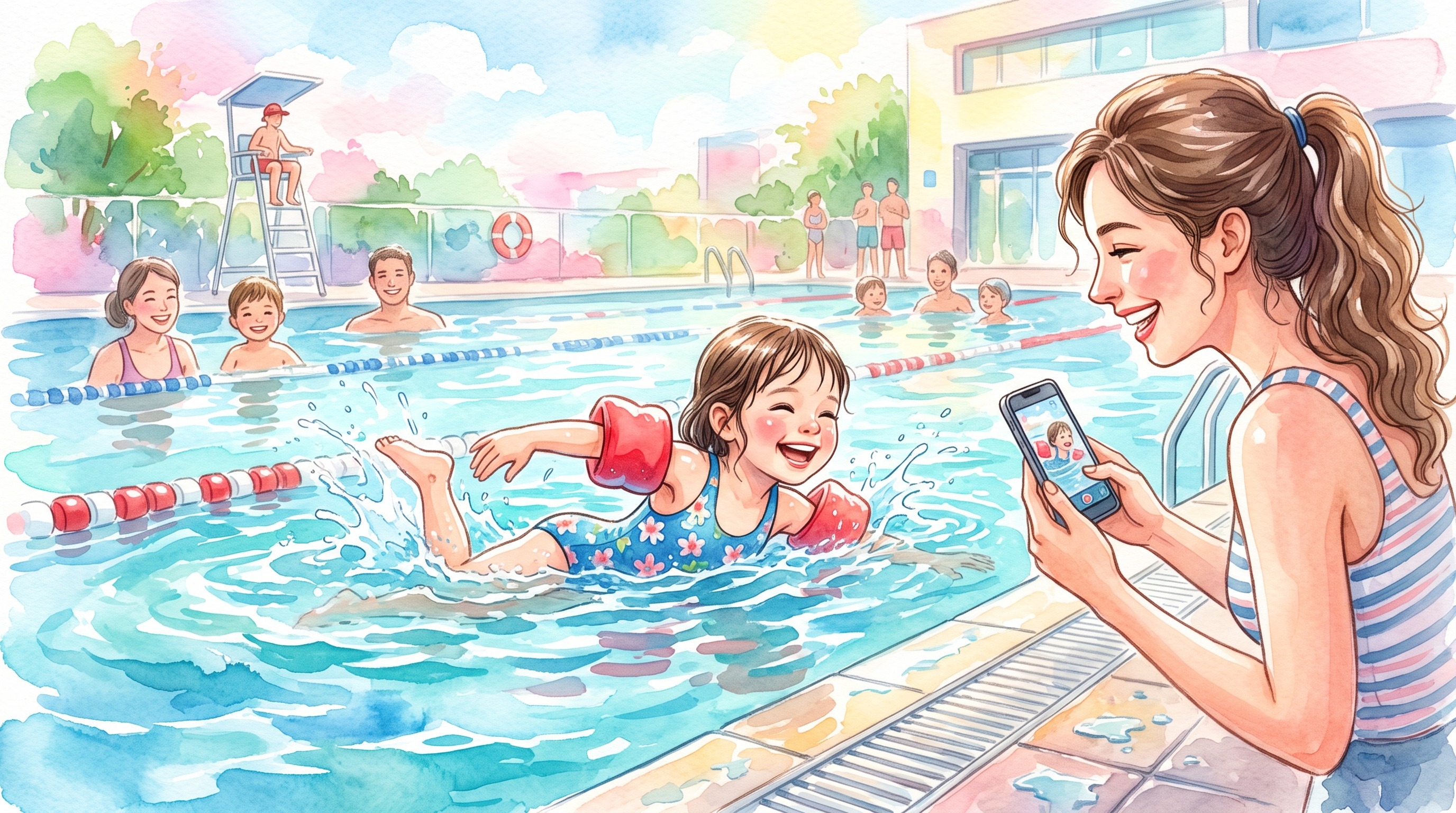
Separate from the research there is a practical argument, a child who becomes familiar with water early is comfortable before they actually learn to swim. That acclimatization takes time, and you have that time if you start early.
Confidence in the water
Children who start early are often calmer and more confident in the water. That makes later swim lessons easier and more enjoyable.
Prioritize water familiarization
With young children it is about becoming comfortable with water, not performance. Let your child play, splash and explore. Technique comes later.
See it as long term
Learning to swim is a marathon, not a sprint. If you start early you have time to build it up slowly. That is nicer for your child and for you.
Swimmigo · Swim lesson app
Free for parents
Follow your child's swimming progress, see where you stand and report absences in the app.


See progress instead of waiting for the diploma
Seven levels and 86 skills
With Swimmigo you see your child's progress per exercise, instead of waiting for a diploma. The app divides swimming into 7 levels and 86 skills, from getting used to the water to swimming independently.
See what your child can already do
Each exercise receives a score from 0 to 6. That way you see exactly where your child stands and what can improve, without having to wait for a diploma.
Conclusion
Starting lessons early is associated with an advantage in language, math and listening, but that correlation is not proof that swimming is the cause. What is certain is that swimming saves lives. Start early for that reason, and track progress with Swimmigo per exercise instead of waiting for the diploma.
More on how swim lessons contribute to your child’s development: this overview. And about the levels: the levels page.
Swimmigo · Swim lesson app
Free for parents
Follow your child's swimming progress, see where you stand and report absences in the app.

Bob van Soest
As an expert in operating sports facilities (such as swimming pools) and developer of, among others, Swimmigo.com, I am passionately committed to making swimming lessons simpler, more fun and more insightful for parents, swimming instructors and everyone who wants to learn to swim.
Frequently Asked Questions
Related articles
How Swimming Lessons Contribute to Your Child’s Development: More Than Water Safety
Swimming lessons stimulate motor skills, cognition, and social growth in children. Discover how swimming lessons support development, backed by scientific insights.

Swimming as Medicine: The Proven Health Benefits of Swimming Lessons for Children
Swimming is more than water safety. Discover how swimming lessons improve children's health: from reducing asthma to better motor skills and social abilities.

How Swimming Lessons Boost Your Child’s Confidence: More Than Just a Diploma
Discover how swimming lessons strengthen your child’s confidence through micro-wins. From fear to self-assurance, the mental growth behind every swim lesson.
Discover Swimmigo
The all-in-one app for swimming lesson progress. For parents, swim schools, and adult swimmers.